

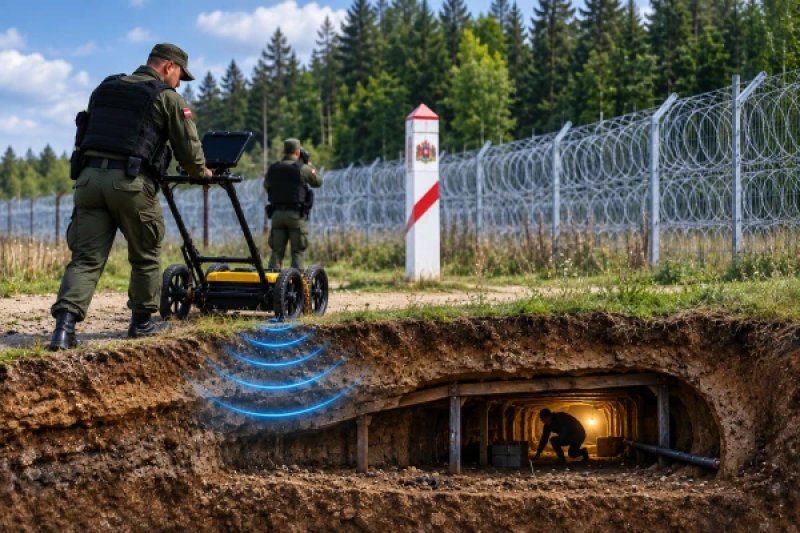
According to him, ground-penetrating radar yields good results provided that a suitably trained specialist operates the equipment. It is significantly more difficult to obtain information about what lies underground using other methods. At the same time, Pinkovskis allows for the use of other technologies. For example, the construction of tunnels can be monitored using special microphones that capture sounds from underground or vibration sensors. The effectiveness of such devices depends on the depth of the tunnel, which is unknown in advance. The expert explained that ground-penetrating radar can determine whether an underground tunnel already exists. Sensors, on the other hand, are primarily intended for early warning and can help detect work being done to lay the tunnel. As previously reported, in August, two tunnels used by illegal migrants were discovered at the Latvia-Belarus border. To enhance security along Latvia's eastern border, Operation "Vilkatis" began on August 11. Its goal is to significantly reduce the number of illegal border crossings in the eastern part of the country and to prevent such attempts in the future. The State Border Guard, in cooperation with the State Police, also began scanning soil layers along the Latvia-Belarus border using ground-penetrating radar in search of possible underground tunnels. Until the end of the year, an enhanced border protection regime is in effect in the border areas with Belarus. This has been implemented due to the increased pressure of illegal migration from Belarus.
