

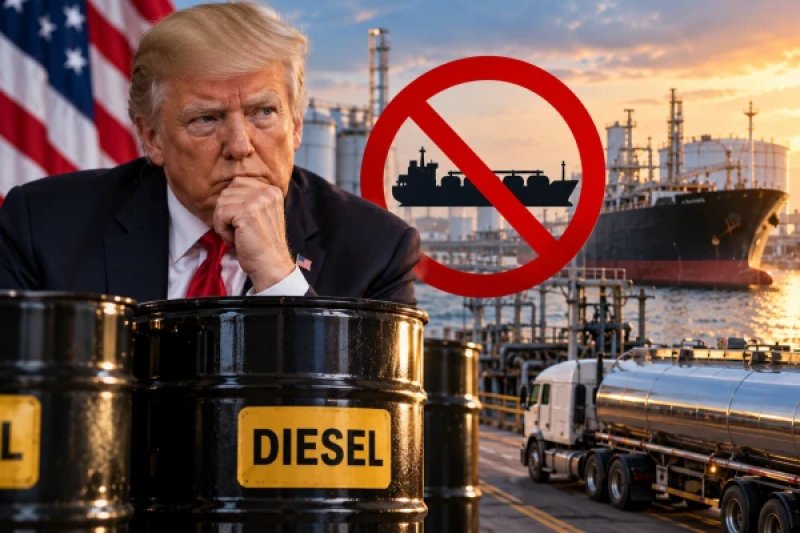
The President of the United States is discussing with advisors the possibility of limiting or temporarily banning diesel fuel exports. According to the Financial Times, no final decision has been made yet, but the White House is considering export restrictions as one option to combat the sharp rise in prices. Diesel in the U.S. reached a record $6.53 per gallon last week — more than 70% higher than the level before the U.S. war with Iran. The price increase is particularly painful for agriculture, freight transportation, and industry. Pressure on the administration is mounting from Republicans in agricultural states. They are demanding that more fuel be kept within the country, hoping to lower prices ahead of the midterm elections for Congress. Trump himself stated over the weekend that he is "very seriously" considering a ban. ### Why Oil Companies Are Opposed American oil companies are against this measure. Their argument is that the U.S. fuel market is closely tied to global trade: some American regions simultaneously import petroleum products from abroad. Therefore, restricting exports could lower prices in one part of the country but raise them in another. According to FT, several members of the administration, including Energy Secretary Chris Wright, have also opposed a complete ban. Oil companies have been actively lobbying the White House in recent days. Reuters previously reported that the administration discussed a softer option with major oil refiners — a voluntary reduction in diesel exports. ### The Consequences for Europe Could Be Serious The U.S. currently plays an exceptionally important role in the global diesel market. According to Reuters, U.S. exports are expected to increase by more than 20% by 2026, reaching approximately 1.3 million barrels per day. About a quarter of the supplies are directed to Europe, with significant volumes also purchased by Mexico, Brazil, and Chile. If American fuel disappears from the international market, it will be difficult to quickly replace such volumes: global refining capacities are already heavily utilized. The White House understands the possible consequences. According to FT, American officials have already discussed the situation with allies, including the United Kingdom. Washington is also pressuring European countries to use emergency diesel fuel reserves to increase supply and curb prices. The situation is further exacerbated by Russia's decision: on September 30, Moscow extended the ban on diesel exports for producers until the end of October. Russian authorities are trying to cope with the internal fuel deficit, worsened by Ukrainian drone strikes on refineries. Thus, the simultaneous restriction of supplies from Russia and the potential disappearance of a significant portion of American diesel could create additional tension in the global — and especially European — fuel market.
