

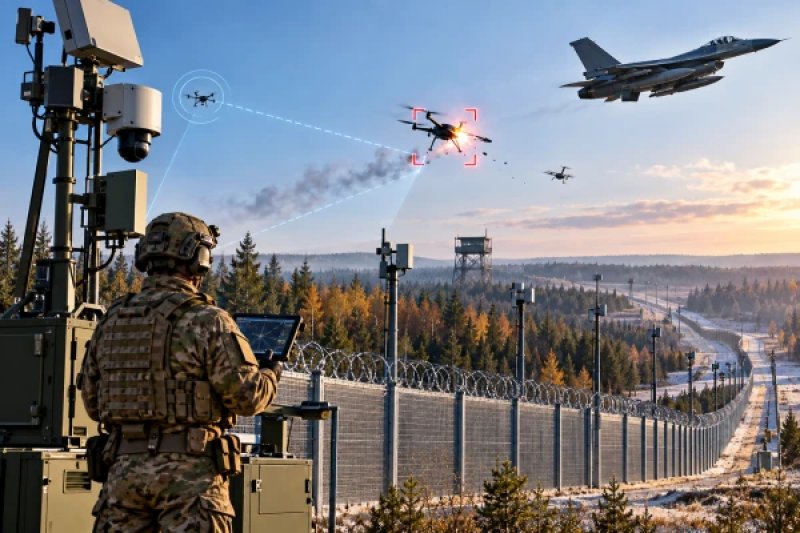
Latvia is creating an automated drone combat system along its entire eastern border with Russia, using Ukraine's experience. Its task is to make NATO fighters the last, not the first, means of intercepting drones, said the Latvian Minister of Defense in an interview with Business Insider. As [reported](https://www.businessinsider.com/automated-anti-drone-border-latvia-nato-fighter-jets-russian-drones-2026-9) by the publication, the completion of the system is planned for the end of September. The new "anti-drone wall" is expected to detect and neutralize any drone crossing the border. NATO fighters will only be engaged if the drone manages to overcome the first line of defense. ### An Expensive Response to a Cheap Threat One of the main problems NATO faces is the huge difference in cost between attacking drones and the means to destroy them. To intercept relatively cheap drones, F-35, F-16, and Rafale jets must be deployed, using expensive air-to-air missiles. Surface-to-air missiles can also cost significantly more than the target being destroyed. NATO Secretary General Mark Rutte stated back in June that in the long term, the alliance cannot continue to destroy cheap drones with extremely expensive interceptors. According to him, countermeasures need to be developed that are comparable in cost to the drones themselves. Latvia hopes to include interceptor drones as part of such defense. Ukraine is actively developing this technology to combat Russian strike drones. ### "This is the Border of Russia with NATO" The minister emphasized that this is not just about protecting Latvian territory. According to him, the country’s eastern border is effectively the border between Russia and NATO and the European Union. Therefore, a drone crossing the Russian-Latvian border is already in NATO and EU airspace. At the same time, Latvia does not intend to abandon NATO's air patrol mission. Allied fighters will still remain a crucial element of airspace protection, but they want to relieve them of the need to respond to every relatively cheap drone target. ### A Human Will Have the Final Word A significant part of the new system is expected to operate automatically. The detection of a drone, target tracking, and the launch of interception means are planned to be as automated as possible. The final decision to destroy the target will remain with the military personnel. This approach will not only allow for a quicker response to threats but also reduce the number of military personnel needed to operate the anti-drone system. ### Lessons from Ukraine The basis of Latvia's concept is the experience gained from the war in Ukraine. Over the past few years, Kyiv has sharply expanded the use of relatively cheap interceptor drones against Russian strike drones. Latvia is studying this experience and collaborating with Ukrainian defense enterprises. The goal is not simply to copy the Ukrainian model but to select solutions that are most suitable for Latvian conditions. The minister noted that Latvia currently does not observe direct Russian military aggression or an immediate conventional threat to the country or other NATO members. However, he stated that Russia is using hybrid methods—cyberattacks, sabotage, espionage, and disinformation—in an effort to weaken the unity of Western countries and their willingness to support Ukraine. The minister believes that the Ukrainian experience allows Latvia and other NATO countries to better understand the characteristics of modern warfare and to prepare the necessary defense capabilities in advance.
