

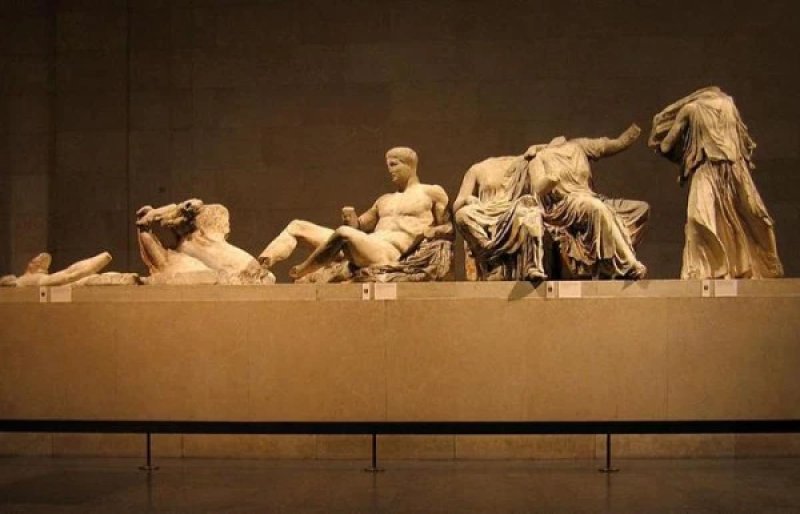
The Prime Minister of Greece has called for a substantive dialogue with the United Kingdom regarding the fate of the Parthenon sculptures. Years of negotiations have yet to yield a resolution, but Athens has no intention of abandoning its demands. The Greek side views the dispute not only as a matter of ownership of museum exhibits. In Athens, it is emphasized that this concerns the restoration of the integrity of one of the most important monuments of ancient culture. ## Why the Sculptures Ended Up in London The marble sculptures and reliefs of the Parthenon were removed from Greece in the early 19th century by British diplomat Lord Elgin. At that time, the territory of modern Greece was under the control of the Ottoman Empire, from representatives of which Elgin, as the British side claims, obtained permission to conduct works and export part of the artworks. Later, the collection was acquired by the British government and transferred to the British Museum, where a significant portion of the Parthenon sculptures remains to this day. Greece has been seeking their return for decades. Athens believes that the ancient artworks belong in the Acropolis Museum, located near the Parthenon. ## What the United Kingdom Responds One of the obstacles to the final return of the sculptures remains British legislation. Current laws significantly restrict the British Museum's ability to transfer items from its collection. Various compromise options are being discussed. Among them are long-term loans of the artworks to Greece, exchanges of museum treasures, or the search for a special legal mechanism that would allow the sculptures to be displayed in Athens. The British Museum traditionally points out that the artworks are preserved and accessible to visitors from around the world. The Greek side, on the other hand, insists that the divided parts of the Parthenon need to be presented again as a unified whole. ## The Dispute Has Been Ongoing for Two Centuries The discussion surrounding the Parthenon marbles has gained additional significance against the backdrop of international debates about the return of cultural treasures taken from other countries in past centuries. Now Athens hopes to bring negotiations with London out of a long-standing deadlock. However, a final agreement has yet to be reached. If a compromise is found, the parts of the sculptural ensemble of the Parthenon, divided between Athens and London for more than two centuries, may finally be reunited in Greece.
