

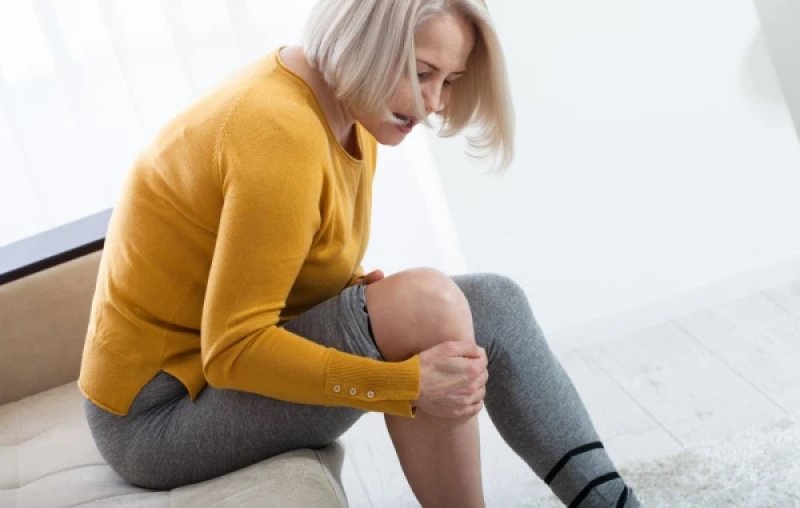
In autumn, the usual rhythm of life gradually changes: there are fewer walks, the dacha season ends, the air temperature drops, and physical activity often decreases. Against this backdrop, people with pre-existing musculoskeletal issues may experience increased discomfort in their knees, hips, feet, and back. However, the cold or rainy weather itself does not damage cartilage or cause osteoarthritis. Rather, it may make the symptoms of an already existing condition more noticeable. Why this happens was explained by orthopedic traumatologist and rheumatologist Irina Rodina. ## Why Joints and Back May Hurt More in Autumn There can be several reasons for seasonal deterioration in well-being. Among the most common are: - Decrease in temperature, which can increase muscle tension; - Change in usual physical activity; - Sharp fluctuations in atmospheric pressure, which some people perceive as an increase in pain and stiffness; - Overloading joints and back during the last dacha work; - Weight gain with decreased activity; - Exacerbation of osteoarthritis, arthritis, gout, and other chronic conditions; - Consequences of old injuries; - Lack of sleep and stress, which can reduce pain tolerance. Thus, discomfort in autumn does not necessarily mean that the joints are "deteriorating" due to the cold. In some cases, the load, muscle tone, and pain perception change, making an already existing condition more apparent. ## What You Can Do at Home ### Maintain Moderate Activity With moderate pain and no significant swelling, a joint usually does not need complete rest. You can walk calmly, change body positions, perform light movements within a comfortable range, and gently bend and straighten your limbs several times a day. The main rule is not to engage in activities through sharp pain. If discomfort significantly increases after exertion and does not go away for a long time, it is advisable to temporarily reduce activity. The same applies to the back. Prolonged sitting in one position can increase strain on the muscles and discomfort in the lower back and neck. It is better to periodically stand up, walk a bit, and change body positions. "In case of exacerbation, the goal is to maintain mobility without trying to overcome symptoms forcefully," explains Irina Rodina. ### Try Heat If the joint does not appear inflamed, moderate heat can help relax the muscles and reduce aching pain. You can take a warm shower or use dry heat for about 10–15 minutes. However, in the presence of noticeable swelling, redness, and a feeling of heat over the joint, it is better to avoid warming procedures. They may increase discomfort. "If the joint has become red, hot, and swollen, the cause of the pain should be determined by a doctor. Special caution should be exercised with warming in case of sudden severe pain in one joint," warns the specialist. ### When Cold is Needed Cold can be useful after fresh overload or in the presence of significant swelling, especially if the joint is hot and painful. Ice or another cold object should not be applied directly to the skin. It should be wrapped in a cloth and held for about 10–15 minutes, after which a break should be taken. "Cold can temporarily reduce pain and swelling, but it does not eliminate the cause of inflammation. If the joint quickly increases in volume, turns red, becomes hot, or movement is sharply limited, home procedures should not be the only approach," notes the rheumatologist. If there is a fever alongside such symptoms, medical assistance is needed the same day. ### Wear Comfortable Shoes With discomfort in the knees, feet, and back, it is important to distribute the load correctly while walking. Everyday shoes should fit well, not constrict the foot, and provide stable support. Orthopedic insoles, knee pads, and other devices are not needed by everyone. In some cases, they may indeed be recommended by a doctor, but one should not independently purchase complex orthoses. "The cause of discomfort may not be where a person feels pain. An unsuitable design can change the usual walking mechanics and increase the load on other areas," says Irina Rodina. ### Topical Treatments — Only with Consideration of Contraindications For some types of pain, a doctor may recommend topical anti-inflammatory medications. They are applied directly to the painful joint area and usually have a lower systemic drug load than oral medications. But even topical treatments have contraindications. Before use, it is important to consider the condition of the skin, accompanying diseases, and other medications the person is taking. Warming ointments work differently: the sensation of heat arises from irritation of skin receptors. Such products should not be used on a red, hot, and swollen joint. If pain requires regular use of painkillers, one should not increase the dose independently or use several anti-inflammatory medications simultaneously. ## When Home Treatment is Not Enough You should see a doctor if the pain does not go away within two weeks, gradually worsens, or begins to interfere with walking, working, and sleeping. It is not advisable to simply wait out seasonal deterioration every year. If the same joint regularly starts to hurt in autumn or with changes in weather, it is better to investigate the cause. Emergency medical attention is necessary in cases of rapidly increasing swelling, pronounced redness, and heat in the joint area, especially if body temperature also rises. You should also not delay seeing a doctor after an injury if there is deformation, instability, or if the person cannot bear weight on the limb. Numbness and coldness of the limb, sudden joint locking, and a sharp deterioration in condition with an already diagnosed inflammatory disease also require medical evaluation. In autumn, joints may indeed require more attention, but it is not worth attributing any pain to the cold. Moderate movement, comfortable heat in the absence of signs of inflammation, and reasonable load distribution can help make the season more comfortable. Recurrent or severe symptoms are a reason to seek their cause together with a doctor.
