

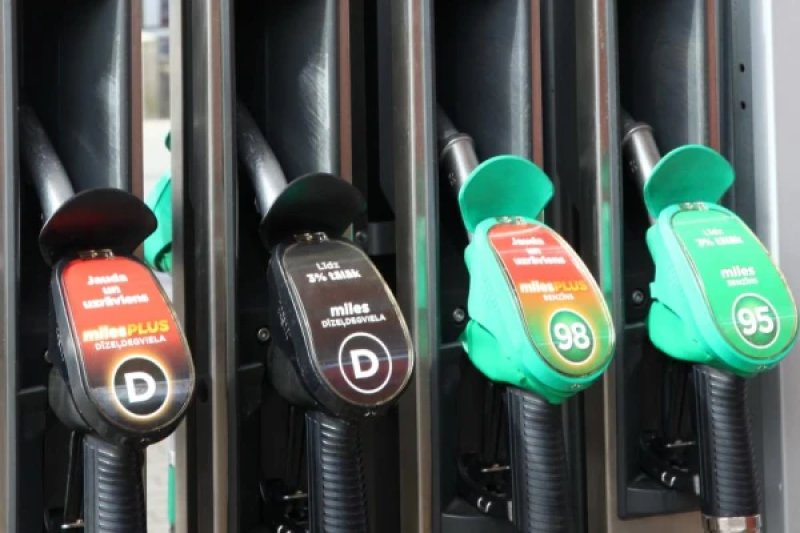
Riekstins stated that during his last trip to Latvia, he refueled at the border because fuel was cheaper there. He pointed out that in Ukraine, refueling for 100 hryvnias costs about two euros. Comparing this price with the incomes of Ukrainian residents, he believes that fuel already creates a very significant financial burden. Riekstins emphasized that the incomes of Ukrainian residents are significantly lower than in Latvia. He mentioned that a monthly salary ranging from 15,000 to 18,000 hryvnias is a common income level, while 20,000 hryvnias, or about 400 euros, is already considered a relatively good salary. In this situation, a fuel price of around two euros per liter becomes particularly heavy. In his opinion, in Latvia, three euros per liter of fuel would be a serious problem; however, the example of Ukraine shows how differently high fuel prices affect people depending on their incomes and daily conditions. The situation can be especially difficult for Ukrainian farmers who need to cultivate vast agricultural lands. Riekstins acknowledged that he does not have direct experience communicating with the farmers themselves, but he judged the situation based on the stories of his comrades. He also pointed out that in Ukraine, there may not be such support mechanisms for agriculture as in Latvia. High fuel prices complicate not only field cultivation but also the production and export of grain. As fuel costs rise, it becomes increasingly difficult for farmers to provide competitive prices for their products. Ukrainian farmers also have to consider the risks posed by the war. When heading to the fields, it is impossible to be sure that there are no mines in the area or that a drone will not attack. Thus, fuel costs are just one of several problems faced in the agricultural sector.
