

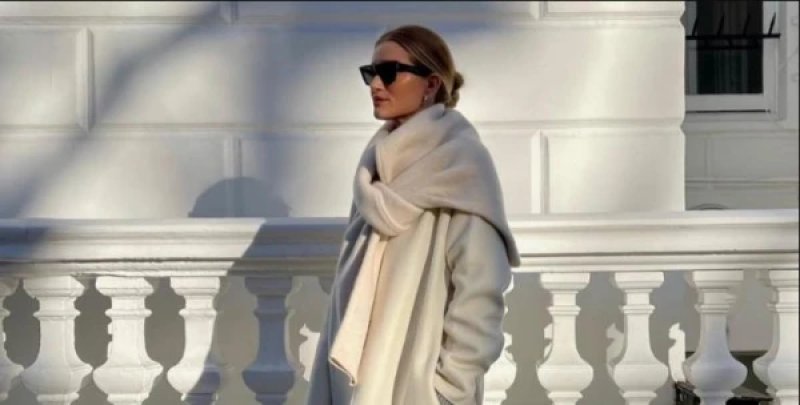
The fashion for coats has its roots in the military. The warm overcoat, originally intended for soldiers, soon became popular among civilians. However, the concept of warm outerwear made of wool appeared much earlier. Initially, these were cloaks with hoods, mantles, and what is now called a cape — a loose bell-shaped coat without sleeves.Over time, coats have undergone changes, and modernity has made its adjustments. In different eras, zippered coats were popular, while classic models have strayed from traditional neutral colors such as gray, green, and beige. Now, one can find classic-cut coats in a wide variety of colors, as successfully demonstrated by Kate Middleton, who has amassed an impressive collection of bright and cozy coats.As for raincoats, there have also been no revolutionary changes. Fashionistas striving to stay on trend choose classic trench coats, whose design has remained unchanged for many years, parkas, which came from the wardrobes of Arctic explorers but in a lighter version, and loose-fitting raincoats that are convenient to throw over a sweater in rainy and cold weather.10 Outerwear Options That Will Always Be RelevantFocus has selected classic coat and raincoat styles that will never go out of fashion. An example is the new King of the United Kingdom. Prince Charles, now King Charles III, has worn his favorite double-breasted coats for years, having inherited some from his uncle. And they still look relevant!Double-Breasted CoatThis style came into civilian fashion from military times. There are oversized and fitted models, but this is the type of coat preferred by Prince, and now King Charles, as well as most English gentlemen. Ladies also often choose this timeless model. Many fashionistas prefer men's models, pairing the heavy fabric of the coat with wide trousers, stiletto boots, and feminine skirts. A double-breasted coat can be of any length, but today, maxi models — coats that nearly reach the floor — are in trend. However, it is worth noting that high-quality fabric can be heavy.PeacoatAnother military style, this time from sailors' wardrobes. In 1848, the peacoat was made from green wool, later it became dark blue. Designers appreciated its concise and austere silhouette, and since then, the peacoat has remained in trend. It is produced in various variations and colors. The peacoat can be recognized by its notched collar, double row of buttons, and warm lining. It looks great with knitted dresses and light maxi skirts.Duffle CoatThe most recognizable coat model that has not changed for decades. The best duffle coats are made by Burberry. In Britain, duffle coats are named after British Field Marshal Bernard Montgomery, a World War II hero nicknamed Monty. The "Monty coat" is the most English coat among other options. For the best and most expensive models, wooden buttons are sewn on, and the loops are made of jute; horn buttons and leather loops can also be found.Notably, it is the dark blue duffle coats that are school uniforms in Japan. A duffle coat should be worn with loafers, Chelsea boots, mini skirts, and slim trousers.Wrap Coat or Shawl CoatThis style came into European fashion from the East and is based on traditional robes. The design is simple and elegant: a loose coat of straight cut without fasteners, but with a belt that can be tied or worn open. It pairs well with turtleneck sweaters and roll necks. This style was popularized by the fashion house Max Mara in 1981, showcasing a fresh take on the classic model on the runway.Cocoon Coat or Bubble CoatThis style was introduced by fashion revolutionary Cristóbal Balenciaga, who invented the bubble dress and then the bubble coat. The oversized silhouette that conceals the figure was favored by fashionistas decades ago and is now back in peak popularity.OvercoatThe overcoat experienced an unprecedented rise in popularity thanks to the British series "Sherlock." The austere Sherlock Holmes, played by Benedict Cumberbatch, flaunted a luxurious English coat, the Milford by Belstaff, made from Irish tweed with waterproof fibers — perfect for rainy London. The company brought the model back to the shelves; the original coat costs over £1200, but it can be worn for practically forever. More affordable models are also produced. This is essentially a variation on the double-breasted coat, but with a distinct military style emphasis.The perfect overcoat pairs well with leather trousers, jeans, chunky platform boots, and English Chelsea boots. The ideal overcoat features a back strap at the waist, a more fitted cut, patch pockets, and epaulettes, and may sometimes have a belt and large buttons.Crombie CoatThis is a short single-breasted coat with a notched collar and hidden fastenings. Crombie coats are favored by business style enthusiasts. It was named in 1805 after the owner of a wool factory — Scotsman John Crombie, who was the first to start making such coats.They were typically chosen by politicians and members of the aristocracy, so the Crombie coat acquired an aristocratic and business-like tone.CapeThe cape coat is the most vintage of all coat styles. Essentially, it is a modified medieval cloak and a crusader's mantle. Capes came into fashion in the 19th century, then were forgotten until the mid-1960s, and later remained in the wardrobes of elderly English ladies and Queen Elizabeth, who loved to wear capes during walks in the Scottish hills. In the 21st century, capes are back in trend thanks to the fashion house Givenchy. This model is paired with wide trousers, dresses, and high boots, but the cape is primarily a comfortable and stylish alternative to jackets and an excellent way to create a romantic look.Trench CoatThe trench coat — literally "trench coat." This style of coat came from the trenches of World War I. The trend for waterproof trench coats was introduced by Thomas Burberry, the founder of the Burberry brand, in 1856, but the Aquascutum brand claims that this credit belongs to them, as they began producing trench coats six years earlier. ParkasOriginally, fur-lined parkas were created for travelers, then for military pilots. The long hems could be lifted, tied at the waist, and additionally insulated at the lower back. They were worn by indigenous peoples of the North, as well as anoraks (coats of a similar style but worn over the head). Lightweight parkas became popular among youth as an alternative to long coats. They are less formal than trench coats and pair perfectly with jeans and sneakers.Leather RaincoatPopular in the 1990s, leather raincoats have become relevant again in the 21st century due to the trend towards sustainability. They are now made from eco-leather and pair well with stiletto boots and dresses. A bit of aggressiveness in an outfit is always relevant. Moreover, a leather raincoat is the perfect model for those who do not know how to combine clothing elements. If you are unsure of what to wear, a leather raincoat will help you solve this dilemma with the best outcome for your look.
