

 Foto: BB.LV / супермарше
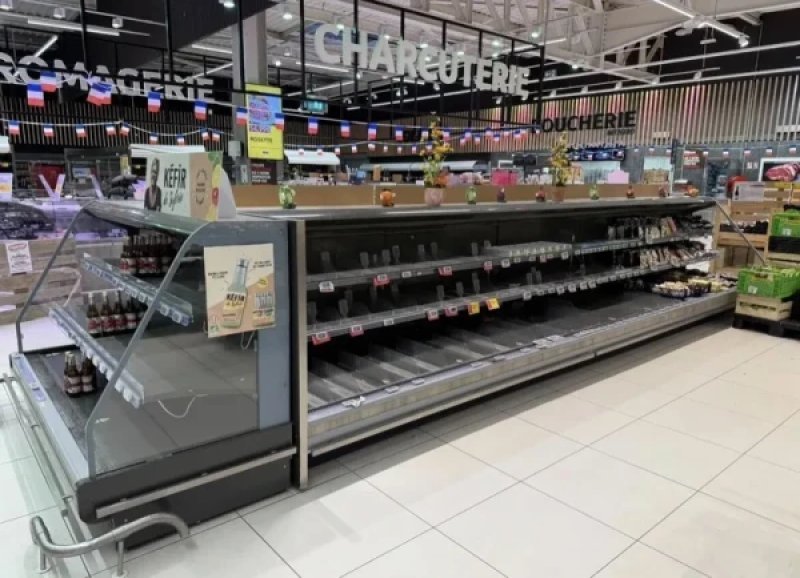
A massive failure occurred on the night of Sunday to Monday, October 12. In the morning, employees of hundreds of French supermarkets discovered that the refrigeration equipment had stopped functioning properly, and meat, vegetables, dairy products, and frozen goods could no longer be sold. According to Reuters, Bloomberg, and French media, the cyberattack affected stores of major chains Intermarché, Netto, Coopérative U, Carrefour, E.Leclerc, and Monoprix. In some retail locations, it was necessary to completely empty the refrigerated displays, withdraw products from sale, and send them for destruction. ## ## How Hackers Managed to Heat Refrigerators to 50 Degrees The peculiarity of this attack is that the perpetrators did not attempt to steal money or personal data from customers. Their target was the cooling system itself. Many modern refrigeration units in supermarkets are managed by electronic controllers. They regulate temperature, monitor equipment operation, and initiate automatic defrosting, which is necessary for removing ice buildup. It is this function that hackers reportedly exploited, according to preliminary investigation data. Gaining remote access to the controllers of the Danish company Danfoss, the perpetrators altered the defrosting system settings. As Le Monde discovered, the duration of one of the cycles was increased from one to eight hours. The temperature reached +50 degrees. In some stores, the equipment operated in this mode for several consecutive hours. Products were defrosted, heated, and became unfit for sale. In some cases, additional technical damage occurred, and French media even reported isolated fires. ## ## How Many Stores Were Affected The exact number of retail locations affected by the attack is still being clarified. According to French media reports, the group Les Mousquetaires, which includes the Intermarché and Netto chains, suffered the most severe impact. Various sources estimate the number of affected stores in this group to be between 150 and approximately 300. Additionally, around a hundred stores of Coopérative U, dozens of Carrefour and Monoprix supermarkets, as well as individual E.Leclerc locations, have been reported. Thus, it concerns several hundred stores across France. In some of them, employees discovered the consequences of the attack only in the morning when they arrived at work. Le Monde cites the example of an Intermarché supermarket in Gradignan, where the malfunction was noticed after water appeared in the storage area. The temperature in the refrigeration chamber rose so high that the fire suppression system was activated. Stores had to throw away entire batches of perishable goods and frozen products. The total damage is estimated in millions of euros, although the final amount is still unknown. ## ## Why the Systems Were Vulnerable At the center of the story is the Danish company Danfoss, which produces equipment and software for managing refrigeration units. A company representative told Bloomberg and Le Monde that most of the affected controllers belong to outdated models that no longer receive software and security updates. According to the manufacturer, the company has long recommended that equipment owners timely install new software versions and replace outdated devices. As Le Monde notes, some vulnerabilities in Danfoss systems were known earlier. The company issued warnings and patches, but not all systems used in stores were upgraded. This allowed the perpetrators to exploit a digital vulnerability to inflict real physical damage. ## ## Who Is Behind the Attack French law enforcement agencies have launched an investigation. Cybersecurity specialists have also joined the inquiry. At this point, it is unknown who exactly organized the attack and what goals the perpetrators pursued. No one has publicly claimed responsibility for the incident. The case in France demonstrated how serious the consequences of cyberattacks on equipment connected to computer networks can be. To cause multimillion-euro damage, the criminals only needed to change the temperature settings and the duration of defrosting. Moreover, the consequences affected not only the stores themselves but also food supplies: a huge quantity of products that were intended for sale just the day before had to be destroyed.
