

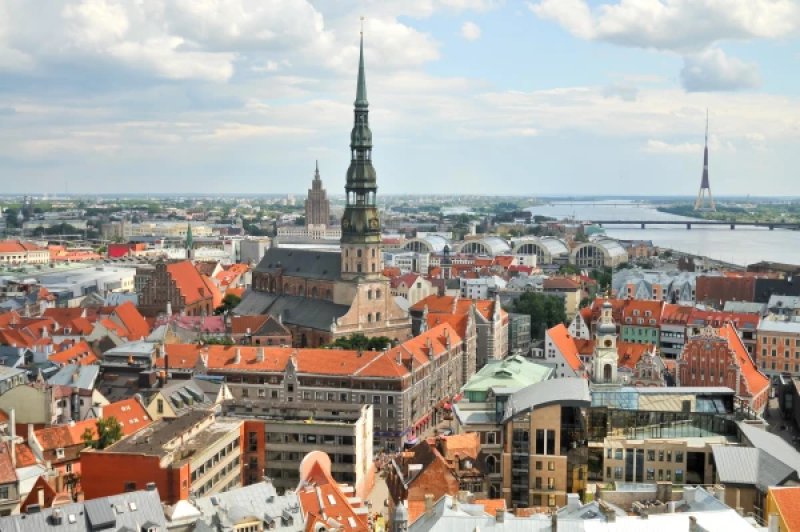
 Foto: BB.LV / Рига
According to a survey conducted by Latvijas Fakti, in 2026, the quality of urban environment index in Riga reached 72 points out of a possible 100. This is the highest result since measurements began in 2019. Compared to last year, the indicator increased by 2.9 points. Positive changes were recorded in three-quarters of the assessed areas. ### Mezaparks came out on top The highest quality of life index among the districts of Riga was recorded in Mezaparks — 84.2 points. Following closely are Dreilini, Milgravis, Bierini, Bergi, Chiekurkalns, Skansete, Tornakalns, Imanta, Dzirciems, the Old Town, and Brasa. In compiling the index, researchers considered residents' responses to questions about the situation in their districts across 16 areas. Safety, the environment, transportation, recreational opportunities, and other components of everyday life were evaluated. Compared to the 2025 study, most indicators improved. ### 85% of Riga residents are satisfied with life in the capital Despite numerous complaints about urban problems, the overwhelming majority of respondents rated life and work in Riga positively. 85% of respondents expressed satisfaction. At the same time, 71% of residents feel a sense of belonging to the district they live in, while 69% feel a connection to Riga as a whole. The assessment of the city government’s work has not changed significantly since 2021. Edgars Bergholcs, the Chairman of the City Development Committee of the Riga City Council, considers the study results positive. According to him, residents are increasingly rating living conditions in the capital positively, which is confirmed by the record quality of urban environment index over the past seven years. He particularly noted the significant increase in satisfaction with business activity in the districts: over the year, the corresponding indicator increased by 10 percentage points. At the same time, Bergholcs acknowledged that some problems require more active action from the government. First and foremost, these include housing availability, building renovation, and the improvement of internal courtyards. ### Street repairs noticed, but transportation still irritates One of the most noticeable improvements residents mentioned was the condition of transportation infrastructure and street repairs. Positive changes in this area were noted by 60% of survey participants. Riga residents also highlighted the development of cycling infrastructure, the improvement of parks and green spaces, urban greening, the organization of events and holidays, and the construction and repair of bridges and overpasses. However, the transportation situation remains one of the main problems of the capital. Despite the work done, 55% of respondents believe that the quality of transportation infrastructure still requires the attention of city authorities. At the same time, the condition of sidewalks, pedestrian paths, and crossings has been rated better by residents. 67% of Riga residents are satisfied with them — 5 percentage points more than a year ago. Among cyclists, 72% rate the mobility options in the city positively. Over the year, this figure increased by 8 percentage points. The number of those who regularly use bicycles has also increased. 23% of respondents ride at least once a week — 4 percentage points more than the previous year. ### Riga residents feel safer One of the highest ratings in the study was given to personal safety and housing security. 85% of survey participants are satisfied with these aspects. 79% of Riga residents positively assess safety in their immediate area. Over the year, this indicator increased by 6 percentage points. Environmental ratings have also improved. 82% of residents are satisfied with nighttime noise levels, which is 8 percentage points more than a year ago. 77% of respondents are satisfied with daytime noise levels — 5 percentage points more. 80% of respondents positively assess the cleanliness of the area and air quality. ### Parks and green spaces — among the main advantages of Riga The quantity and quality of parks, squares, and green spaces satisfy 84% of residents. Compared to last year, this indicator increased by 4 percentage points. 76% of respondents positively evaluate the improvement of public spaces for recreation. The same number of Riga residents are satisfied with the convenience of these areas for everyday needs. Thus, green spaces and public areas remain some of the highest-rated components of the urban environment. ### Sports and education have become more accessible Ratings for opportunities for additional education, creativity, and sports have improved. 81% of respondents are satisfied with opportunities for additional education and amateur creativity in educational institutions — 6 percentage points more than a year ago. 74% of residents positively assess the availability of municipal general education. 75% of respondents are satisfied with opportunities for sports and active recreation in their district. Over the year, this indicator increased by 7 percentage points. ### Car or public transport: how Riga residents travel Despite the development of cycling infrastructure, personal cars and public transport remain the main means of transportation in the capital. 61% of survey participants use a car at least once a week. For 42% of Riga residents, a car is the primary means of transportation on weekdays. 54% of residents use public transport at least once a week, and for 41%, it remains the main way to get around the city on weekdays. More than three-quarters of respondents positively assess the availability and quality of public transport. However, 8% of respondents believe that the government needs to primarily improve routes, schedules, and nighttime transport services. ### Main problems — housing, parking, and courtyards Despite the overall increase in satisfaction with the urban environment, housing issues remain among the most pressing. Residents still rate the availability and quality of housing low. Among the problems requiring solutions are the lack of affordable housing, insufficient improvement of internal courtyards, a shortage of parking spaces, as well as the need for renovation and insulation of apartment buildings. These areas, along with transportation infrastructure, require further work from city authorities. ### Riga residents want more influence on the city's development The most noticeable growth over the year was recorded in the assessment of business activity in the districts. This indicator increased by 10 percentage points and reached 58%. Ratings for the availability of information and opportunities to participate in urban processes have also improved. Both indicators reached their highest values since 2019. Residents have rated their ability to participate in the planning of the capital's development and decision-making higher. Moreover, more and more Riga residents are getting involved in the public life of their districts. The survey results show that Riga residents have significantly increased their ratings of the quality of the urban environment. Safety, parks, public spaces, and opportunities for active recreation are perceived particularly positively. However, a high overall index does not mean that all problems have been solved. Housing availability, the condition of courtyards, a lack of parking spaces, and the quality of transportation infrastructure still cause dissatisfaction. Mezaparks topped the quality of life ranking, but the main question for city authorities now is how to make the other districts of Riga equally comfortable.
