

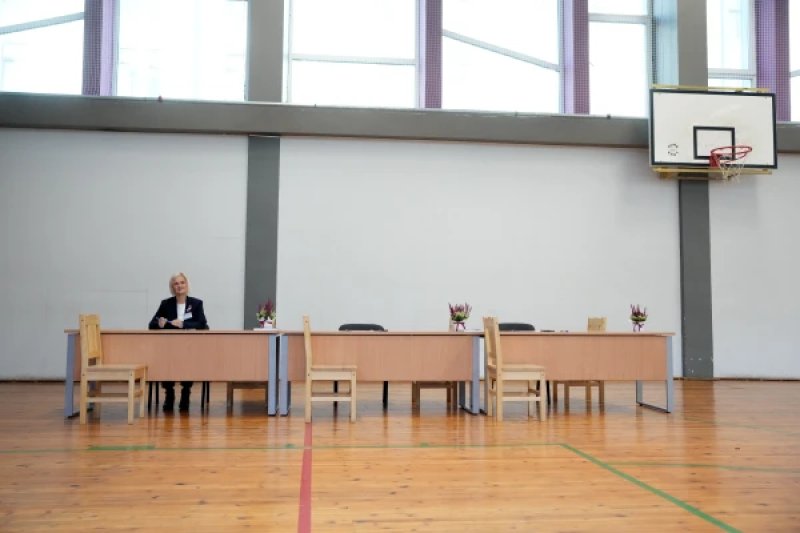
 Foto: BB.LV / выборы
In the run-up to the Saeima elections, pro-Kremlin information channels actively spread calls to abstain from voting and messages questioning the legitimacy of the electoral process. Predominantly, well-known propaganda theses about Latvia were used, adapted to the electoral agenda. These conclusions were reached by researchers from the Center for Eastern European Policy Studies, who, together with the information space monitoring project DisInt.ai, studied the dissemination of such messages on social media, as reported by LSM.lv. The monitoring lasted from early July to October 4 and covered 502 public channels and accounts on TikTok, YouTube, Facebook, Telegram, and X. One of the most notable results was a fourfold increase in claims about the illegitimacy of the elections compared to the previous Saeima election campaign. Researchers note that electoral campaigns are particularly vulnerable to attempts at external information influence. During this period, messages aimed at reducing trust in state institutions can directly affect citizens' attitudes toward participating in voting. At the same time, the content of the disseminated narratives has changed little. The basis still consisted of claims that Latvia allegedly cannot exist without Russia, lacks real sovereignty, persecutes Russian-speaking residents, provokes conflict with Moscow, and glorifies Nazism. What has changed is the way these theses are presented. During the election campaign, they were linked to the possible consequences of the victory of parties that do not suit the Kremlin. Thus, familiar messages about Latvia were used not only to form a negative attitude toward the state but also in the context of a specific political choice. The study also allowed for the establishment of how such information was disseminated. The core of the pro-Kremlin sources consisted of about 12 Telegram channels that regularly republished each other's materials. However, a significant part of the dissemination occurred outside these channels. According to researchers, in four out of five cases, pro-Kremlin theses were found in user comments, primarily under publications by Latvian politicians, political parties, and media outlets. This means that such messages reached the audience not only through specialized information resources. They appeared in discussions of ordinary news and political publications, where they could be seen by users not subscribed to pro-Kremlin channels. One of the unexpected results of the study was the activity of the account "Grani Svobody," associated with Belarus. Elina Vroblevska, Deputy Director and Senior Researcher at the Center for Eastern European Policy Studies, reported that Roman Samul and former Latvian politician Andrei Mamykhin are involved in creating its materials. "It turned out that one of the most active is the Belarus-based account 'Grani Svobody,' where Roman Samul and our well-known Andrei Mamykhin work. It was a surprise for us that they are very actively creating this content," Vroblevska reported. According to her, the materials of this account are particularly saturated with pro-Kremlin statements about Latvia. Moreover, publications are created not only in Russian but also in Latvian. "Their content is extremely rich in pro-Kremlin theses regarding Latvia. They create materials in Latvian, so it cannot be said that the Russian-speaking and Latvian-speaking audiences are somehow separated," the researcher emphasized. This observation shows that the dissemination of pro-Kremlin messages is not limited exclusively to the Russian-speaking information space. Such content is also aimed at the Latvian-speaking audience. Overall, the study revealed not so much the emergence of new propaganda themes but rather a change in the methods of their dissemination. Before the elections, familiar narratives were tied to the electoral campaign, and comments on social media became one of the main channels for their promotion. At the same time, the study describes the nature and scale of the dissemination of messages but does not allow for determining how much they influenced voters' decisions.
