

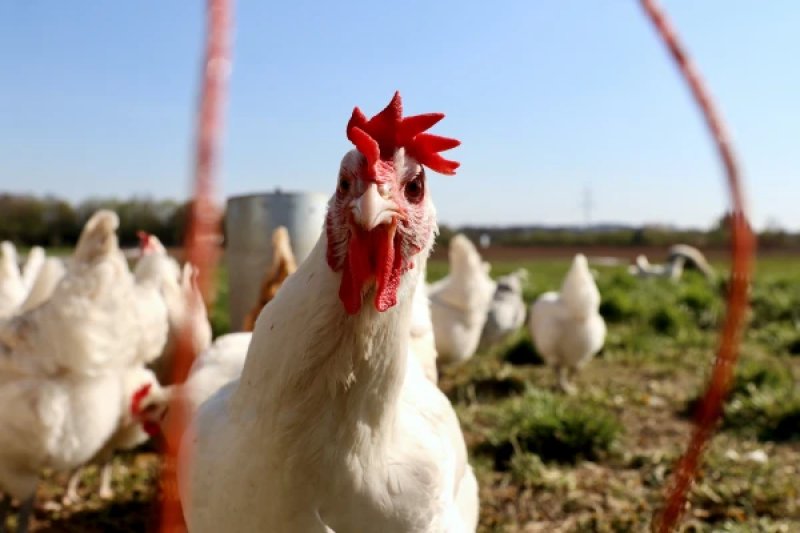
 Foto: BB.LV / курица
A live chicken requires feed, electricity, ventilation, heating, water, and waste disposal. Moreover, it consumes oxygen and emits CO₂. A real disaster for the balance of the green economy! But a slaughtered chicken needs nothing more. It doesn’t eat, doesn’t run, and doesn’t require a salary. You just need to find the right approach. First, the carcass is thoroughly massaged. Then it is introduced to a special marinade, which may include salt, water, and substances that help retain moisture, along with spices. Using appropriate technology, the marinade is injected into the meat, after which the chicken is smoked. And here begins the economic miracle! A chicken that weighed only one kilogram while alive can, after appropriate processing and smoking, theoretically turn into a success story weighing 1.6 kilograms during a promotional campaign. Of course, these figures are satirical and not a statement about the products of any specific manufacturer. In real production, the result depends on technology, and during smoking, the meat can also lose water. But just imagine the prospects that open up for the green future of Europe! In Brussels, a working group is urgently convened. A directive is being developed for the full utilization of the potential of the circular economy concerning slaughtered broilers. The expert group of the European Commission concludes: if the chicken cannot be grown faster, its efficiency after slaughter must be increased. The main principles of the new policy are simple: - A live chicken must reduce its carbon footprint. - The marinade must increase added value. - The smoker must ensure sustainable weight transformation. - The promotional price must be attractive enough that the buyer does not ask unnecessary questions. A new sustainability indicator is introduced — the amount of CO₂ per kilogram of sold chicken. The heavier the product, the better the emissions statistics per kilogram look. At least until someone starts counting how much of that kilogram is actual meat and how much is added ingredients. But such questions are deemed insufficiently constructive. They can undermine public trust in the European green transformation. New terminology also appears on store shelves. Now it’s not just smoked chicken. It’s a climate-neutral unit of protein turnover with optimized moisture retention. ## ## Price? Promotional! And the buyer is happy. After all, they bought more kilograms for less money. Aren’t kilograms still kilograms? Orwell would probably smile. In his world, truth depended on who controlled the language. In our world, it increasingly depends on who controls the label, advertising, and reporting table. Doublethink in the grocery department: we buy meat, but we also pay for what has been added to it. We talk about a healthy lifestyle, but we don’t always read carefully what we put on our table. We fight for every gram of CO₂, yet we prefer not to discuss how the weight of the product is formed. And if someone does ask why a slaughtered chicken becomes heavier, the answer is already prepared. This is European green policy — even after death, you still have the opportunity to grow. One can only hope that one day, on the label, in letters as large as the promotional price, it will say what the buyer really wants to know: how much the meat costs, how much the added ingredients cost, and how much is beautifully packaged green wonder.
