

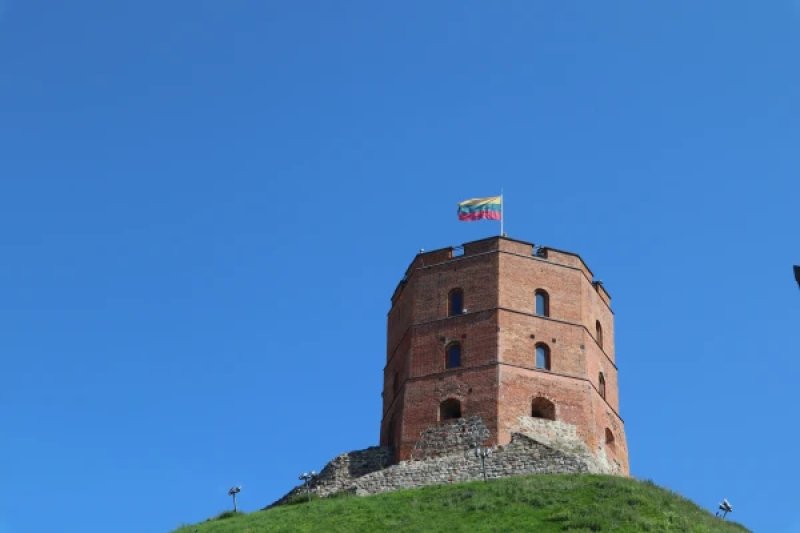
 Foto: BB.LV / Башня Гедиминаса
At the suggestion of the Ministry of Foreign Affairs of Lithuania, the sanctions against the oligarchs will remain in effect until the end of 2027. As previously reported by the BNS agency, they were added to the list of undesirable persons in Lithuania at the end of September. Vilnius made this decision after the European Union (EU) removed them from its 'black lists'. Lithuania did not approve of their removal and abstained from voting on this decision. After the EU lifted the sanctions, the freezing of their assets at the Community level ceased to be in effect in Lithuania. "It should be emphasized that Lithuania consistently opposes any exceptions from the EU sanctions lists for political reasons," the Ministry of Foreign Affairs stated. According to the ministry, Latvia and Estonia have already imposed national sanctions on these individuals. European sanctions against Usmanov and Friedman were lifted at the request of several countries. Officials in Paris cited 'national security' interests as the motive for the request to lift sanctions on Usmanov, but declined to publicly disclose details. According to the Financial Times, this request may have been linked to a potential deal for the release of French citizens held in Azerbaijan. Luxembourg, according to diplomats, demanded the lifting of sanctions on Friedman because the oligarch sued the country for €15 billion in damages for the freezing of his assets under EU sanctions. According to the Latvian government, Usmanov is an influential Russian businessman connected to regime leader Vladimir Putin, and he is also the main shareholder of USM Holdings. Friedman is also noted as a businessman close to Russian President Putin and the main shareholder of Alfa Group. By removing the mentioned oligarchs from the 'black lists', EU member states agreed at the end of September to extend sanctions against nearly 3,000 individuals and entities linked to Russia's aggression for another three years.
