

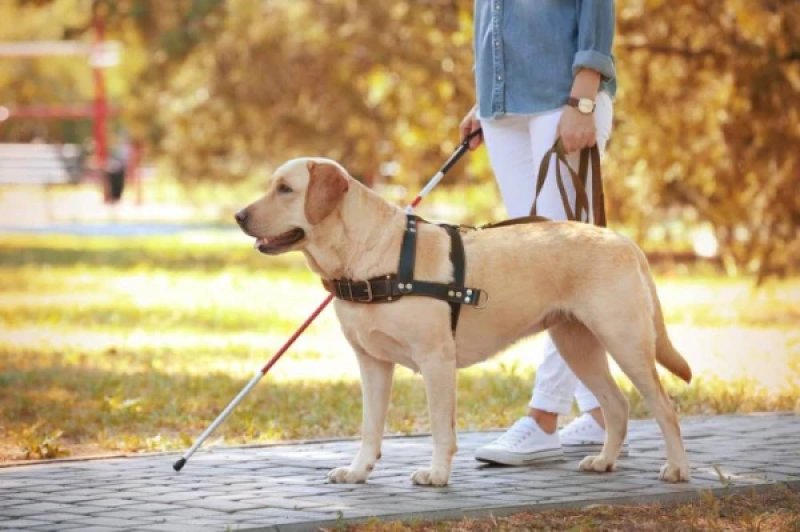
 Foto: BB.LV / собака-поводырь
At the beginning of the meeting, Riga Mayor Viesturs Kleinbergs announced that the municipality had received objections to the project from several animal protection organizations. He proposed to exclude the issue from the agenda, but the deputies voted against this proposal. Opposition deputies criticized the project. They pointed out the insufficient number of dog walking areas in the city and the ineffective collection of the municipal fee for pet ownership. At the same time, some opposition deputies supported the abolition of the fee, as this would allow residents to reduce their expenses. Deputy Julia Stepanenko stated that no one intends to comply with the new rules. After the vote on the new rules did not reach the necessary quorum, Riga Deputy Mayor Edwards Ratnieks announced that the issue would not be considered further at this council meeting. According to the project, outside of specialized areas, dogs will only be allowed to be walked on a leash. The municipality explains this as a necessity to ensure the safety of people, cleanliness on city streets, and compliance with public order. A leash allows for control of the animal and reduces the risk of it attacking a person, causing a traffic accident, getting into conflict with other animals, or violating public order. At the same time, dogs on a leash will not be allowed in children's playgrounds, sports grounds of educational institutions, and official city beaches during the swimming season. The ban will also apply in places where public events are held, if established by the organizer, and in other places as provided by regulations. An exception will be made for assistance dogs, guide dogs, and therapy dogs. The project also provides for the abolition of the municipal fee for pet ownership in Riga. The municipality explains this by stating that the income from the fee is not significant enough to justify the costs of its collection. The new rules are intended to establish order in the keeping of pets and the responsibility of their owners, prevent uncontrolled movement of animals, and ensure oversight of their registration. At the request of a municipal police officer, the dog owner will be required to present the animal for microchip verification and keep it while the officer reads the identification number. If the owner refuses to comply with this requirement, the police may engage a contractor responsible for capturing stray animals. The capture of stray animals and animals in helpless conditions will be organized by a contractor working under a contract with the Department of Housing and Environment of the Riga municipality. Owners will have to reimburse the municipality for the costs of capturing the animal and transporting it, veterinary assistance, and shelter maintenance. The amount will be calculated based on the information in the animal's card and the rates specified in the contract between the municipality and the contractor. The municipal police will monitor compliance with the requirements for the marking and registration of pets. In case of violations, they will be able to issue an order to comply with the established requirements.
