

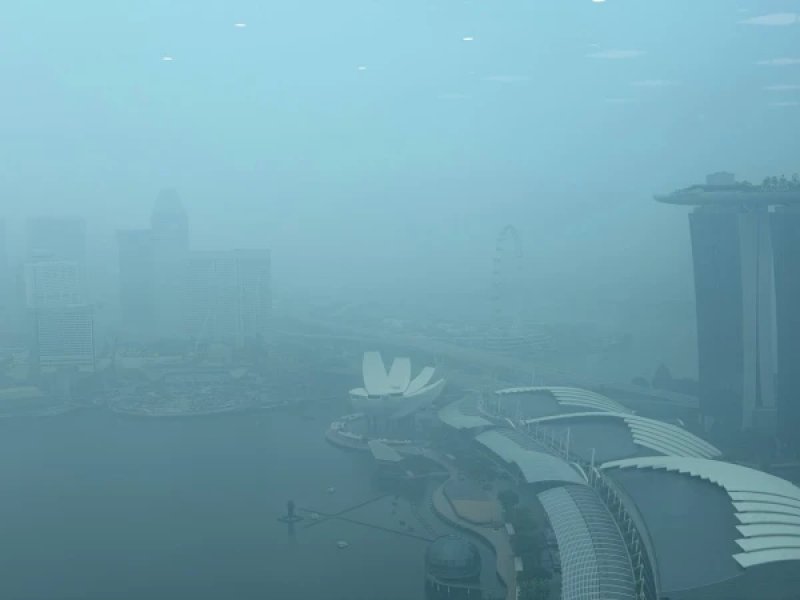
 Foto: BB.LV / Дым в Сингапуре
Toxic smoke from ongoing fires in Indonesia has spread to neighboring countries and has been disrupting the daily lives of millions of Southeast Asians for several months. The situation has forced regional monitoring services to declare the highest level of alert, reports the LETA agency citing AFP. Indonesia, Malaysia, Singapore, and East Timor are suffering from severe smoke pollution. In several areas, schools are being closed, outdoor activities are being restricted, and medical professionals are noting an increase in respiratory illnesses. ## What the Highest Alert Level Means The specialized meteorological center of ASEAN (ASMC), which monitors fires and smoke spread in the region, has declared a third level of alert for the southern part of Southeast Asia. This is the maximum level in the current alert system. It is introduced when there is a high risk of severe transboundary smoke pollution, and extensive areas remain covered by smoke of moderate or high density for at least two consecutive days. According to ASMC, such an alert has already been declared twice since the beginning of the year. The current situation is related to fires in Indonesia, the smoke from which crosses national borders and deteriorates air quality in neighboring countries. ## Indonesia Attempts to Dissipate Smoke with Dry Ice The situation is particularly difficult on the island of Sumatra. On Saturday, Indonesia's National Disaster Mitigation Agency reported the use of dry ice in the vicinity of one of the main airports in South Sumatra province. 2.4 tons of dry ice were sprayed from an aircraft as part of efforts to combat the smoke. > "Smoke not only reduces visibility and disrupts air traffic but also affects public health," the agency warned. The problem affects not only aviation: prolonged air pollution creates additional risks for people with respiratory diseases. ## Singapore Plans to File Complaints Against Seven Companies Singaporean authorities announced that they will send official warnings to seven Indonesian companies believed to be responsible for the fires. These primarily involve companies related to the supply of timber for pulp production and lumber manufacturing in Sumatra. Among the named companies are Bumi Andalas Permai, Bumi Mekar Hijau, and SBA Wood Industries. Singapore intends to demand explanations regarding the fires, the consequences of which are felt beyond Indonesia. However, this is currently about complaints from the authorities, not about established court liability for the companies. ## The Issue Will Be Discussed Ahead of the ASEAN Summit Severe smoke pollution has become a regional problem that requires coordinated actions from several states. A representative of the Philippine Department of Foreign Affairs for ASEAN, Dominic Xavier Imperial, stated that the situation will be discussed at upcoming meetings in preparation for the organization's summit. The ASEAN summit is scheduled to take place in November in Manila. The issue of transboundary smoke spread is particularly important for countries in the region, as fires in one state can deteriorate air quality and disrupt transportation in neighboring countries.
