

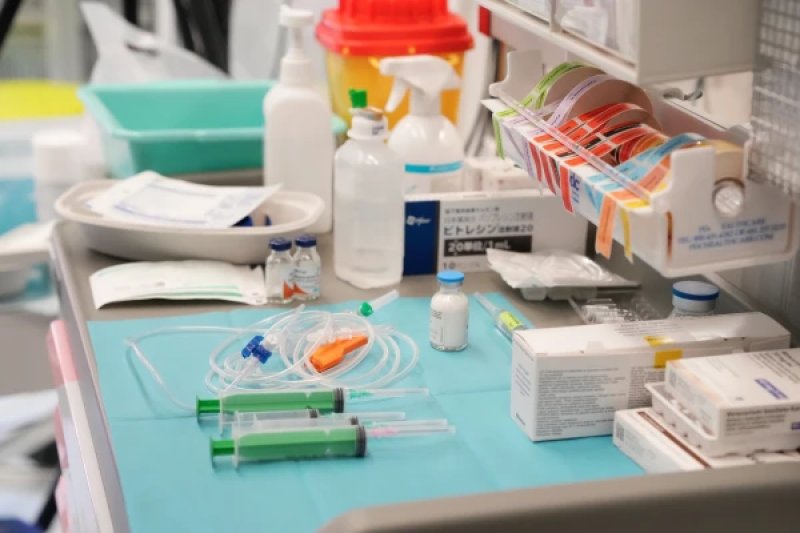
 Foto: BB.LV / лекарства
Latvia will create a system of reserves for essential medications to ensure their availability even during serious supply disruptions, power outages, or communication failures. This week, the government approved the procedure for forming and using such reserves for the needs of the population, reports [TV3 News](https://tv3.lv/zinas/latvija/sabiedriba/latvija-veidos-kritisko-zalu-rezerves-lidz-2028-gadam-ieguldis-devinus-miljonus-eiro/). The issue was discussed at the "First Line of Defense" conference in Rezekne, where representatives from the medical sector, government institutions, and crisis management specialists spoke about the healthcare system's readiness for emergencies. The choice of the conference venue was not accidental: for the eastern border region of Latvia, issues of security and uninterrupted medical care are of particular importance. Liāne Cīpule, Director of the Emergency Medical Service, emphasized that the approach to crisis planning has significantly changed. It is now necessary not only to ensure the readiness of services for the first days of an emergency but also to plan their operations for weeks and months in advance. "We must be ready from the first minute as soon as the signal about a possible crisis comes in. Right now, we are discussing what we will do in five days, what we will do in a month," Cīpule noted. According to her, one of the main challenges remains the lack of resources — financial, material, and human. Participants at the conference paid special attention to the supply of medications. Even if the necessary drugs are physically present in the country, serious problems may arise in delivering them to pharmacies and directly to patients during a crisis. This is evidenced by the experience of Ukraine. Andriy Metelytskyi, a representative of a Ukrainian pharmaceutical company who spoke at the conference remotely, talked about the dangers of excessive concentration of drug stocks in large warehouses. If a significant portion of medications is stored in just a few logistics centers, the destruction of one of them can disrupt the supply to entire regions. As an example of organizing state reserves, the conference considered the experience of Estonia. The neighboring country has already formed reserves of approximately 200 types of medications in volumes corresponding to about a month's consumption. Additionally, there are separate reserves of veterinary medications for agricultural animals, which is important for ensuring food security. Ando Lepiman, head of the Estonian State Reserves Agency, emphasized that it is not enough just to purchase and store medications. It is equally important to ensure their delivery to the population when usual logistics routes are disrupted. "We are not only creating stocks of medications but also ensuring that people can receive these medications at pharmacies. Therefore, we assess the entire supply chain of medications and look for ways to ensure its operation under various crisis conditions," Lepiman explained. In Latvia, the reserve system is still in the process of being established. The list of critically important medications approved by the government includes drugs for the treatment of various diseases, including diabetes, cardiovascular, and oncological diseases. Jānis Libkēns, a board member of the Latvian National Association of Pharmaceutical Supply, noted that the country is gradually moving towards a model already in place in Estonia. However, the current stocks of medications available to the population through pharmacies remain limited. "The ministry has instructed hospitals to maintain three-month supplies, but I would say that right now the medications that people can buy in pharmacies would last at best for two weeks," Libkēns stated. Thus, the three-month reserves planned for hospitals do not mean that similar stocks are already available in the pharmacy network. Contracts for the formation of state reserves of critically important medications are planned to be concluded by the end of 2026. Nine million euros will be allocated from the Ministry of Defense budget over three years to create the system — three million annually from 2026 to 2028. The National Health Service and wholesale suppliers of medications will participate in the formation and management of the reserves. The main task of the new system is to ensure that residents have access to necessary medications even in the event of a prolonged crisis when normal supply mechanisms may be disrupted.
