

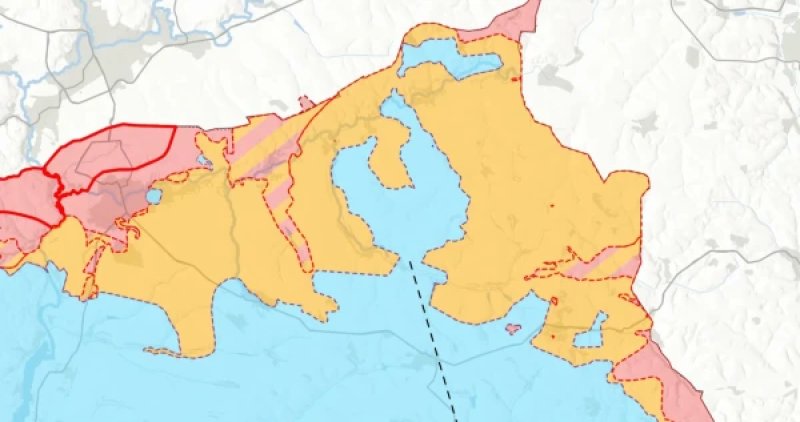
 Foto: BB.LV / карта ISW
The Russian leadership continues to disseminate significantly exaggerated information about the advancement of its army in Ukraine, creating the impression of large-scale military successes that do not correspond to the real situation on the front. This is stated in the [report by the American Institute for the Study of War (ISW)](https://understandingwar.org/research/russia-ukraine/russian-offensive-campaign-assessment-october-16-2026). The analysis was prompted by statements from Russian President Vladimir Putin, Chief of the General Staff Valery Gerasimov, and other high-ranking Russian military officials during Putin's visit to the auxiliary command post of the Joint Group of Forces. According to analysts, claims of a confident advance by the Russian army in several directions are not supported by available data. ## 6500 square kilometers versus 100 During a meeting with military command, Putin stated that since the beginning of 2026, Russian troops have captured about 6500 square kilometers of Ukrainian territory and 310 settlements. However, according to ISW's assessment, based on available confirmations, since January 1, the Russian army has achieved a territorial gain of only about 100 square kilometers and occupied 69 settlements. Thus, the area of territory claimed by Putin to have been captured is approximately 65 times greater than the ISW estimate. The Chief of the Russian General Staff Valery Gerasimov also presented a significantly more favorable picture for Moscow. He claimed that since September 1, Russian troops have captured over 1800 square kilometers and 92 settlements. However, ISW analysts reached the opposite conclusion: during this period, the Russian army incurred net territorial losses of 122 square kilometers. This means that the area of lost territories exceeded the area gained. According to the institute's estimate, since the beginning of October, Russian troops have been losing an average of about seven square kilometers of territory daily. ## Claims of encirclement of Ukrainian troops have not been confirmed Gerasimov also claimed that the Russian grouping of troops "North" completed the encirclement of Ukrainian units in the northern Kharkiv region, capturing 461 square kilometers of territory and 28 settlements. However, as noted by ISW, the Russian command did not provide evidence for these claims. According to analysts, reports of the encirclement of Ukrainian servicemen northeast of Kharkiv have been circulated by Russian sources since early September, but are not confirmed by available evidence. The commander of the "North" grouping, Evgeny Nikiforov, in turn, stated that the so-called security strip along the Russian-Ukrainian border stretches for more than 600 kilometers, of which 465 kilometers are allegedly under Russian control. ISW estimates the area of territory controlled by Russian troops in the considered part of the border strip at 205.77 square kilometers. Analysts also calculated that since the beginning of 2026, Russian troops have achieved a net territorial gain in the Kharkiv region of 114.66 square kilometers, occupying five settlements. In the Sumy region, during the same period, confirmed advancement amounted to 99.1 square kilometers. ## In the Donetsk region, Russia has lost nearly 200 square kilometers ISW paid special attention to the statements of the Russian leadership regarding the situation in the Donetsk region. Gerasimov claimed that since September, Russian troops have captured about 500 square kilometers and 23 settlements there. However, according to ISW's assessment, during this period, Russian forces occupied only three settlements, while their net territorial losses amounted to 198.28 square kilometers. Putin also stated that only 2748 square kilometers remain under Ukrainian control, or just over 10% of the Donetsk region. According to ISW's calculations, Ukrainian troops continue to control about 5530 square kilometers, which constitutes 20.4% of the region's territory. Analysts found no confirmations for several of Gerasimov's statements about the capture of settlements and advancement toward major cities in Donbas. In particular, the Russian General Staff claimed that its troops entered Druzhkovka and reached the outskirts of Kramatorsk. However, ISW estimates the minimum distance to these cities at 12 and nine kilometers, respectively, even considering the penetration of individual Russian groups, which does not imply control over the territory. The institute also found no evidence that Russian troops established control over Dobropolie. ## The Russian command exaggerates advances in the Zaporizhzhia region According to Putin, Ukraine allegedly controls only 16.5% of the Zaporizhzhia region. However, ISW estimates the area of the region remaining under Ukrainian control at 24.6%. Gerasimov also claimed that Russian troops captured Malokaterynivka and are only five kilometers from the southern outskirts of Zaporizhzhia. According to analysts, Russian forces are at least 20.95 kilometers from the city. Even considering the actions of individual penetration groups, the distance is no less than 11.6 kilometers. At the same time, ISW confirms some Russian territorial acquisitions in the Zaporizhzhia region. Since September 1, the institute has recorded the capture of 104.5 square kilometers and eight settlements by Russian troops. However, these figures are lower than the 180 square kilometers and ten settlements claimed by the Russian command. ## Putin excluded territorial concessions in negotiations Analysts also noted the political component of the Russian president's speech. During the meeting with the command, Putin stated that one of the tasks of the Russian army remains the creation of a so-called security zone in northern Ukraine. At the same time, he made it clear that he does not intend to discuss the transfer of this territory to Ukraine as part of possible peace negotiations. ISW notes that the Kremlin continues to refuse its own territorial concessions while simultaneously demanding that Ukraine relinquish areas that Russian troops do not control. According to the institute's estimate, Moscow still seeks to achieve the initial goals of the war by military means. ## Why the Kremlin exaggerates military successes ISW believes that the statements of Putin, Gerasimov, and other Russian commanders are part of a broader information campaign. Its goal is to create the impression that the Russian army is rapidly advancing across the front, and Ukraine and its Western partners should agree to Moscow's terms. Analysts note that the Russian command has publicly exaggerated the results of offensive operations on various sections of the front at least once a month since the beginning of 2026. Meanwhile, according to ISW's assessment, the Russian army is struggling to achieve operational and strategic goals. This is facilitated by successful Ukrainian counteroffensive actions, particularly in the Liman area and in the Alexandrovsky direction, as well as a decrease in recruitment rates in the Russian military. The institute believes that Moscow is trying to use exaggerated reports of military successes to pressure Ukraine and its Western allies into accepting Russian demands at possible negotiations. NEW: Russian high-ranking military officials, including Russian President Vladimir Putin, continue presenting greatly exaggerated claims of Russian frontline advances that do not correspond to battlefield realities in order to present a falsely constructed narrative of pervasive Russian military success. (1/2) Other Key Takeaways: Putin also used the Russian Joint Grouping of Forces (GoF) visit to reject the possibility of any Russian territorial concessions as part of potential peace negotiations to end the war in Ukraine. Russian high-ranking military officials’ exaggerated claims of Russian advances are part of a broader cognitive warfare effort to falsely portray Russian advances as sweeping across the battlefield such that Ukraine and its Western partners should capitulate to Russia’s negotiation demands. Russia appears to be reconstituting its armored vehicle assets across Russia despite simultaneously engaging in large-scale combat operations in Ukraine, indicating that the Russian military has not fully abandoned efforts to use mechanized vehicles at scale in modern war. The Russian military likely assesses that it can employ mechanized vehicles at scale against adversaries that have not mastered drone warfare, or possibly against Ukraine if Russian forces succeed in eventually breaking out of positional warfare. The Kremlin continued the seizure of assets belonging to European companies operating in Russia as part of the ongoing efforts to coerce European states into favorable behavior toward Russia. An unidentified drone violated Moldovan airspace, crashed, and exploded near Scaieni, Donduseni District — approximately 30 kilometers within Moldova.— Institute for the Study of War (@TheStudyofWar) October 17, 2026
