

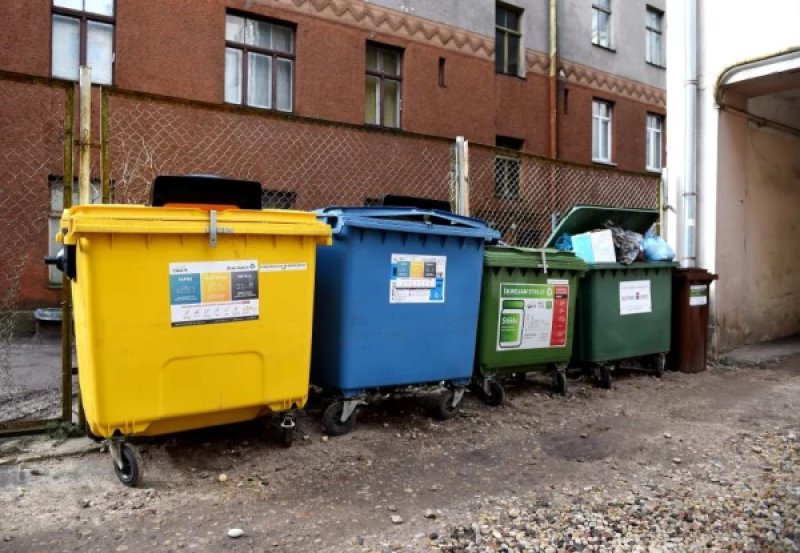
 Foto: BB.LV / мусорники
In Latvia, 87.5% of residents believe they know how to properly sort waste, however, not everyone regularly applies this knowledge. This is evidenced by the results of the Brand Capital 2026 study presented by Latvijas zaļais punkts, as reported by the LETA agency. According to the survey, 75.3% of respondents stated that waste is sorted in their households. Another 12.2% claim they know the sorting rules but cannot apply them in practice for various reasons. One of the most frequently mentioned obstacles remains the availability of infrastructure. At the same time, 59.1% of residents believe that containers and sorting points in their area are conveniently located. ## Residents are urged not to store old electrical appliances at home To encourage residents to move from knowledge to action, Latvijas zaļais punkts, in collaboration with the waste management company Eco Baltia vide, is launching an information campaign "You already know. Now do it" (Tu jau zini. Tagad izdari). The organizers focus on the proper disposal of used electrical appliances. Residents are reminded that old refrigerators, televisions, computers, phones, and other electrical devices should not be thrown away with regular household waste. They must be handed over for specialized recycling. Board member of Latvijas zaļais punkts, Kaspars Zakulis, notes that most residents already understand the importance of sorting, but knowledge alone is not enough. He reminds that the European Union has set a goal: by 2035, no more than 10% of generated household waste should be sent to landfills. According to Zakulis, achieving this goal depends not only on the development of infrastructure but also on how actively residents use sorting opportunities. ## Why an old refrigerator cannot just be thrown away Companies emphasize that electrical appliances are different from many other household waste. Electrical devices may contain substances that are hazardous to the environment and human health, including lead, cadmium, and mercury. Improper disposal of such substances can lead to environmental contamination. At the same time, electrical appliances contain many valuable materials that can be reused. For example, recycling an old refrigerator can yield metal, copper wires, aluminum parts, and plastic. With proper disassembly, a significant portion of the components of electrical devices can be directed to secondary processing. ## Sometimes repair is more beneficial for the environment than buying a new appliance Chairman of the board of Eco Baltia vide, Janis Aizbalts, emphasizes that not every broken device needs to be sent for recycling immediately. In some cases, repair can significantly reduce environmental impact. As an example, he cites refrigerators. According to the company’s estimates, producing a new refrigerator can be associated with emissions of about 200–300 kilograms of carbon dioxide equivalent. At the same time, certain repair works may be associated with emissions of about 10–30 kilograms. Thus, under certain conditions, repairing instead of buying a new refrigerator can reduce the associated greenhouse gas emissions by about 90%. The campaign organizers recommend first assessing the condition of unnecessary appliances. If the device works, it can be sold or given to someone else. If the appliance is broken, consider the possibility of repair. Only if further use is impossible should the device be sent for specialized recycling. ## Where in Latvia can you hand over old electrical appliances According to Eco Baltia vide and Latvijas zaļais punkts, residents can hand over used electrical appliances at more than 70 waste sorting sites across Latvia. For small electrical devices and used batteries, there are also special containers placed in various retail outlets. Additionally, residents can contact their waste management operator to find out if the service for picking up old electrical appliances directly from home is available. The organizers remind that batteries and electrical equipment must be handed over separately from regular waste, as the substances contained in them can pose a danger to nature and human health. More than 3,000 residents of the Baltic states participated in the online survey — about 1,000 respondents from each country. The age of participants ranged from 15 to 74 years.
