

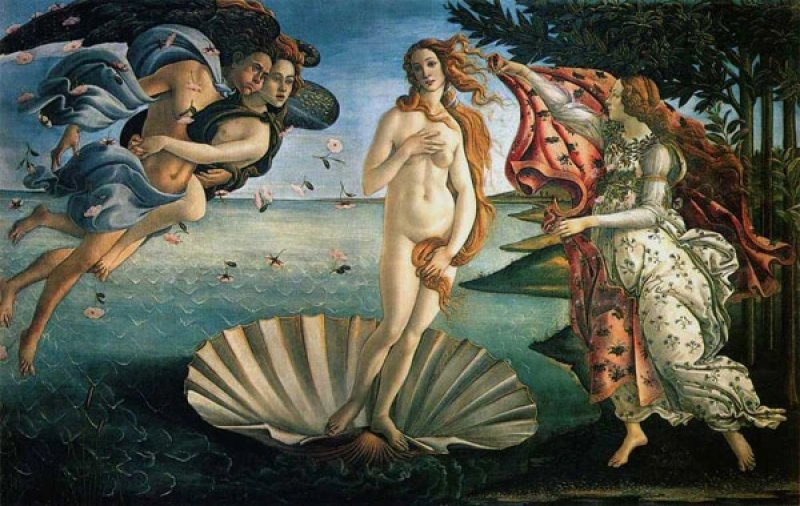
 Foto: BB.LV / Знаменитая картина Сандро Боттичелли «Рождение Венеры» может скрывать неожиданную медицинскую загадку
This conclusion was reached by an international group of researchers led by Professor Paolo Poccilli from Queen Mary University of London. The results of their work were published in the scientific journal Medical Humanities. The focus of the specialists was Simonetta Vespucci — one of the most famous beauties of the Italian Renaissance. She was born around 1453 in Genoa and moved to Florence after marriage, where she quickly became the object of admiration of the local aristocracy, including members of the influential Medici family. It is believed that Botticelli used her features to create the images in the famous paintings "The Birth of Venus" and "Primavera." According to legend, the artist was so enamored with Simonetta that he wished to be buried next to her. However, the young woman's life was cut short in 1476. For a long time, it was assumed that tuberculosis was the cause of her death. Now researchers have proposed another explanation. While studying images of Simonetta, the scientists noted the unusual position of Venus's eyes. The painting shows slight strabismus, eyelid swelling, and tissue edema around the eyes, especially on the left side. According to the specialists, such changes may indicate the presence of a large pituitary tumor — a gland located at the base of the brain responsible for producing important hormones. The researchers suggest that the tumor gradually increased in size, causing changes in Simonetta's appearance. Ultimately, a hemorrhage into the tumor could have occurred — a dangerous condition known as pituitary apoplexy, which can lead to sudden death. This version is also consistent with some historical evidence regarding the last days of the young woman's life. Documents from that time mention severe headaches, vomiting, fever, and altered consciousness. Interestingly, Venus's unusual gaze has been perceived by art historians for centuries as an artistic device. Slight strabismus was even considered one of the hallmarks of idealized female beauty during the Renaissance. Now, however, scientists suggest that Botticelli may have inadvertently captured on canvas the real symptoms of his muse's illness. Nevertheless, the researchers emphasize that it is impossible to definitively establish a diagnosis more than five centuries later. Furthermore, there is no indisputable evidence that Simonetta personally posed for all the images attributed to her. Nonetheless, the new study shows that famous works of art may be of interest not only to historians and art critics but also to medical professionals. Perhaps the details that have been considered manifestations of artistic intent for centuries preserved evidence of the real illnesses of people from the past.
