

 Foto: BB.LV / космос
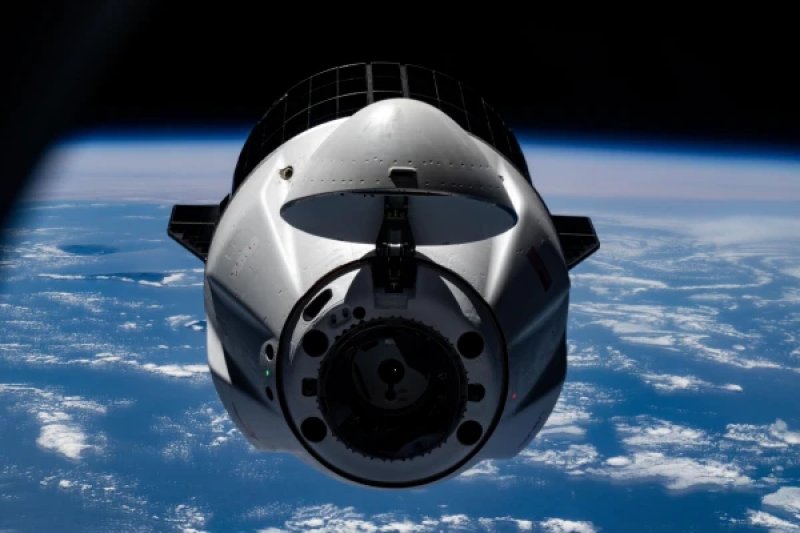
The SpaceX Dragon spacecraft delivered more than 2.8 tons of cargo to the International Space Station, including equipment for new medical experiments. The vehicle launched on October 13 as part of SpaceX's 35th commercial resupply mission for NASA and docked with the ISS on October 15. A significant portion of the scientific program is dedicated to studying how microgravity affects human tissues and whether space conditions can be used to develop new medical technologies. ### Brain Models Will Help Study Neurodegenerative Diseases As part of the AVATAR-ORg1 experiment, scientists will observe small lab-grown models of the human brain — miBrains — for five weeks. The results obtained will be compared with similar samples that remained on Earth. Researchers want to find out how brain tissues develop and change in space and whether such models can be used to study the risks that arise during long space flights. Another experiment, MINDS, focuses on the connection between inflammatory processes and neurodegenerative diseases. Scientists will use groups of organoids containing cells from different people to investigate the mechanisms of Alzheimer's, Parkinson's, and multiple sclerosis diseases. A separate study, Stellar Spheroids, will examine the impact of weightlessness on three-dimensional models of human heart tissues. In the future, the results may be useful in the development and testing of drugs. ### Artificial Retina Will Be Attempted to Create in Weightlessness Another experiment, LambdaVision-1, is related to the development of an artificial retina that could potentially help people losing their sight due to degenerative diseases. The technology is based on the use of the light-sensitive protein bacteriorhodopsin. Hundreds of its layers are formed into a structure that is supposed to replicate the ability of the human eye's photoreceptors to absorb light. However, Earth's gravity complicates the creation of uniform layers: individual sections become unstable. Scientists hope that under microgravity conditions, it will be possible to form a more homogeneous structure and improve the quality of the artificial retina. Currently, this is an experimental technology, not a ready-made method for restoring vision. ### How to Protect Astronauts from Bone Loss and Infections Part of the delivered equipment is intended specifically for the medical safety of the ISS crew. The ELISA MABL experiment will allow testing a compact analyzer capable of determining the content of antibodies, antigens, and proteins in biological samples. If the technology proves effective, astronauts will be able to conduct some studies directly on the station without sending samples back to Earth. In particular, this could help monitor changes in bone tissue, which loses density during prolonged weightlessness. Another experiment, GEARS, focuses on antibiotic-resistant bacteria Enterococcus faecalis and Enterococcus faecium found on the ISS. Scientists intend to find out how these microorganisms develop in the closed environment of the space station and how to reduce the risk of infections during prolonged missions. NASA hopes that the research will help make long space flights safer, and the knowledge gained will eventually find applications in terrestrial medicine.
