

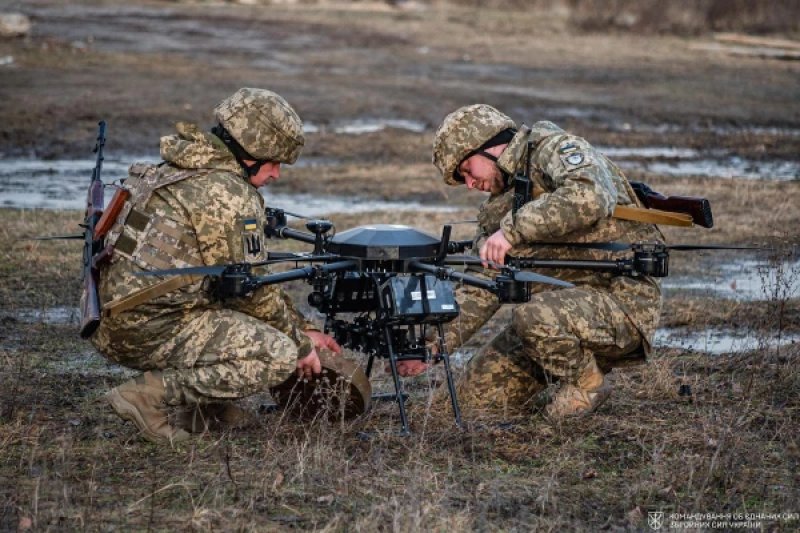
 Foto: BB.LV / украинские военные с дроном
“The situation is quite clear. We verified the data with the representatives present at the meeting: when and from where the drone entered Lithuanian airspace. There is no doubt that it flew in from the Schengen zone from the direction of Poland,” said the head of the government to reporters. According to the Chief of the Defense Staff of the Lithuanian Armed Forces, Gediminas Šernas, Polish military did not see the drone on their radars. According to the military, their radars first detected a flying object at 5:47 in Polish territory, 30–40 km from the border with Lithuania. The object was moving towards Lithuania and crossed the state border at 6:02. After 6:00, residents of Kalvarija began calling the Unified Assistance Center, reporting the sound of a drone. Following the residents' reports, a decision was made to scramble NATO fighters at 6:40. “Today it is clear that the FPV drone, according to our data, has Ukrainian origins,” he claims. According to Sinkevicius, representatives of Ukraine confirmed that they lost contact with one of their drones during an attack on Sunday, so it is quite likely that this was the very drone that fell in Lithuania. “There is no doubt that it was carrying explosives,” he said. According to the Prime Minister, in terms of response and informing the public, this case was different from others in that the drone came not from Belarus, but from the Schengen zone. He noted that when a drone arrives from a friendly side, a different notification algorithm is applied than in cases where it comes from Belarus or the Kaliningrad region of Russia. “Knowing that it is coming from a friendly country, from the Schengen side, we do not automatically react as if it is a threat,” Sinkevicius explained. According to him, the response would have been different if the drone had been moving from the direction of Belarus.
