

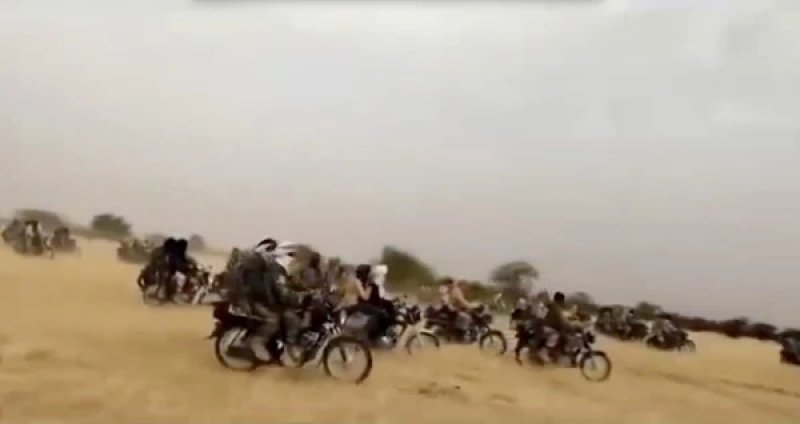
 Foto: BB.LV / люди на мотоциклах
In the Menaka region of northeastern Mali, a series of attacks on civilian camps occurred over the past weekend, resulting in the deaths of more than 40 people. This was reported on Monday, October 19, by sources in the security forces and local communities, as reported by the LETA agency citing AFP. According to available information, armed militants moved on motorcycles and attacked camps predominantly inhabited by members of the Daousahak community. Representatives of this community have blamed the terrorist group "Islamic State" for the killings. The report does not provide independent confirmation of the group's involvement. ## The Attacks May Have Been Revenge for Military Operations One source in the security forces stated that the mass killings could have been a response to recent operations by the Malian army and attacks by the armed Movement for the Salvation of Azawad (MSA). This group, which emerged from the Daousahak community, is an ally of the Malian government. "According to the information we received, about 40 people were killed, mostly men," the source reported. Thus, the attacks may have been directed against the population associated with the community from which the armed movement supporting the government was formed. ## The Armed Conflict in Mali Has Been Ongoing Since 2012 Mali has been experiencing a prolonged security crisis for more than ten years. Since 2012, the country's army has been fighting jihadist groups, Tuareg separatist formations, and criminal gangs. The situation is further complicated by economic instability. After military coups in 2020 and 2021, a military junta came to power in the country, which began to strengthen cooperation with Russia. In particular, the Malian authorities attracted Russian mercenaries from the Wagner group. In 2025, their presence in the country was replaced by the Russian African Corps. Despite military operations by the Malian army and its Russian allies, armed groups continue to carry out attacks, including on the civilian population.
