

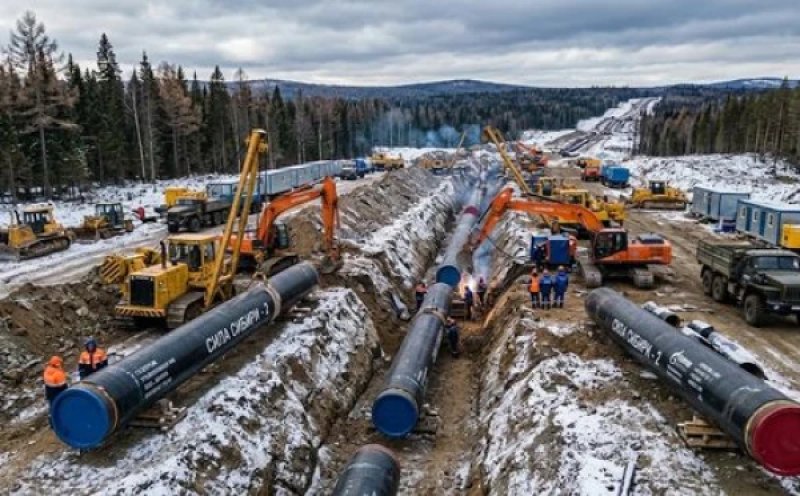
 Foto: BB.LV / укладка газопровода
According to Novak, Russian and Chinese companies will continue commercial negotiations and hope to reach the necessary agreements by the end of the year. The project involves the construction of a pipeline through Mongolia, which will be able to transport up to 50 billion cubic meters of gas annually from the fields of Western Siberia to China. This volume is equivalent to more than 10% of China's current demand for natural gas. For comparison, the estimated (total) design capacity of the Nord Stream 2 pipeline is 55 billion cubic meters of gas per year. If the new route reaches full capacity, total supplies of Russian gas to China via pipelines are expected to exceed 100 billion cubic meters per year. Negotiations on the construction of the pipeline have been ongoing for several years. Among the main contentious issues are the price of gas and the flexibility of supply volumes. Russian authorities have previously stated that the disagreements can be resolved. Currently, Russia supplies gas to China through the existing Power of Siberia pipeline. In 2025, the supply volume was nearly 40 billion cubic meters. In addition, the launch of the Far Eastern route is planned for early 2027, which is expected to provide supplies of up to 12 billion cubic meters of gas per year. The final terms of the agreement and the timeline for the implementation of the new project will depend on the results of negotiations between Russian and Chinese companies.
