

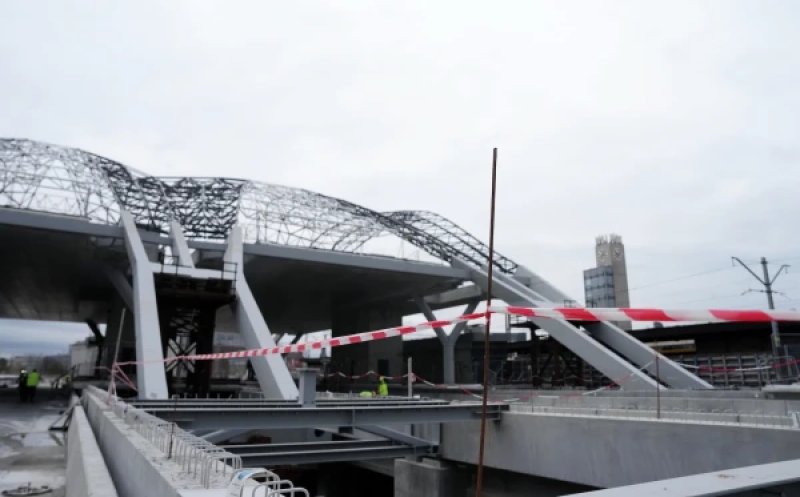
 Foto: BB.LV / rail baltica
The continuation of the construction of the Rail Baltica railway line will be one of the complex financial issues for the next government of Latvia. When preparing the next state budget, the cabinet of ministers will have to determine whether the country can afford to continue the implementation of the project and how to finance it. As reported by the LETA agency, this was stated by the Minister of Transport, Rihards Kozlovskis ("New Unity"), in an interview with the TV3 program "900 Seconds." According to the minister, the current situation requires a serious reassessment of the approach to implementing Rail Baltica. The state can no longer continue work under the previous model. One of the reasons Kozlovskis mentioned was the change in the geopolitical situation, including Russia's war against Ukraine and other international events affecting state priorities. The main problem lies in the lack of clarity regarding future sources of funding. The minister noted that it is still unknown what support can be expected from the European Union in the upcoming financial planning periods. There is also no certainty regarding further funding from the European Commission. However, the lack of funds is already being felt. According to Kozlovskis, there is a funding deficit even within the framework of existing contractual obligations, the volume of which continues to increase. Additional uncertainty is created by the inability to accurately forecast further growth in expenses. As a result, the state cannot currently reliably assess how much budgetary funds will be needed even to continue work on already concluded contracts. The minister emphasized that when preparing the next budget, the government will need to take all these circumstances into account and determine a clear spending plan for Rail Baltica. Thus, it is not only about finding funds for new stages of construction but also about ensuring financing for obligations that the state has already undertaken. The scale of the financial problem becomes particularly noticeable when comparing current cost estimates of the project with initial calculations. According to the current cost-benefit analysis, the total cost of Rail Baltica in all three Baltic countries may reach 23.8 billion euros. In comparison, in 2017, the total cost of the project was estimated at only 5.8 billion euros. Thus, the current estimate is more than four times higher than the original. At the same time, the first stage of Rail Baltica construction in the Baltic countries may cost 14.3 billion euros. Of this amount, Latvia accounts for about 5.5 billion euros. Considering the indexing of expenses, the cost of the Latvian part of the first stage may increase to six billion euros. The first stage in Latvia plans to build the main railway line from the border with Lithuania to the border with Estonia. In addition, it is planned to complete construction work at Riga Airport and the southern part of the Riga Central Station. These works should ensure the connection of the new Rail Baltica line with the existing railway network. The project itself involves the construction of a railway with a European gauge that will connect Tallinn with the border of Lithuania and Poland, and then provide rail communication between the Baltic countries and the rest of Europe. The total length of the new line in the Baltic countries is expected to be about 870 kilometers. The gauge width is 1435 millimeters, and the maximum allowed speed of trains is 240 kilometers per hour. However, against the backdrop of rising construction costs and uncertainty regarding European funding, the further implementation of these plans will require new political and budgetary decisions. Kozlovskis did not announce the cessation of the project but indicated that the next government will need to determine a financially feasible option for its continuation.
