

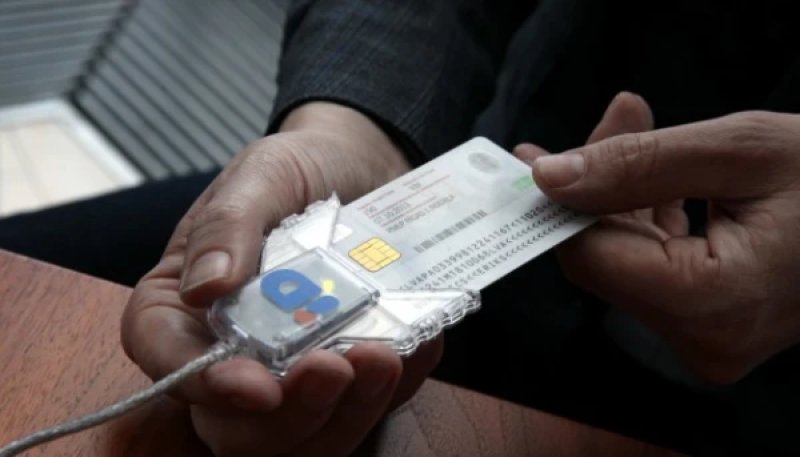
 Foto: BB.LV / ID карта
But now the state has found a way to solve the problem without their mass replacement. The story began with microchips that are installed in some Latvian eID cards. According to European Union rules, such chips must undergo verification every five years to confirm that they can still be used for electronic signatures. The chips of a certain generation (Cosmo 8.1) have their approval period expiring on December 9, 2026. These are the ones found in most cards issued to Latvians from September 2, 2019, to January 30, 2026. However, it is already clear that there will be no confirmation of their compliance with European requirements (one possible reason is that manufacturers did not want to deal with this). As a result, owners of perfectly valid eID cards faced an unpleasant prospect: either receive new documents ahead of time or remain unable to sign electronic documents. Now imagine what would happen at the Office of Citizenship and Migration if more than three hundred thousand Latvians rushed there for new cards in December. It would simply paralyze the institution's work! Not to mention that it is impossible to produce so many new cards so quickly. Fortunately, the Latvian State Radio and Television Center (LVRTC), which is responsible for electronic signatures, has come up with a solution. Instead of forcing people to change their cards, it has developed a new way to sign documents. For the average user, the meaning is this: the eID card will still help confirm that the document is being signed by them. But the electronic signature itself will no longer be created by the card's chip, but by the LVRTC computer system. The legal force of such a signature will remain unchanged. ## So what should eID cardholders do now? First of all, do not rush to change documents. You can check which chip is installed in your card on the website www.eidkarte.lv. If the card is affected, LVRTC promises to send the owner an explanation of how to use the electronic signature after December 9. Therefore, it is important to ensure that the email address you provided when obtaining the eID card is correct. If necessary, it can be updated through the portal Latvija.gov.lv. An important detail: letters will not be sent to addresses with certain domains, particularly .ru. The new signing method should automatically become available to holders of such cards. There will be no need to go anywhere, obtain a new card, or purchase additional equipment. However, the signing procedure will change slightly. LVRTC promises to provide detailed instructions in November, before the old method ceases to work. At the same time, no changes are expected for those using the eParaksts mobile application. Other functionalities of the eID card will not be affected: it will still be possible to verify identity, access government electronic systems, and travel. The government has already approved the amendments necessary for the new signing method. They will come into effect on December 1. At the same time, the authorities have expanded the list of reasons for which a passport or eID card can be replaced early. In particular, identification can be changed if the passport is still valid, but its duration is insufficient for a planned trip, if there are no free pages left in it, or if a person has significantly changed in appearance. Replacement will also be allowed in some other cases, including in the event of the unauthorized use of the document's data.
