

 Foto: BB.LV / канал
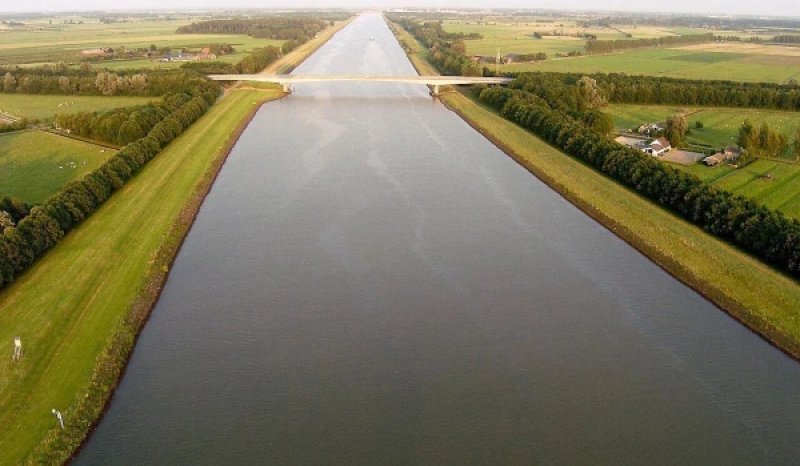
According to the publication, the completion of the works is expected to be two years later than previously anticipated, when the canal was scheduled to be put into operation in 2030. In January 2026, the state company Société du Canal Seine-Nord Europe, responsible for the project, increased the budget from €5.1 billion to €7.3 billion. The reasons cited include inflation, construction delays, and additional environmental requirements. The canal will be part of the "Seine–Scheldt" transport network, which will connect France, Belgium, and the Netherlands through inland waterways and major trading ports, particularly Rotterdam and Antwerp. The waterway, 54 meters wide and 4.5 meters deep, will be able to accommodate barges with cargoes of up to 4,400 tons. "The increase in capacity will allow for the annual replacement of up to one million heavy truck trips on French roads," the publication states. The construction includes the building of seven locks, three bridges over the canal, road and rail crossings, as well as the implementation of environmental protection measures. Funding is provided by the European Union, the French government, and regional authorities. At the same time, as noted in the publication, environmental organizations question whether the reduction in road transport can offset the impact of large-scale construction on the environment. The canal is expected to operate within the existing French navigation toll system. However, unlike the Suez Canal in Egypt, which serves large sea vessels and generated a record $10.25 billion in revenue in 2023, the French project is primarily focused on regional freight transport. Its economic impact is still a topic of discussion.
