

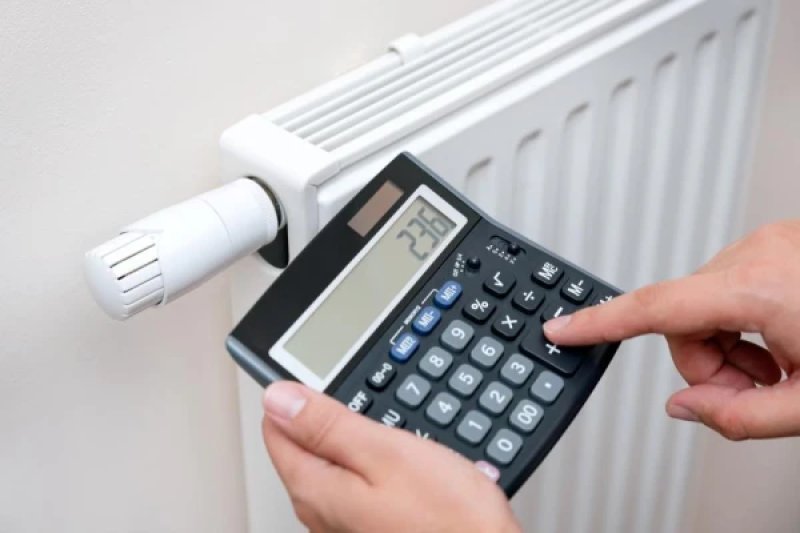
 Foto: BB.LV / радиатор и калькулятор
Rīgas siltums has already presented a tariff change project to the Public Utilities Commission (SPRK). According to the proposal, starting from December 1, the cost of thermal energy will be 96.33 euros per megawatt-hour (MWh) excluding VAT. This is 16% more than in the previous heating season and 19% higher than the current tariff, which is 80.96 euros per MWh. ## ## Gas prices have increased by 200%, biomass by 50% The Chairman of the Board of Rīgas siltums, Kalvis Kalniņš, explains that the upcoming increase is due to a sharp rise in energy resource costs, which cannot be fully compensated. Compared to last year, natural gas has increased by 200%, and biomass by about 50%. Electricity prices have also risen. Together, these resources account for about 70% of the costs considered in the calculation of the heating tariff. Previously, the company predicted that heating in Riga could increase by 20–30% from December. However, according to Kalniņš, thanks to the measures taken, it was possible to limit the tariff increase to 16% compared to the previous heating season. ## ## How the company tried to curb price increases Rīgas siltums claims that, as before the previous heating season, a number of measures were taken this year to mitigate the effects of fluctuations in energy resource prices. In accordance with the procurement strategy, the company purchased natural gas in advance and gradually, distributing risks and reducing the possible impact of events in the Middle East on the cost of heating supply in Riga. Together with the Ministry of Climate and Energy, a solution was developed to decouple the purchase price of thermal energy produced from biomass from fluctuations in natural gas prices. To this end, a maximum purchase price for heat in the relevant market zone has been established. The price ceiling was introduced based on amendments to the Energy Law. In addition, a mechanism for three-hour purchases of thermal energy has been implemented. This allows cogeneration plants to use the produced heat more efficiently during periods when conditions in the electricity market are most favorable. It is expected that this will increase market flexibility, enhance competition, and help reduce consumer costs. According to Valdovskis, all these measures have helped to reduce the impact of rising energy resource prices and keep the tariff increase below initial forecasts. ## ## Aiming to reduce dependence on gas within five years Kalniņš reminds that the strategic goal of Rīgas siltums is to gradually reduce dependence on natural gas, the cost of which significantly affects the tariff. Currently, gas accounts for about 60% of the energy resources used by the company. Over the next five years, this share is planned to be reduced to 35%. However, it is impossible to completely abandon gas: it is still necessary for heat production during peak demand periods and in crisis situations. During the heating season, the company will have to purchase additional gas. The necessary volumes will depend on the severity of the winter, and the purchase price will depend on the situation in the energy market. Therefore, the management of Rīgas siltums does not rule out a new tariff revision during the heating season. However, it is still premature to talk about possible changes. The company promises that any decisions will be based on economically justified calculations, and residents will be informed in advance. ## ## Rīgas siltums profits have increased Meanwhile, according to previously published data, the turnover of the Rīgas siltums group in the last financial year - from October 1, 2024, to September 30, 2025 - amounted to 239.625 million euros, which is 3.6% less than the previous year. At the same time, the group's profit increased several times and reached 19.888 million euros. The turnover of the parent company Rīgas siltums for the same period amounted to 239.618 million euros, decreasing by 3.6%. However, the company's profit increased by 61.4% to 6.373 million euros.
