

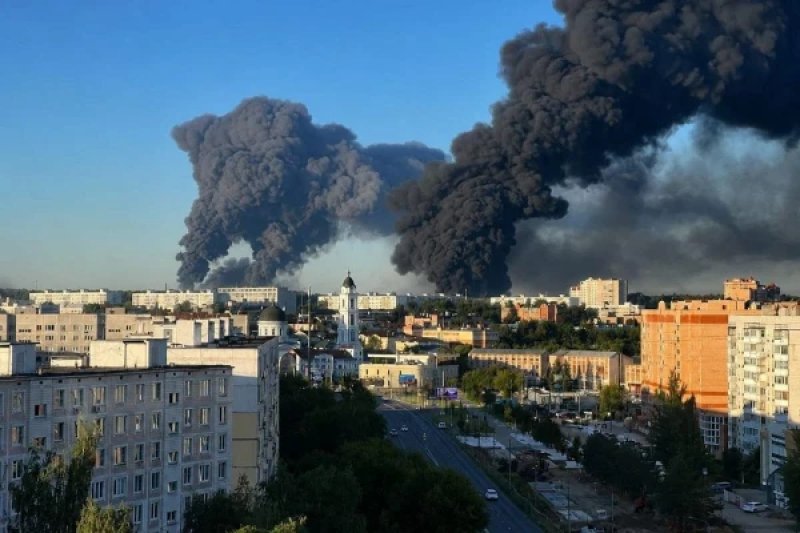
 Foto: BB.LV / дым над городом
Ukrainian military forces temporarily halted attacks on Russian oil refineries after several weeks of pressure from U.S. President Donald Trump. The unofficial pause may last until the completion of the U.S. midterm elections or even longer – until the end of November. This was reported by The Wall Street Journal, citing sources familiar with military operations. According to the publication, the decision to effectively suspend the campaign against Russian refineries came into effect last week amid escalating tensions between Kyiv and Washington. Just days prior, Trump called for the removal of Ukrainian President Volodymyr Zelensky, while Elon Musk's SpaceX limited Ukraine's use of the Starlink satellite internet. Two Ukrainian military officials familiar with the situation told WSJ that in mid-October, units responsible for long-range strikes were informed of the effective suspension of the campaign against Russian refineries. They were to complete operations that were already underway. ## ## Zelensky Did Not Order a Complete Halt to Strikes on Russian Refineries According to sources, Ukrainian Defense Minister Yevgeny Khmara informed Volodymyr Zelensky that the military decided to temporarily refrain from strikes on refineries due to the complicated diplomatic situation. The president agreed with this approach but emphasized that the military could again attack these facilities if deemed necessary. Zelensky himself denied that Ukrainian units received an order not to strike Russian refineries. "Our guys have been trying to act a bit more cautiously these days. But they do not have an order not to strike the refineries," the president told reporters in Kyiv on Tuesday. According to him, Ukrainian drone units are currently attacking various types of targets on Russian territory. ## ## Kushner Demanded a 30-Day Pause in Strikes on Refineries from Zelensky WSJ writes that in recent weeks, Trump has intensified pressure on the Ukrainian president, demanding a halt to attacks on Russian refineries. The American leader accused Ukraine of rising global fuel prices, although energy market experts largely attributed this phenomenon to the war between the U.S. and Iran. The issue of strikes on Russian energy infrastructure was also raised by U.S. Special Representative Jared Kushner. During a meeting with Zelensky on October 20 in Oslo, he reiterated Trump’s demand to cease such attacks. According to two American officials, the conversation was very tense. Kushner, who joined the meeting remotely due to illness, told the Ukrainian president that he should suspend strikes as he and U.S. Special Representative Steve Vitkoff were spending a lot of time, effort, and fuel on mediating negotiations with Moscow. One American official noted that a 30-day pause in strikes on refineries would be a way for Ukraine to express gratitude for these efforts. ## ## European Allies Also Advised Ukraine to Temporarily Halt Strikes According to WSJ, Ukraine's European partners also urged Zelensky to consider the political delicacy of energy prices ahead of the U.S. midterm elections. Some of Kyiv's closest European allies were concerned about the escalating rhetoric between Trump and Zelensky, as well as disruptions in Starlink service. Therefore, they advised the Ukrainian president to temporarily refrain from attacks on Russian refineries until the American elections were over. At the same time, Ukrainian and European officials described the situation as more complicated than the American side. ## ## Ukraine Wanted Concessions from the U.S. in Exchange for Halting Strikes According to the publication, during recent contacts with Trump, Zelensky emphasized that Ukraine would like to receive something in return for halting attacks on Russian refineries. One of the desirable options for Kyiv was a mutual energy ceasefire, which would involve stopping Russian strikes on Ukrainian power plants. The Ukrainian president also considered the possibility of receiving additional missiles for Patriot air defense systems to protect energy infrastructure or permission to use Starlink on Russian territory to destroy Russian missile launchers. However, none of these proposals received further development.
