

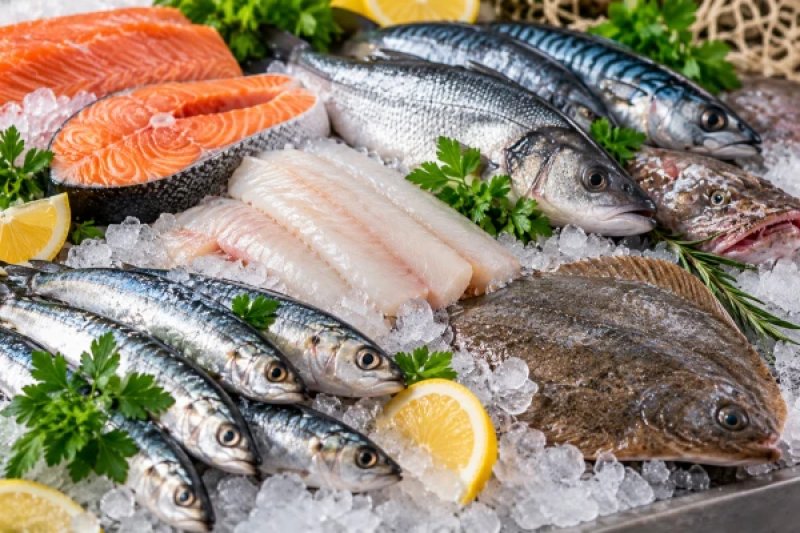
 Foto: BB.LV / Рыба
Fish is an important part of a healthy diet due to its content of quality protein, vitamins, minerals, and omega-3 fatty acids. However, as noted by Spanish dietitian María Casas, when purchasing fish, one should pay attention not only to its nutritional value but also to the possible presence of contaminants. This is reported by the Spanish publication El Español. ## Why larger fish may be more dangerous According to the specialist, among the least preferred options are swordfish, bluefin tuna, and pike. The problem lies not in the caloric content or the amount of protein, but in the ability of these species to accumulate mercury. Large predatory fish often live for many years and are at the top of the food chain. By consuming other fish, they gradually accumulate contaminants, including methylmercury. This process is related to bioaccumulation — the accumulation of substances in the body. When contaminants are transferred through the food chain, their concentration can also increase. Excessive exposure to methylmercury is particularly dangerous for the developing nervous system. The Spanish Agency for Food Safety and Nutrition (AESAN) recommends that pregnant women, nursing mothers, and children under ten avoid consuming swordfish, shark, bluefin tuna, and pike. For other adults, these species are not under an absolute ban, but their consumption is recommended with consideration of possible mercury content. ## Sardines and mackerel: small fish with great benefits Among the most interesting options, the dietitian considers sardines and mackerel. These species are characterized by high omega-3 content — beneficial fatty acids that play an important role in the cardiovascular system. Two acids are particularly significant: EPA and DHA. They are involved in maintaining normal heart function and other physiological processes. At the same time, sardines and some types of mackerel usually contain less mercury than large predatory fish. It is important to note that mercury content varies among mackerel species: for example, king mackerel is considered a fish with high mercury content. Sardines are also convenient because they can be purchased canned. They are available year-round and do not require complicated preparation. The article also mentions a 2023 study that covered data from over 1.4 million people. According to its results, consuming two to three servings of fish per week was associated with approximately an 8% reduction in the risk of cardiovascular diseases. However, such a statistical correlation does not itself prove that fish is the cause of the reduced risk. ## What about salmon? Salmon also remains a valuable product due to its high omega-3 content. The specialist particularly highlights wild salmon. It provides the body with complete protein and healthy fats that are necessary for a balanced diet. At the same time, dietitians do not advise limiting oneself only to fatty fish. White fish also has important nutritional advantages. ## Hake, cod, and sole: why they should be included in the menu María Casas highlights lean types of fish, including hake, fresh cod, monkfish, some types of sole, and young merluza. They usually contain relatively little fat, including saturated fat, but are a good source of complete protein. Many of these species also have relatively low mercury content. The U.S. Food and Drug Administration (FDA) classifies cod, hake, and sole as fish options with low mercury content. White fish can be particularly convenient for people who prefer less fatty dishes. However, this does not mean that it is healthier than fatty fish in all respects. White fish generally contains less omega-3, so the most rational approach is to alternate different types. ## What fish is better to buy? When choosing fish, one should consider not only the price and taste preferences but also its nutritional value and mercury content. | Type of Fish | Key Features | | ---------------------- | ----------------------------------------------------- | | Sardines | Rich in omega-3, usually contain low mercury | | Atlantic mackerel | Source of omega-3, relatively low mercury content | | Salmon | Rich in healthy fats and protein | | Hake | Lean fish, good source of protein | | Cod | Low fat content, usually low mercury | | Sole | Lean fish with relatively low mercury content | | Swordfish | High mercury content | | Bluefin tuna | Large predatory fish capable of accumulating mercury | | Pike | Can accumulate significant amounts of mercury | ## How many times a week should you eat fish? The Spanish agency AESAN recommends consuming fish about three to four times a week, alternating between white and fatty varieties and preferring those with low mercury content. At the same time, portion size and the choice of specific species should be considered based on age, health status, and individual recommendations. María Casas' main advice is that one should not seek a single ideal type of fish. It is much more beneficial to diversify the diet by combining lean white fish with fattier varieties rich in omega-3. And one more important principle: large and expensive fish are not necessarily more beneficial. Sometimes small sardines or regular hake can be a more sensible choice for everyday nutrition.
