

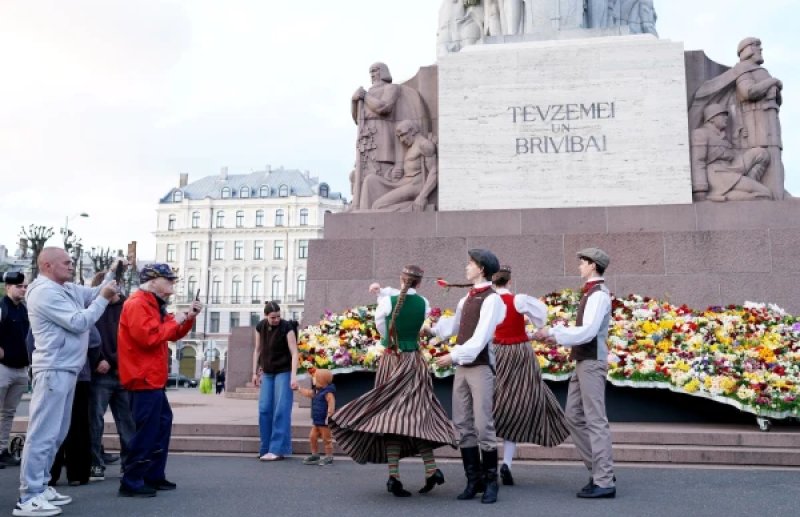
 Foto: BB.LV / туристы у памятника свободы
"The offer we promote is uniform. There could be much more advertising for food, not only Riga restaurants but specifically rural food, which foreign guests are thrilled about," said Ziemele. According to her, foreign guests are surprised by the usual preparation of fresh products in Latvia and the taste of the food. This part of Latvia's offering should be showcased more. As an example of promoting nature tourism, she mentioned Estonia, which has long paid attention to offers beyond Tallinn, such as nature tourism, bear and bird watching, and national parks. There is very good infrastructure for wildlife observation, cycling, and boating. "In my opinion, they gain a lot from this because they attract people who come to get to know the country and its nature, not for bachelor parties. These are very good guests; they are willing to pay and are genuinely interested in the country," said the association leader. This also helps to develop the rural tourism offering as a whole. "Entrepreneurs see that the state is promoting this direction, so they continue to invest and develop the offering themselves. This creates a kind of circle. In Latvia, such promotion of nature tourism does not happen," said Ziemele. In her opinion, the offering of Latvian rural tourism competes very well with Lithuania and Estonia. Prices for rural tourism in Latvia are lower than in Estonia and the same as in Lithuania. "Perhaps Estonia is a bit better overall because they have better infrastructure - bike paths, good parking lots, toilets, and opportunities for various activities. This elevates them a notch higher. However, comparing the offerings of specific rural estates, I would say we are at a very similar level," said Ziemele. Compared to Lithuania, Latvia has more farms outside of settlements, so guests have more space and room, noted the association leader. In attracting Lithuanians, the Latvian coastline is also a significant advantage. In turn, Estonians visit Vidzeme more, especially northern Vidzeme. The Latvian coastline is not as relevant to them, which is related to the numerous water bodies and islands of Estonia. Evaluating the work of the Latvian Investment and Development Agency (LIAA), she noted that the agency works quite well; however, the geopolitical situation limits marketing opportunities. Investing large sums in a broad campaign now, in her opinion, would be questionable, so marketing must be well thought out. "Estonian marketing is better, but that doesn’t mean LIAA's work should be dismissed," said Ziemele. The association leader also expressed regret that the Baltic countries cannot act together in tourism marketing. "I am very sorry that the three Baltic countries cannot work together. I do not know what the considerations are and how much this is related to the attitudes of the other two countries, but together we could achieve much better results, especially in distant markets. If each Baltic country separately talks about its song festivals, baths, and black bread, then listening to the presentation of the second country already feels like hearing the same thing," Ziemele acknowledged, adding that joint marketing events were once held in both Japan and England.
