

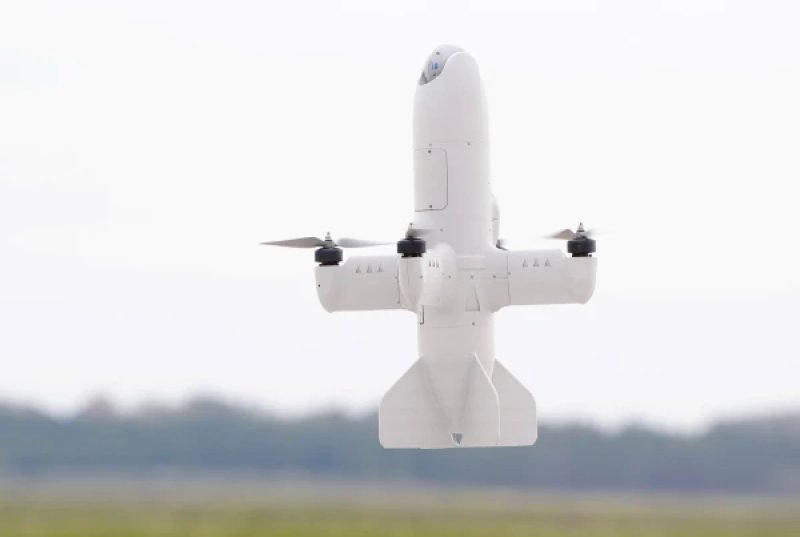
 Foto: BB.LV / военный дрон
### NATO Tests How to Integrate Technologies from Different Countries For two weeks, NATO conducted a technological experiment at the training grounds in Adazi and Selia, organized with the participation of NATO's Transformation Command and Latvian partners. The main task was not so much to test individual drones or counter-drone protection systems, but to check their ability to operate as a unified system, reports [TV3 News](https://tv3.lv/zinas/latvija/nato-adazos-un-selija-parbauda-jaunas-dronu-un-pretdronu-tehnologijas/). This year, the experiments covered three areas: digital communication, next-generation targeting, and drone protection. Specialists tested whether military and civilian communication networks, sensors, and various technological platforms could be integrated for rapid information exchange. Particular attention was paid to reducing the time between detecting a potential target and making a decision on further actions. During the demonstrations, participants showcased the full cycle of system operations — from detecting a drone and intercepting it to analyzing information using artificial intelligence. In particular, the possibility of intercepting a drone traveling from Lithuania to Latvia was tested. ### Interceptor Drones Are Already on Duty at the Border The Commander of the National Armed Forces of Latvia, Kaspars Pudans, emphasized that the needs of NATO countries vary depending on their geographical location and the nature of potential threats. For Latvia, located directly at the border, technologies that allow for timely detection of threats at short distances are particularly important. > "We are located directly at the border, and we essentially need to engage in close combat with the enemy. This is our priority, while allies can assist us more in striking at long distances, deep into enemy territory," Pudans explained. According to him, modern systems are necessary not only for responding to possible military attacks but also for countering sabotage and other hybrid threats. Sensors, surveillance, and early warning systems reduce the need for a constant military presence in specific areas and preserve forces for other tasks. Some of the solutions presented have already gone beyond experimentation. > "What we are already doing with interceptor drones, which are now stationed at several points along the border and provide its coverage, is no longer even testing; they are indeed on combat duty," the commander of the NAF stated. ### "I Will Never Claim That They Can Shoot Down Every Drone" Despite the use of new protective measures, Pudans warned against overestimating existing capabilities. According to him, it cannot yet be guaranteed that any drone approaching the Latvian border can be intercepted. > "I will never claim that they can shoot down every drone right at the border. No, these capabilities need to be further developed and enhanced," he noted. The commander of the NAF pointed out the rapid changes in drone characteristics. They are becoming faster, capable of operating at various altitudes, and are increasingly used in groups rather than individually. Therefore, effective protection requires sensors of different types that can detect targets at various distances and altitudes. The interaction of such systems became one of the main focuses of NATO's experiment in Latvia. ### NATO Wants to Move Away from the "Innovation Theater" The tests involved technology companies from several countries that presented developments in communication, targeting, drone management, and counter-drone defense. However, the organizers emphasize that the task was not to showcase impressive equipment but to test its compatibility and practical applicability. Supreme Allied Commander Transformation Pierre de Villiers referred to this issue as the "innovation theater." > "In my opinion, the West needs to put an end to what I call the innovation theater. That is, a company organizes a demonstration, everything looks impressive, but in reality, it is just a show for the public — the technologies never reach real application," he stated. According to de Villiers, the conducted experiment demonstrated that developments from different manufacturers can be integrated into functioning systems. Now, further practical solutions are expected from alliance countries and technology companies. ### Artificial Intelligence Helped Connect Incompatible Systems One of the important tools of the experiment was artificial intelligence. Developers used it to adapt various data standards that were initially incompatible with each other. According to the organizers, in some cases, creating the necessary interaction between systems took only a few hours. This allowed for the integration of information from various sensors and platforms without lengthy development of separate solutions for each combination of equipment. De Villiers emphasized that artificial intelligence can not only facilitate data exchange but also help military personnel assess the situation. > "Artificial intelligence helps create this information layer that brings everything together. Moreover, it can help better understand the situation on the battlefield — identify danger zones, notice the most important points, and assess what decisions need to be made," he explained. According to a NATO representative, the volume of information in modern combat operations is so vast that it is difficult for one person to track everything happening on their own. ### A Drone Technology Center Will Be Established in Selia During the event, news was also announced about the further development of Latvia's military technological infrastructure. The European Union plans to create two drone technology centers. One is expected to be located in the Netherlands, and the second at the military training ground in Selia. There, it is planned to develop and test both aerial and ground unmanned systems, as well as technologies for their detection and neutralization. Special attention will be paid to the compatibility of equipment from different manufacturers and testing its operation in conditions close to real ones. Thus, the training ground in Selia is set to become not only a site for military exercises but also one of the European centers for the development and testing of drone technologies.
