

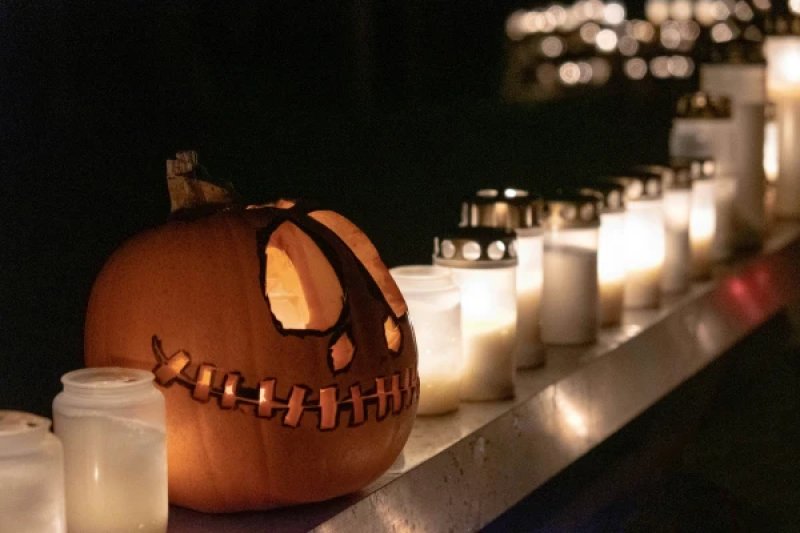
 Foto: BB.LV / helloween тыква и свечи
In France, there are fears of a repeat of mass unrest amid a new wave of protests. On Saturday, October 31, demonstrations will coincide with Halloween, which, according to business representatives, may further complicate the work of law enforcement agencies. According to the LETA agency citing AFP, about 70,000 police officers and other security personnel will be deployed across the country to maintain public order — the same number as during protests the previous weekend. ### Stores fear riots French business representatives are concerned about the possible recurrence of violence, looting, and property damage that accompanied previous actions. President of the French Chamber of Commerce Alain Di Crescenzo stated on Friday to France Inter radio that entrepreneurs are anxiously awaiting the upcoming demonstrations. > "Store owners can’t wait for Saturday to end. We don’t feel safe," he said. Particular concern is raised by the coincidence of protests with Halloween, when many people take to the streets in costumes and masks. > "The information we have indicates that Halloween will not improve the situation, as there will be people in masks on the streets," Di Crescenzo added. ### Marches restricted in central Paris French Interior Minister Laurent Nunez stated that the authorities do not intend to completely ban demonstrations, but will restrict their holding in areas where there is an increased risk of disorder. According to him, protest actions will be allowed, but not in the central districts of cities if there is a threat to public order. The Paris police prefecture has approved the holding of a march only on the outskirts of the capital. However, the student union UNEF stated that it does not intend to cancel its planned action in the eastern part of Paris. The organization plans to hold a march from Bastille Square to Nation Square, despite the restrictions. UNEF representatives accused the authorities of trying to "silence the voice of youth," claiming that the bans limit the right to express protest. ### Authorities increased security measures after the riots on October 17 The current police mobilization is related to the events of October 17, when protests in France were accompanied by clashes, mass looting, and damage to public property. French government agencies acknowledged that there were mistakes in the work of security and intelligence services, which left law enforcement agencies inadequately prepared for the developments. After that, the authorities intensified control over demonstrations, restricted the holding of certain actions, and imposed a curfew in several cities. According to an AFP source, the situation remains tense in Parisian law enforcement agencies. > "On October 17, they were caught off guard. Now even the slightest information turns into intelligence reports, and police are deployed everywhere," the source told the agency. ### Protests began due to prices and educational conditions The protest movement includes representatives of the "yellow vests," trade unions, high school students, and university students. Initially, participants protested against the high cost of living, social inequality, and issues in educational institutions. However, after the tightening of security measures, political demands were added to the economic and social ones: demonstrators are calling for the protection of civil liberties and the right to protest. The new wave of protests is occurring as France prepares for presidential elections, which, according to AFP, are about six months away. In published opinion polls, Marine Le Pen of the national-conservative "National Rally" is leading. Thus, the upcoming weekend will be another test of the French authorities' ability to ensure public order while maintaining the possibility of peaceful demonstrations.
