

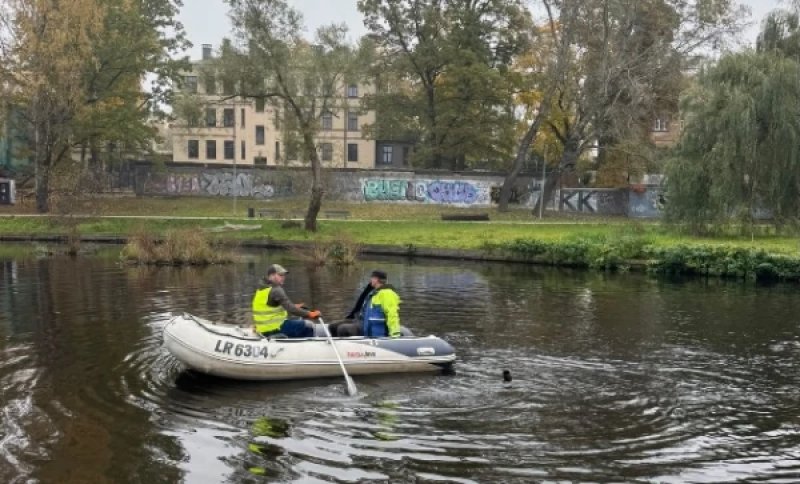
 Foto: BB.LV / лодка с людьми на пруду
In Riga, the cleanup of the Maras pond from fishing gear and other debris that can injure waterfowl has been completed. Fishing lines, hooks, lures, weights, and various metal items were extracted from the water and the shoreline. According to the Riga City Council, the work was organized by the Department of Housing and Environment. The main task was to remove dangerous items for birds that were left or lost during fishing. ### Even a Small Piece of Fishing Line Can Become a Deadly Trap Fishing lines pose a particular threat to swans and other waterfowl. They can wrap around the legs, wings, or neck, restricting the bird's movements and causing severe injuries. Hooks and other sharp tackle left in the water are equally dangerous. ### The Bottom Was Surveyed with Magnets, and Tree Branches Were Checked Manually The cleanup was organized in three stages. Specialists repeatedly surveyed the bottom, the shoreline, and areas where fishermen are particularly active. Special attention was given to tree branches that are in the water or overhanging its surface. Torn fishing lines and lures often get caught on them, remaining virtually unnoticed. During the work, it was possible to discover and extract metal and lead weights, fishing hooks, lures, feeders, fragments of fishing lines, and other debris. Additionally, the water area was checked for abandoned nets and fishing traps. To search for metal items on the bottom, special devices with neodymium magnets were used. Specialists tried to minimize disturbance to the birds inhabiting the pond. Therefore, instead of a motorboat, a regular rowboat was used. ### Fishermen Are Urged Not to Leave Gear on the Shore The Riga City Council reminds that the danger to birds comes not only from large items but also from small fragments of fishing tackle. Even a short piece of fishing line can become entangled around a bird's limbs and lead to serious consequences. Therefore, fishermen are urged to collect all used tackle, including torn lines, hooks, and weights, after finishing fishing and not to leave them in the water or on the shore. The cleanup of the pond allows for the removal of already accumulated dangerous items; however, preventing their reappearance largely depends on the behavior of the visitors themselves.
