

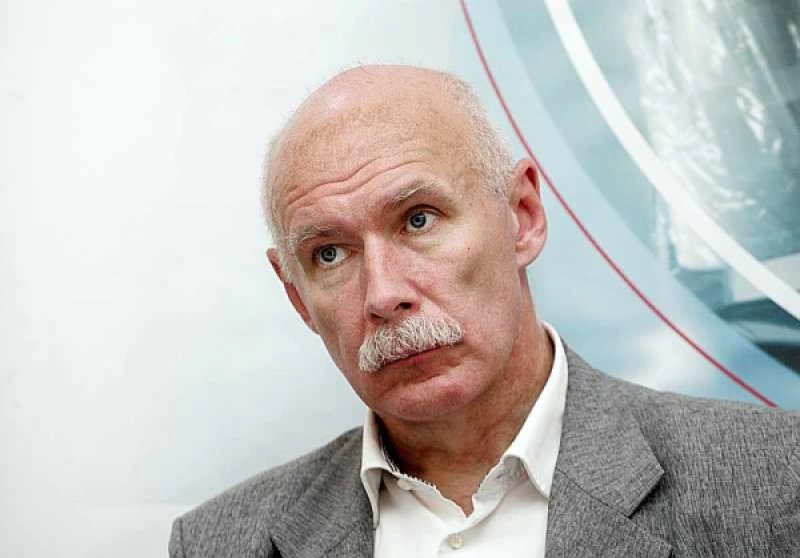
 Foto: BB.LV / Апинис
### “Why do trade unions protect only the fat cats?” Former president of the Latvian Medical Association and ex-Minister of Health Peteris Apinis questioned the fairness of the distribution of additional payments in the public sector, reports [LA.LV](https://www.la.lv/esmu-parsteigts-par-arodbiedribu-centibu-aizstavet-trekno-runcu-galu-apinis-norada-uz-kadu-bistamu-lietu-premiju-sadale) citing the TV24 program "Press Club." On the air of TV24, he expressed bewilderment that trade unions defend workers who receive bonuses, while other categories of employees do not have such opportunities. > “I am a bit surprised by the union's desire to protect the 'fat cats' rather than those people who do not work in the public system and, accordingly, do not receive any bonuses,” Apinis stated. As an example, he cited healthcare workers, particularly nurses, who, according to him, do not receive such additional payments. Apinis believes that trade unions should pay more attention to these categories of workers instead of focusing on preserving bonuses in public administration. ### Up to 15% of vacancies may remain unfilled According to Apinis, there may be a practice in ministries of keeping a certain number of vacant positions. The funds allocated in the budget for the salaries of these workers may subsequently be redirected to additional payments for current employees. > “It seems to me that most ministries have, so to speak, accidentally created a reserve of at least 10–15% of jobs that remain unfilled,” he said. Apinis suggests that by the end of the year, the accumulated funds are distributed among the employees of the institution. At the same time, in his opinion, the amount of additional payments may depend on the employee's position in the service hierarchy. > “Of course, the higher the boss, the more they get, and that goes without saying,” he stated. However, Apinis did not provide specific data confirming the existence of such a practice in most ministries in his speech. His estimate of the share of unfilled vacancies also remains a hypothesis. ### “Out of 160 people, only 37 went outside” To support his doubts about the organization of the work of the public apparatus, Apinis recalled a case that occurred in the Cabinet of Ministers building. According to his account, there was once an alarm signal, after which employees had to leave the premises. > “Everyone ran outside. The Prime Minister also ran out, quickly counted all those who came out. And it turned out that out of 160 people, only 37 came out,” Apinis recounted. Thus, according to his account, there were 123 fewer people outside than expected. > “Then the question arises: where were the others?” the former minister asked. He allowed that some employees might not have had time to evacuate or faced other circumstances, but he suggested that a significant number of workers were simply not at their workplaces at that time. At the same time, Apinis did not specify when exactly the described case occurred. There is no independent confirmation of the figures he provided in the original message, and the number of evacuees alone does not allow determining how many employees were actually at work. ### “Hidden unemployment” in public administration Apinis believes that there may be what is called hidden unemployment in public institutions — a situation where the staffing structure and the funds allocated for it do not fully correspond to the actual need for workers. In his opinion, such an organization of work creates financial reserves that can then be used for additional payments. > “This is where extra resources, extra funds appear, which government structures use to pay additional bonuses,” he stated. At the same time, the former minister does not oppose rewarding employees as such. His criticism is primarily directed at the system in which additional payments can effectively become an expected part of compensation rather than a reward for specific work results. > “I don’t want to say that bonuses are unnecessary, but I want to emphasize that such systems, in which bonuses are already built in from the start, are dangerous,” Apinis emphasized. ### The issue is not only about bonuses but also about the transparency of expenditures Apinis’s statements touch on a broader issue: how transparently public institutions manage the funds allocated for salaries. If the money allocated for unfilled positions is indeed redirected to bonuses, both the legal grounds for such payments and the criteria for their distribution are significant.
