

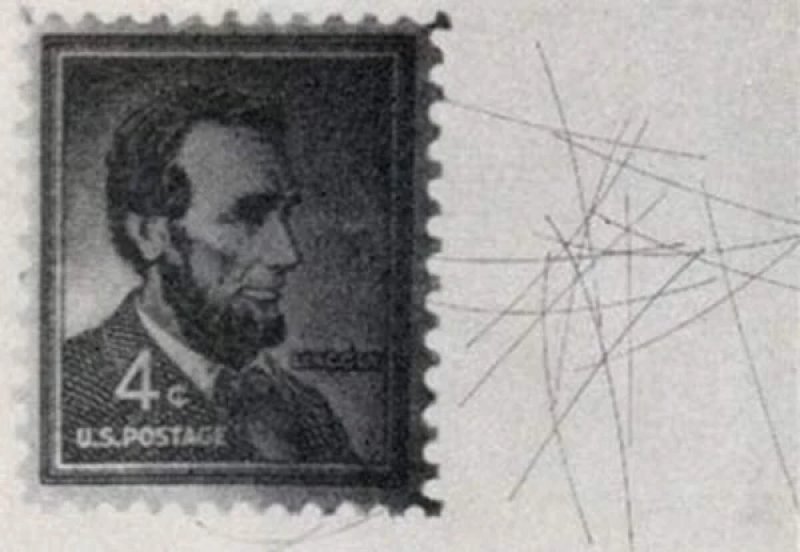
 Foto: BB.LV / Целью было обеспечить надежность дальней военной связи и защитить ее от СССР
However, as motorpasion.com reports, the project became outdated almost immediately after its implementation, and millions of needles turned into the first man-made space debris in history. The experiment, conducted by the Lincoln Laboratory at the Massachusetts Institute of Technology (MIT), was named "Project West Ford." Its goal was to create the largest radio antenna in history to ensure the reliability of long-distance communication, especially in the event of an attack. At that time, all international communication was conducted either through underwater cables or by reflecting signals off the ionosphere. Millions of tiny copper needles were chosen as the material. According to the developers' theory, if a "permanent radio reflector in the form of an orbital ring of copper wires" appeared around the Earth, it would guarantee uninterrupted long-distance communication for the United States. As a result, the U.S. Department of Defense decided to launch an "ring" of 480 million copper antennas into orbit to ensure continuous global radio communication – essentially creating an artificial ionosphere around the Earth. Each copper wire was approximately 1.8 cm long – half the wavelength of the 8 GHz signal transmitted from Earth. Using rockets launched from California, they were placed into a medium Earth orbit (at an altitude of 3500 to 3800 km) with inclinations of 87° and 96°. Over the course of two months, the needles spread out across the orbit. A cloud 30 km thick and 15 km wide formed, rotating around the Earth at an altitude of 3700 km. However, although this "screen" for communication successfully facilitated signal transmission between California and the Lincoln Laboratory – and from a technical standpoint, the project was deemed successful – a number of issues ultimately led to its failure. The first difficulty arose when the needles began to enter the atmosphere: the quality of the signal transmission deteriorated as the naphthalene gel, which was supposed to evaporate, did not disappear, causing the needles to clump together. Additionally, the system became outdated almost immediately after the launch of Telstar 1 – the first modern active communication satellite. Meanwhile, the needles that failed to distribute properly in space still remain in low Earth orbit today, forming clusters of space debris. As of March 2020, there are 36 such clusters remaining in orbit, according to the UNIAN agency.
