

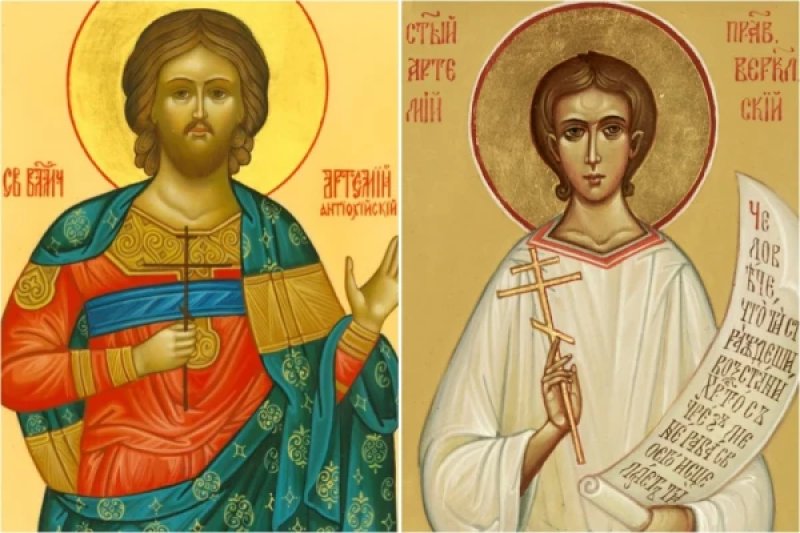
 Foto: BB.LV / Артемий Антиохийский, Артемий Веркольский
**What is Remembered in the Church on November 2, 2026** Artemius of Antioch. Artemius lived in the 4th century in Antioch, which is why he received his nickname. He served as a military commander under Emperor Constantine the Great. After retiring, he continued to serve, but as a hired soldier in the armies in Egypt. At that time, the ruler was Julian the Apostate. Under him, persecutions against Christians began, but Artemius refused to renounce his faith, so he was arrested, tortured, and beheaded. Artemius of Verkole. This future saint was born in the village of Verkole in the Arkhangelsk province in the 16th century. The boy showed an extraordinary character from childhood – instead of mischief, he preferred to help his parents and spent all his free time in the church or in prayer. At the age of 13, he died – he was struck by lightning while working in the field with his father. Due to such an astonishing sudden death, the villagers, thinking it was a punishment for some sins of the boy, did not allow the youth to be buried properly and left him in the forest, covering him with branches and birch bark. But about 30 years after the event, a priest of the local church, Agafonik, stumbled upon the hidden body in the forest. He saw that the remains were untouched by decay and emitted a pleasant aroma. He asked to bring the body to the village. The locals complied, but did not show the deceased the proper respect – they simply left the coffin, covered with birch bark, on the church porch. At that time, a fever broke out in the province. In the village, the child of one of the peasants who transported the body also fell ill. The peasant did not know what to do; the child was literally dying. In despair, he went to the church and touched the coffin with the incorrupt remains of Artemius, and then broke off a piece of the birch bark covering the coffin. Bringing it home, he hung this piece on the string where the sick child's cross was hanging, and then put it around his neck. Immediately, the fever subsided, and the child began to recover. The story of the miracle began to spread from mouth to mouth. Many followed the peasant's example, and all their children also recovered. The epidemic subsided. Soon, a Holy Artemius-Verkole Monastery was built at the site of the discovery of the relics, where the relics of Artemius were kept. In honor of them, a stone church was built some time later. **The Meaning of the Holiday** The history of the amazing miracles performed by the will of the Lord is remembered. **Folk Weather Signs** - Dogs are restless and whimpering – a sign of cooling. - Branches are covered with frost; there will be no rich harvest next year. What Can Be Done on November 2, 2026 - It is customary to prepare supplies for winter. - A great day for fermenting cabbage. - A good time to do repairs – walls, fences, roofs, windows. - A wonderful day for a friendly gathering. What Cannot Be Done on November 2, 2026 - It is not allowed to start quarrels. - It is very bad to speak in raised voices. - One should not conflict with colleagues. - One should not think of anything bad or imagine negative scenarios. - One should not look at passing birds.
