

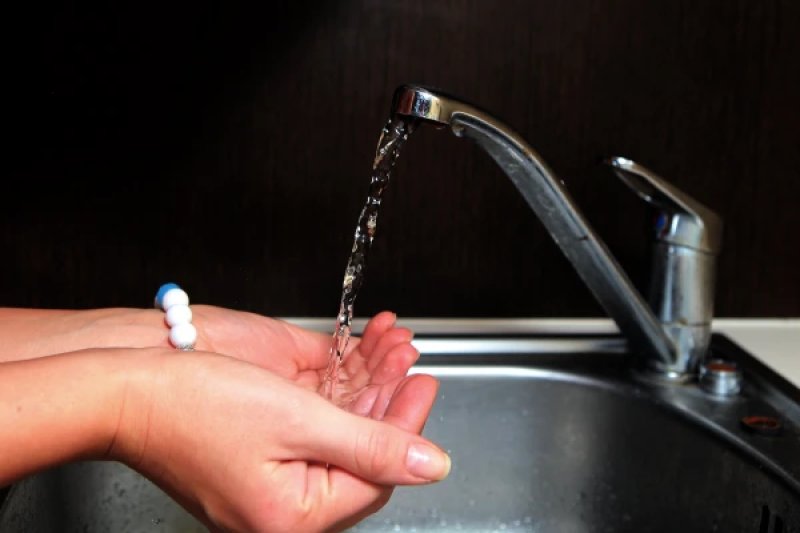
 Foto: BB.LV / кран с водой и ладони
In Riga, from midnight on Monday, November 2, until 11:59 PM on Thursday, November 5, a scheduled disinfection of centralized water supply networks is being conducted. This is the second and final such procedure in 2026. As reported by the LETA agency, citing the municipal enterprise Rīgas ūdens, preventive chlorination is necessary to maintain the quality of drinking water throughout the city's water supply system. During the procedure, tap water may have a more noticeable chlorine smell and a slight specific taste. ### Is it necessary to boil water? The enterprise emphasizes that the concentration of chlorine used during disinfection poses no health threat. However, as an additional precaution, residents are advised to boil water intended for drinking and cooking. This recommendation is in effect not only during the four days of chlorination but also for 24 hours after its completion — that is, until the end of Friday, November 6. For household and utility purposes, water can be used without boiling. ### What to do with water for pets and plants? Water for pets, birds, and ornamental fish, as well as for watering houseplants, is recommended to be pre-settled in an open container. As Rīgas ūdens explains, chlorine is a volatile substance, so its concentration gradually decreases during settling. At the same time, boiling such water is not necessary according to the enterprise's recommendations. ### Why is chlorination of the water supply conducted twice a year in Riga? The total length of the centralized water supply networks in the capital exceeds 1,500 kilometers, and the average age of the pipes is over 45 years. According to representatives of Rīgas ūdens, regular preventive measures are necessary for such a large-scale infrastructure. Chlorination helps prevent the proliferation of microorganisms in the pipelines and reduces the risk of microbiological contamination of water on its way from treatment stations to consumers. The procedure is carried out twice a year — before the warm season and after its completion. This time, disinfection began simultaneously at all water pumping stations of the enterprise, as well as in several districts of the city using mobile equipment. ### How much will the chlorine content increase? The head of the Joint Water Quality Control Laboratory of Rīgas ūdens, Gunita Kona, explained that according to the recommendations of the World Health Organization, the maximum concentration of free chlorine in drinking water is 5 mg/L. Under normal conditions, this indicator in Riga is around 0.32 mg/L. During preventive disinfection, the concentration is temporarily increased to 4 mg/L, which still does not exceed the specified limit. For comparison, according to the data provided by the enterprise, the usual concentration of chlorine in drinking water is 0.40 mg/L in Rome, 0.43 mg/L in Helsinki, and 1.1 mg/L in Tallinn. Rīgas ūdens notes that preventive chlorination is a common international practice. In some European countries, a small concentration of chlorine is maintained in drinking water continuously to ensure its safety during transportation through pipelines. ### Key points for Riga residents November 2–5 — preventive chlorination of the water supply. For drinking and cooking, it is recommended to boil water until the end of November 6. For household needs, water can be used without restrictions. For plants and pets, it is recommended to pre-settle the water. For aquariums, the special sensitivity of fish to chlorine should be taken into account.
