

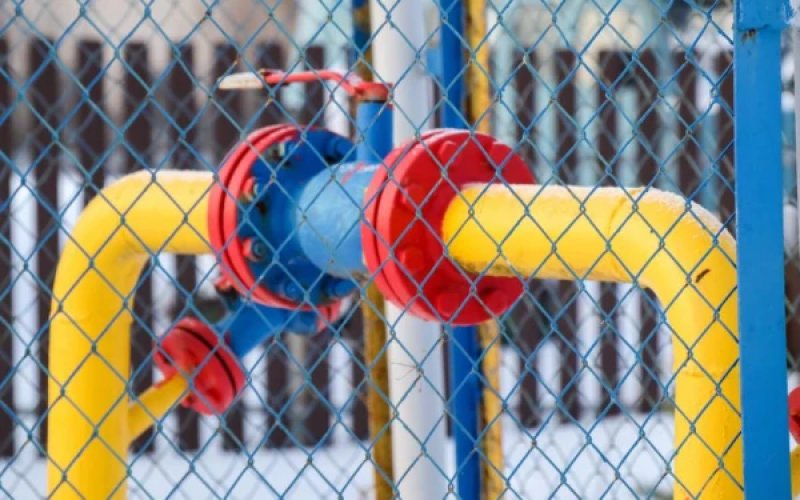
 Foto: BB.LV / газопровод
The United States has proposed a new scheme for selling natural gas to European countries, which involves the participation of an American intermediary and a special mechanism for controlling Moscow's revenues. This was reported by The Wall Street Journal, citing informed sources, as conveyed by LETA referencing Meduza. According to the publication, the proposal was made in September during visits to Moscow and Kyiv by special envoys of U.S. President Donald Trump — Jared Kushner and Steve Witkoff. The American side hopes that the resumption of gas trade will serve as an incentive for the Kremlin to agree to cease strikes on energy infrastructure as part of the war against Ukraine. ### How Should the American Scheme Work? According to the proposal, Russian natural gas would again enter the European market, but its sale would be conducted through an American intermediary. It is assumed that such a scheme would allow circumventing the existing restrictions of the European Union. At the same time, Washington proposed a special mechanism for handling the revenue: the proceeds from gas sales would be transferred to a deposit account under the jurisdiction of a third country. The American negotiators intend for this to prevent Russian authorities from directly using the funds to finance the war. However, the details of the proposed money control mechanism and its compliance with existing sanctions are not disclosed in the report. ### What Will Russia, Ukraine, and the U.S. Gain? As The Wall Street Journal writes, American negotiators see several potential advantages in this scheme. For Russia, returning to the European gas market would mean a resumption of export supplies and the associated revenues, although access to the proceeds was expected to be limited. Ukraine, in turn, could receive money for the transit of Russian gas through its territory. Additionally, the involvement of American intermediaries would open new commercial opportunities for investors from the U.S. According to Washington representatives, the combination of these economic incentives could help achieve an agreement on an energy truce. ### Europe is Being Persuaded with the Promise of Cheaper Gas American negotiators also discussed the proposal with European leaders. One of the main arguments was the potential decrease in energy prices ahead of winter. As noted by The Wall Street Journal, the negotiations took place at a time when European natural gas reserves were at their lowest levels in recent years. In the Trump administration, according to the newspaper, they hope that economic circumstances may force European countries to reconsider their stance on Russian gas. The official position of Brussels, however, remains unchanged: the European Union does not intend to return to purchasing Russian natural gas. ### European Officials Reject the Proposal Despite Washington's attempts to present the initiative as economically advantageous, European representatives sharply criticize it in private conversations. A senior official from one of the Scandinavian countries stated that resuming purchases of Russian gas contradicts the principles upheld by European states. Another representative from a major European country compared the proposed deal to the policy of British Prime Minister Neville Chamberlain, who in 1938 agreed to the Munich Agreement with Adolf Hitler, which involved the transfer of the Sudetenland of Czechoslovakia to Germany. Thus, European officials view the American initiative not only as an economic issue but also as a political concession to Russia. It is still unknown how Vladimir Putin reacted to the proposal and whether it is currently being discussed at an official level.
