

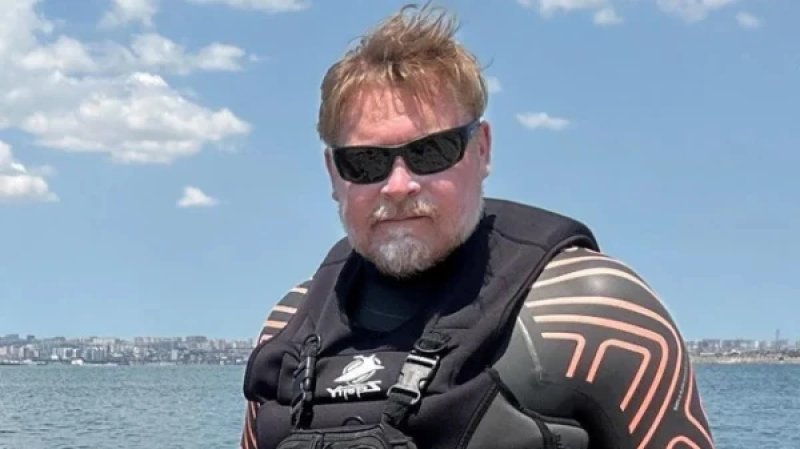
 Foto: BB.LV / Карл Бушби
A journey that was supposed to take five years stretched over almost three decades. And now the traveler faces perhaps the most difficult task — learning to live a normal life. On November 2, 2026, an event awaited for almost 28 years took place in the British city of Hull. Former paratrooper Karl Bushby returned home — a man who set himself an incredible goal: to walk from South America to his native England without using motorized transport. He was greeted by hundreds of people, relatives, friends, and the mayor of the city, [reports](https://nos.nl/artikel/2637763-britse-avonturier-voltooit-na-28-jaar-wereldtocht-te-voet-ik-heb-dit-niet-alleen-gedaan?utm_source=chatgpt.com) NOS. Bushby entered Hull pushing a cart loaded with belongings. Behind him were four continents, about 30 countries, and an estimated 75 million steps. "It took the whole world for me to be here today," the traveler admitted to the crowd. He added that this achievement belongs not only to him: the expedition was completed thanks to the help of people from all over the world. ## Left with $500 and Expected to Return in Five Years The story began in 1998 in Punta Arenas, at the southernmost tip of Chile. 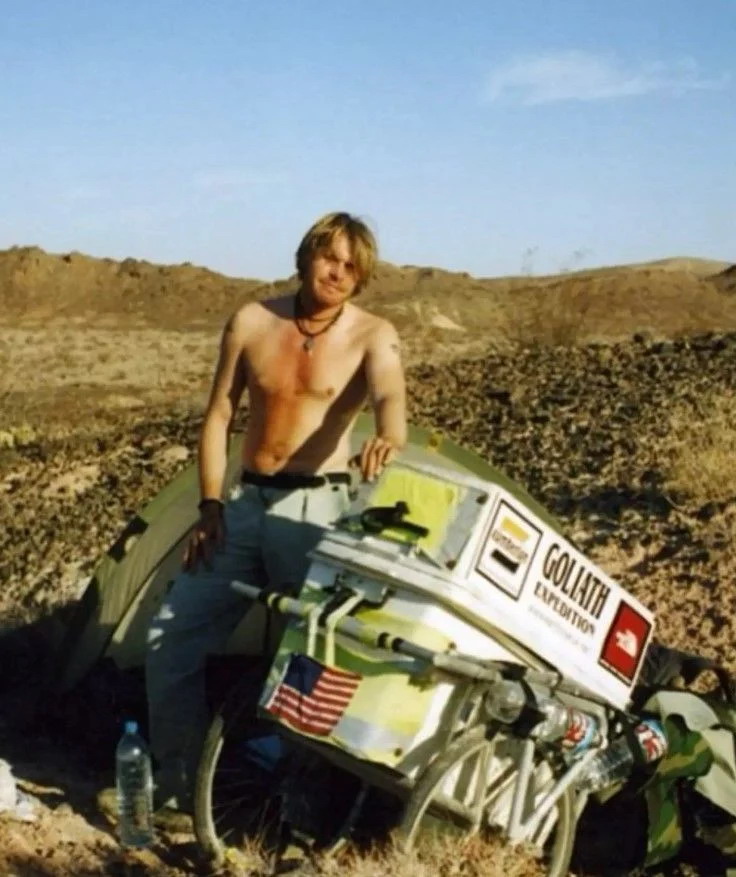 At that time, the 29-year-old Briton, who had served in the airborne forces, set off on a journey he called the "Goliath Expedition." He had only $500 in his pocket. Bushby set two fundamental rules for himself: not to use motorized transport to progress along the route and to reach his hometown of Hull under his own power. Initially, he expected to manage it in five years. However, he quickly realized how wrong he was. According to him, he first extended the estimated time to twelve years, and then life forced him to abandon even those calculations. As a result, the journey home took almost 28 years. 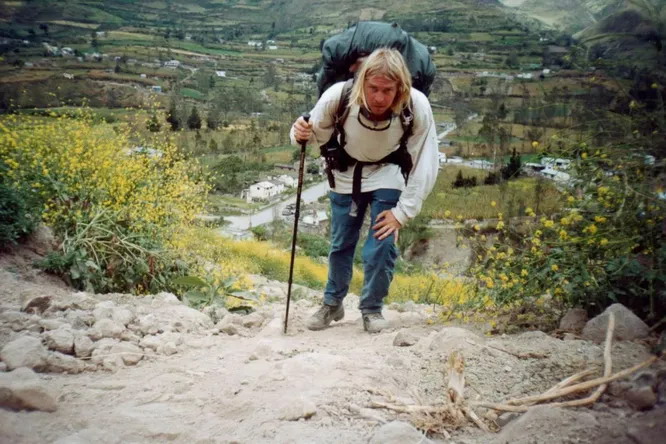 ## Crocodiles, Partisans, and a Polar Bear During the expedition, the Briton experienced so many dangerous adventures that they could fill several movies. In Colombia, he had to escape from armed conflict while navigating through waters inhabited by crocodiles. He crossed the infamous Darién Gap — a treacherous stretch of jungle and swamps between Colombia and Panama. This area is considered one of the most dangerous migration routes in the world. 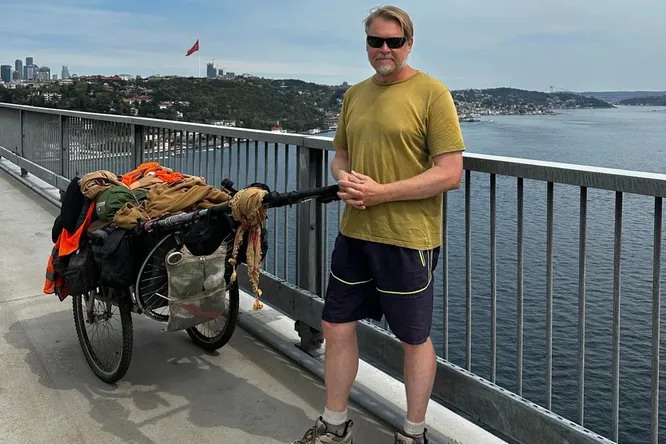 In other parts of his journey, he had to traverse deserts, tropical forests, marshy areas, and regions with extremely low temperatures. Once, the traveler came face to face with a polar bear. But one of the most incredible episodes was crossing the Bering Strait between Alaska and Russia. Together with a French traveler, Bushby set off across dangerous stretches of sea ice to reach Siberia. The story is particularly remarkable because none of the participants had experience in Arctic expeditions. Nevertheless, they managed to make the crossing that only a few dare to attempt.  ## Russia Delayed Him for Almost Ten Years While Bushby learned to overcome natural obstacles, dealing with bureaucracy proved to be significantly more complicated. The most time-consuming part was Russia. In total, with numerous breaks, it took almost ten years to traverse this country. After crossing the Bering Strait, the British authorities detained him. He faced deportation due to illegal border crossing. Subsequently, he encountered constant difficulties with visas and permits. The harsh climate also limited the traveler's options: in some areas, he could only continue his journey for a few months each year. In 2012, when Russia denied him a visa, Bushby decided to stage an unusual protest. He walked about 5,600 kilometers from Los Angeles to the Russian embassy in Washington. Ultimately, he was issued the necessary documents. ## Two Years in Mexico and Suspicions of Espionage Russia was not the only obstacle. After the global financial crisis of 2008, Bushby lost his sponsors and found himself virtually without funds. Due to financial difficulties, he had to spend two years in Mexico, temporarily pausing the expedition. Later, while trying to enter Mongolia, the traveler faced Chinese authorities, who suspected him of espionage and detained him. Then new delays were caused by the coronavirus pandemic. There were times when continuing the journey seemed almost impossible. But Bushby consistently returned to his goal.  ## Swam Across the Caspian Sea, Although He Can’t Swim Well In 2024, geopolitical circumstances forced the Briton to seek a new route. Continuing the journey through Russia and Iran became impossible, so he decided to cross the Caspian Sea — the largest enclosed body of water on the planet. This took 31 days. The most surprising thing is that Bushby, by his own admission, is not a good swimmer at all. To navigate the waters, he developed his own technique, which he called floatimming — a combination of swimming and staying afloat. In a wetsuit and life jacket, the traveler moved primarily on his back, using his arms to assist him. In this unusual way, he managed to cross the vast body of water. ## The Last Obstacle — The English Channel It seemed that after thousands of kilometers through jungles, deserts, and icy expanses, reaching the United Kingdom would be a piece of cake. However, a problem arose here as well. Bushby intended to enter England through the tunnel under the English Channel, but he was unable to obtain permission for such a crossing. So he decided to swim. The crossing of the strait to Dover took a total of about 20 hours of swimming, spread over three days. Only after that could the Briton complete the last part of the journey on his native soil. ## “The Poorest People Shared Their Last with Me” During his 28 years of travel, Bushby found himself in situations where he would not have survived without the help of strangers. He slept in huts made from car parts, subsisted on rice and water, and accepted assistance from completely unknown families. Once, when the traveler fell seriously ill due to a stomach infection, he was cared for by the family of a Peruvian doctor. According to the Briton, he was often helped by people who had virtually nothing themselves. "I was welcomed by the poorest," he recalled. The traveler claims that over the years of wandering, he met a vast number of kind and responsive people regardless of their nationality, culture, and wealth. It was these encounters, he says, that allowed him not to give up. ## A Love That Could Not Withstand the Journey Over the long years of wandering, Bushby also experienced romantic stories. In Colombia, he met a woman with whom he was in a relationship for seven years. Later, he had a three-year romance with a woman from Japan. However, both stories ended in separation: constant relocations, uncertainty, and the inability to lead a normal life together proved to be too heavy a burden. But the biggest personal sacrifice was the time spent away from his son. When Bushby set off on the expedition, his son Adam was only eight years old. The boy stayed with the traveler's ex-wife. The father essentially missed his son's growing up. Nevertheless, as Bushby told in an interview with [The Guardian](https://www.theguardian.com/lifeandstyle/2026/oct/13/karl-bushby-incredible-28-year-walk-home-goliath-expedition-hull?utm_source=chatgpt.com), they managed to maintain a good relationship. ## Returned Home, But Now Doesn’t Know How to Live On The finish of the expedition was both a happy and a troubling event for the Briton. For almost three decades, he had one main goal — to move forward, overcome obstacles, and get closer to his hometown. Now the goal has been achieved. But along with that, what he dedicated most of his adult life to has also disappeared. On the eve of his return, Bushby confessed to the Associated Press that he feels mixed emotions. "My life’s purpose and the reason I live are about to disappear. It will be hard to become part of a society that you essentially no longer know," the traveler said. During his absence, the world changed almost beyond recognition. Smartphones, social networks, new technologies emerged, and people's habits and lifestyles changed. And Bushby spent those years on the road, often far from civilization. He managed to walk about 58,000 kilometers and return to where his life once began. But now he faces another journey — much shorter in distance and perhaps no less challenging: returning to normal life.
