

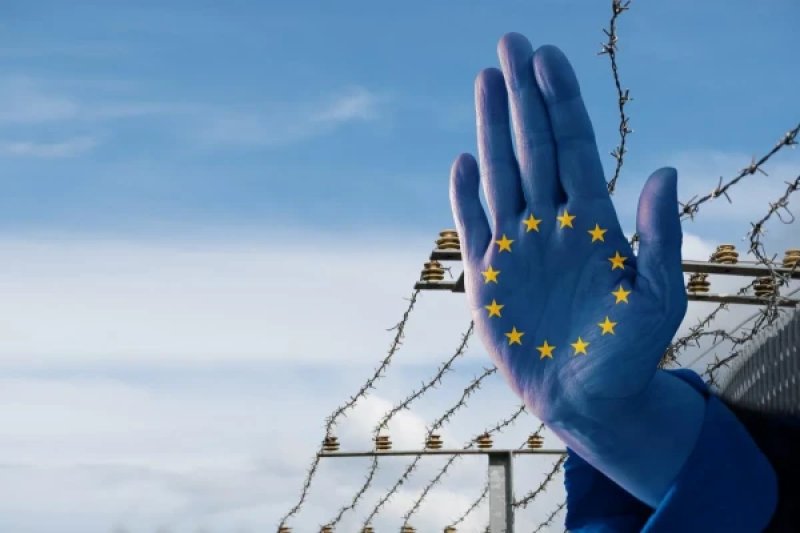
 Foto: BB.LV / Шенгенская граница
Seven of them have already notified the European Commission that checks will continue in 2027, writes SchengenVisaInfo. In particular, Denmark, Norway, and Sweden announced the introduction of controls for new six-month periods – from November 12, 2026, to May 11, 2027. The extension of measures came five months after the European Commission recommended these countries begin a phased lifting of checks. Denmark justifies the need for control at land and sea borders with Germany due to risks of sabotage, terrorism, and organized crime. Norway points to threats to its energy sector and the danger of sabotage, while Sweden cites cross-border organized crime, threats from Russia, hybrid threats, the use of migrants as a tool of pressure, and events in Ceuta as reasons. However, the list of countries is gradually decreasing: the Netherlands ceased to carry out checks at the end of September, while Italy and Spain abandoned mutual checks on flights and ferry routes – measures they had imposed against each other amid the crisis in Ceuta in the summer of the same year. ## ## Where travelers should expect border control The publication emphasizes that tourists should primarily pay attention to the scale of such checks. For example, France and Sweden have introduced checks at all their internal borders, including flights from other Schengen countries, while Germany has done so at all nine of its land borders. In other countries, the measures are more limited: Italy checks only the border with Slovenia, Poland checks its borders with Germany and Lithuania, and Norway checks only ports connected by ferry services to other Schengen countries (thus, Norwegian control measures do not apply to drivers entering Norway from Sweden by land). ## ## What this means for travelers According to the Schengen Borders Code, checks at internal borders are a last resort and should be temporary. After the reform of the code carried out in 2024, in the event of a predictable threat, countries can introduce checks for up to six months, with the total duration of such measures not exceeding two years. In situations defined in the regulation as "exceptional circumstances," a country can extend checks for another six months, and then for one final six-month period. In practice, however, some states have been checking travelers for much longer, each time notifying about the introduction of a new control period and often citing the emergence of new threats. For example, in Germany, checks at some internal borders have been continuous since September 13, 2015, in Austria since September 16, 2015, in Sweden since November 12, 2015, and in Denmark since January 4, 2016. France has been conducting checks continuously since November 1, 2018, Norway since November 12, 2021, Italy (at the border with Slovenia) since October 21, 2023, and Poland since July 7, 2025. For travelers, these measures mean rather selective checks, rather than full passport control at every border crossing point. Most travelers moving by car or train cross borders without stopping; however, any person may be asked to present identification. To avoid trouble, EU and Schengen citizens should carry a valid passport or national identity card. A driver's license is not a document that grants the right to cross the border. Citizens of non-EU countries need to have a passport, and if required, a Schengen visa or residence permit (even for a day trip to a neighboring country). Drivers, as well as passengers on buses and ferries crossing the borders from the above-mentioned list, should consider possible delays at the check locations.
