

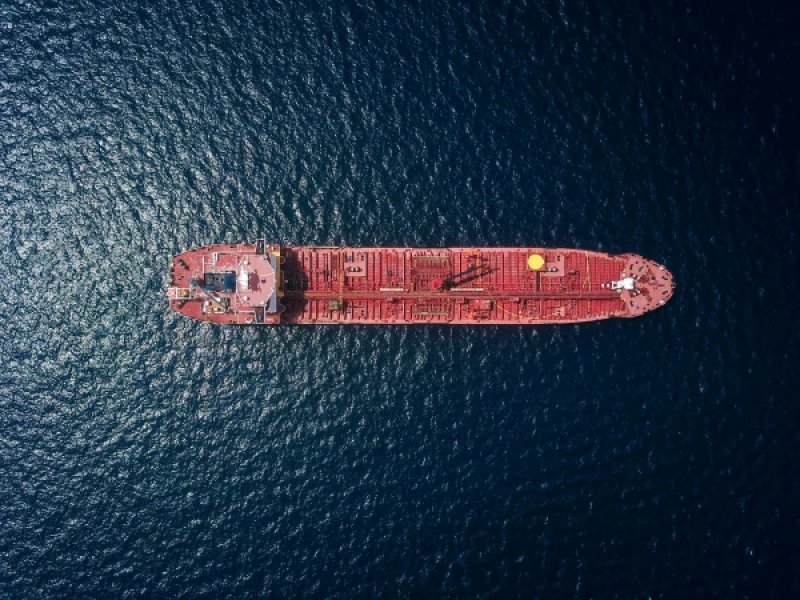
 Foto: BB.LV / танкер
### Two tankers changed their route According to the Financial Times, the Russian tanker Talisman and the vessel Leruo, owned by a Hong Kong company and sailing under the flag of Sierra Leone, no longer list the Atlantic coast of the U.S. as their destination. As of November 2, Leruo is heading to Brazil, while Talisman has entered the Mediterranean Sea and is off the coast of Algeria. Talisman is transmitting a navigation signal for orders — "awaiting orders." This means that the final destination of the cargo has not yet been determined. Both vessels are under European Union sanctions. ### A third tanker may also refuse to dock in the U.S. Another tanker, Agioi Fanendes, owned by the Greek shipping company Eastern Mediterranean Maritime, is still on course for the U.S. It is expected to reach New York this coming weekend. However, the vessel is also transmitting a signal for orders. Kpler analyst Matt Smith believes that American buyers may be exercising caution due to sanctions and legal risks. In his assessment, it cannot be ruled out that this tanker may ultimately change its route as well. Meanwhile, another vessel, Beast, which is under sanctions and owned by companies from the Seychelles, continues its journey toward the Atlantic coast of the U.S. It loaded in the Russian port of Primorsk on October 27. ### Why the U.S. needed Russian diesel Supplies of Russian fuel were intended to help U.S. authorities curb the rising diesel prices, which have sharply increased amid the war in Iran. According to the Financial Times, diesel futures have risen by more than 60% since the beginning of the conflict. Diesel stocks in the U.S. have fallen to their lowest level in more than 20 years. In early November, the average retail price of diesel fuel in the U.S. reached approximately $6.30 per gallon, or $1.66 per liter. To increase fuel supply in the domestic market, the Trump administration reached an agreement with Russia to resume diesel supplies. However, the practical implementation of the agreement faced sanctions restrictions and concerns from American buyers. ### The deal did not help Republicans in the elections The agreements with Moscow were reached a few weeks before the U.S. midterm elections, which took place on November 3. However, it was not possible to reduce the political pressure on the Trump administration. As a result of the voting, the Democratic Party gained control of both chambers of Congress — the Senate and the House of Representatives. The rising cost of living and the consequences of the war in Iran became important themes of the election campaign. Now the future of Russian diesel supplies remains uncertain. Despite a temporary permit for imports, American companies face legal and sanctions risks, and the first expected shipments did not materialize.
