

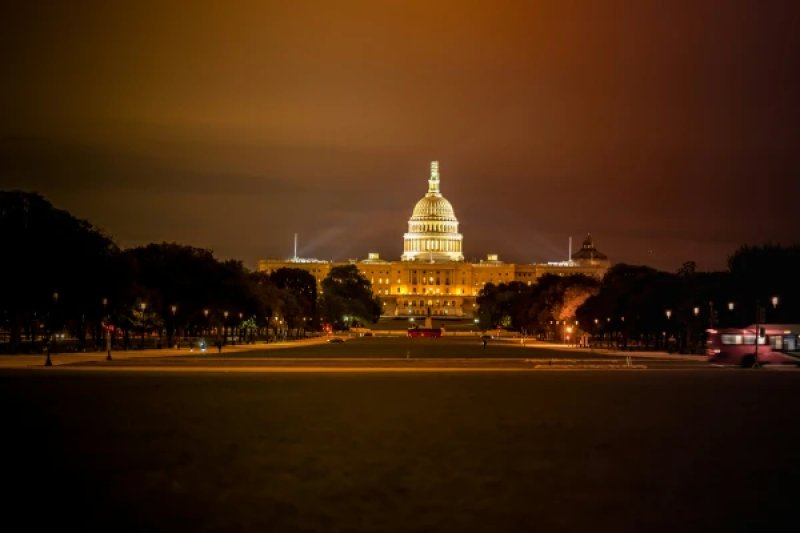
 Foto: BB.LV / капитолий
The new distribution of political power in the U.S. Congress may prove favorable for European security and Washington's relations with NATO allies. This opinion was expressed in an interview with the LETA agency by European Parliament member Rihards Kolss (National Alliance). After the midterm elections, the Democrats gained a majority in both chambers of Congress — the House of Representatives and the Senate. Thus, the remaining two years of Donald Trump's presidential term will take place under conditions of so-called divided government, where the president and the parliamentary majority represent different political camps. ### Why Did Voters Turn Away from Republicans? In Kolss's opinion, the election results are explained not so much by a change in voter activity, but by a shift of some former Trump supporters to the Democrats' side. > "The outcome of the elections was determined not by voter activity — the decisive factor was that a significant portion of voters who supported Trump in 2024 this time preferred to cast their votes for the Democrats," the politician believes. Among the reasons, he cites the rising cost of living, the consequences of the Trump administration's tariff policy, and the protracted war in Iran, which, in his assessment, has led to increased fuel and food prices. Kolss also believes that immediately after the midterm elections, preparations for the 2028 presidential campaign effectively began. According to his observations, the search for scapegoats for the Republicans' defeat has already started in American politics, along with attempts by some politicians to distance themselves from former allies. ### What Will Change for Ukraine? One of the most important consequences of the new composition of Congress, Kolss believes, is the possibility of more consistent support for Ukraine. In his opinion, packages of American aid to Kyiv will no longer be delayed in Congress for many months. > "We in Latvia should not, out of inertia, mourn every mandate lost by the Republicans — some of the loudest MAGA isolationists in Congress consistently voted against supporting Ukraine and European security," stated the MEP. Kolss hopes that the new majority will provide more sustainable support for Ukraine and enhance parliamentary oversight of the administration's foreign policy decisions. In particular, he expects closer scrutiny of sanctions evasion and dubious trade agreements, including the recent decision to allow the import of Russian diesel fuel. ### What Does This Mean for Latvia's Security? In Kolss's assessment, changes in Congress may positively affect the security of the Baltic region. He hopes for continued support for the Baltic Security Initiative, as well as American military presence in Europe. At the same time, the MEP emphasizes that the strategic partnership between Latvia and the U.S. does not solely depend on which party controls Congress. > "For Latvia and our region, the results of the midterm elections in the U.S. Congress do not change fundamental things — the U.S. has been and remains our strategic ally, and the representation of our security interests in Washington has always relied on support from both parties," the politician noted. According to him, Latvia needs to continue proving its significance as an ally through concrete actions. Kolss believes that the country's defense budget, approaching 5% of GDP, and the strengthening of the eastern border demonstrate Latvia's serious contribution to overall security. ### Can Congress Limit Trump? Despite the change in the political balance, Kolss warns against inflated expectations. He reminds that the U.S. president retains broad executive powers and veto rights until the end of his term in January 2029. > "One should not harbor illusions that the new Congress will now take foreign policy into its own hands and everything will change," emphasized the MEP. In his assessment, the White House will continue to define the main directions of American foreign policy. At the same time, the new majority in Congress may strengthen oversight of the administration's decisions and provide greater predictability in relations with European allies. ### Europe Will Still Have to Spend More on Defense Kolss admits that after the elections, the tone of communication between Washington and European partners may become more respectful. However, he believes that the fundamental position of the U.S. will not change: Europe must take on the primary responsibility for ensuring its own defense with conventional armed forces. This means the need for further increases in defense spending and strengthening European military capabilities. > "The new Congress may bring greater stability to transatlantic relations and breathe new life into them in a stronger and more profound format. However, Europe's homework — both in defense and in economic and physical deterrence of Russia — will not be done by anyone else for us," concluded Kolss.
