

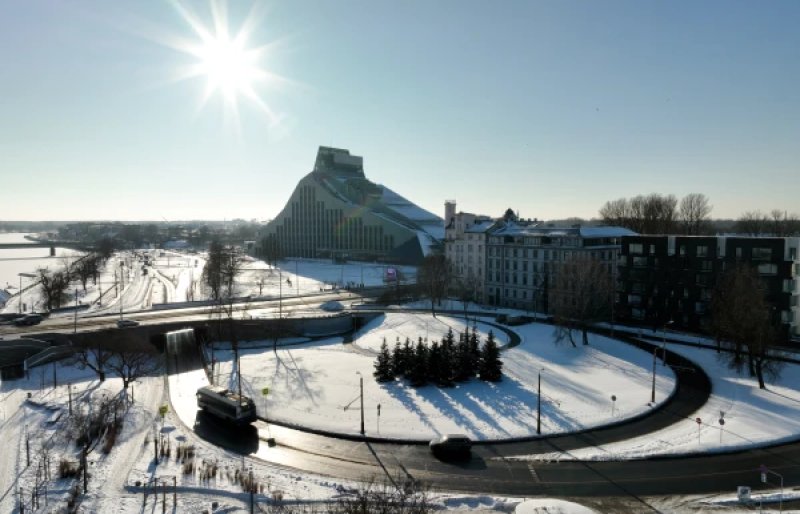
 Foto: BB.LV / Рига зимой
Meteorologists are observing an unusually early weakening of the polar vortex, an extensive circulation of cold air over the Arctic, which increases the likelihood of colder weather in the coming weeks in certain areas of Europe, North America, and Asia. This disruption may raise the chances of cold spells in northern and central Europe, including parts of Scandinavia, the British Isles, Germany, and Poland. Typically, this phenomenon intensifies during the fall, peaks around January, and then gradually weakens by the end of winter. Major disruptions that can allow Arctic air to push further south usually occur between January and March. This year, however, scientists have detected signs of disruption as early as November, which is an unprecedented event in modern meteorological observational history. Professor Andrew Charlton-Perez, a meteorologist at the University of Reading, stated in a published expert commentary by the university (source in English) that scientists have never before observed such an early-season sudden stratospheric warming. The polar vortex is a large area of low pressure and extremely cold air circulating high above the Arctic. When it weakens or shifts, the jet stream can become distorted, potentially allowing cold Arctic air to penetrate into lower latitudes. Scientists assess the possible impact on winter weather Its effects may manifest over several weeks as it reaches the lower layers of the atmosphere, where weather systems form, and the ultimate effect depends on the positioning of high and low-pressure areas. Scientists are also examining the possible influence of a strong El Niño phenomenon developing in the Pacific Ocean, which may alter atmospheric circulation and contribute to disruptions in the polar vortex. Climate change is also considered a possible factor affecting some of the atmospheric processes involved, although a direct link to the current exceptionally early disruption has not yet been established. So far, meteorologists continue to monitor the situation, and it is expected that in the coming weeks it will become clearer whether this disruption will lead to significant changes in winter weather in the Northern Hemisphere.
