

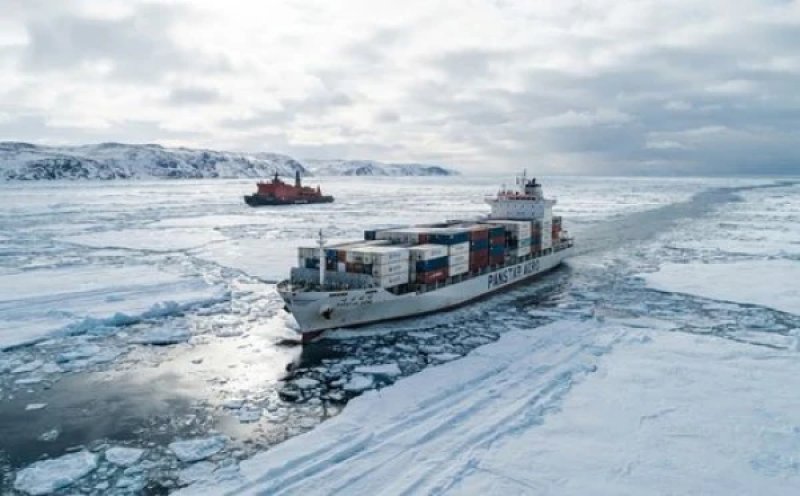
 Foto: BB.LV / Корейский танкер идет через СМП
The South Korean container ship PanStar Acro has successfully completed a round trip between Asia and Western Europe via the Northern Sea Route. The vessel covered the entire route from Busan to Rotterdam and back in 50 days, saving at least ten days compared to the standard passage through the Suez Canal. According to DW, this Arctic crossing was the first practical test of Seoul's plans to create an alternative trade route. The new route is approximately 7,000 kilometers shorter than the usual southern paths and allowed carriers to completely bypass the unstable regions of the Middle East. The melting of Arctic ice has made navigation more accessible, as confirmed by statistics from the Arctic Council: last year, the number of passages through northern waters increased by 40 percent. South Korean authorities hope to establish regular commercial routes in this direction by 2030, enhancing the role of Busan port as a key transport hub. The successful completion of the voyage has raised significant concerns among Seoul's European partners. Capitals in the European Union expressed fears that the active use of the Arctic route would lead to South Korea's strategic dependence on Moscow. Shipping along the Russian coast requires coordination with local authorities and regular engagement of icebreaker fleets, which contradicts the efforts of Western countries to isolate the Russian economy. Experts estimate that President Lee Jae-Myung's cabinet aims to address two objectives at once. On one hand, Seoul is protecting its trade interests and supporting national shipbuilding. On the other hand, the South Korean leadership hopes to maintain a working dialogue with Moscow, trying to limit Russia's military rapprochement with North Korea. Additional tension has been created by reports of recent shipments of South Korean fuel to Russian ports. Relations between Seoul and the Western coalition have become complicated after a diplomatic conflict with Kyiv. Disagreements flared up after public statements from the Ukrainian side regarding the transfer of captured North Korean soldiers, which violated closed agreements. In response, South Korea recalled its ambassador from Ukraine. Analysts note that Seoul has adopted a wait-and-see position: the government is holding onto economic positions for the future while simultaneously trying not to undermine its strategic alliance with traditional partners in the West.
