

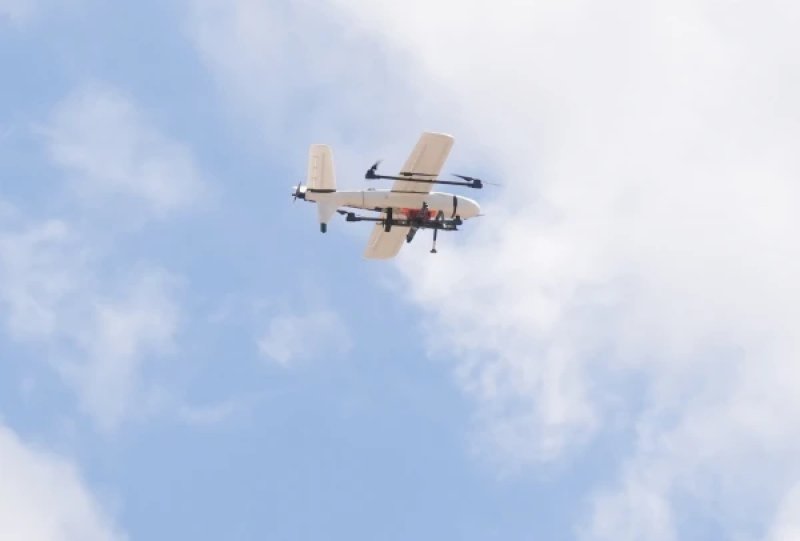
 Foto: BB.LV / дрон
After an unsuccessful attempt to shoot down a drone that violated Latvia's airspace last week, the National Armed Forces reviewed their response procedures to such threats. The main change is the reduction of the decision-making chain, which previously could slow down military actions. This was reported on Monday, November 9, in the Latvian Television program "Morning Panorama" by Defense Minister Raivis Melniks, according to the LETA agency. ### The drone was detected, but could not be destroyed According to the minister, during the incident, the surveillance system detected the drone, after which an interceptor drone was sent after it. However, the target could not be destroyed. Melniks acknowledged that the reasons could be both the existing coordination procedures and the insufficient experience of the military in using the new system. The minister apologized to the residents for the failure to shoot down the drone. At the same time, he emphasized that important elements of the system were successfully tested in practice: target detection and the ability to launch an interceptor drone into the air. ### Military on the ground will be given more authority After the incident, the minister personally reviewed the entire decision-making chain with commanders on the eastern border. As a result, some additional precautionary measures previously introduced by the military themselves were canceled. Now, interception groups that directly detect drones and can destroy them will receive broader authority to act independently. At the same time, the command center will retain the ability to stop the operation if allied aviation appears in the threat zone and poses a risk to its safety. According to Melniks, the changes should allow for a significantly faster response to drones. ### Why did coordination with NATO aviation hinder? The minister explained that until now, Latvia also relied on allied aviation when intercepting drones. When an interceptor drone and allied aircraft operate in the same area, additional coordination is required. This is necessary to ensure that the attempt to destroy the drone does not pose a threat to friendly aviation. However, coordination took time, which could reduce the effectiveness of the interception. After reviewing the procedures, military groups on the ground will be able to make decisions faster, and the command center will be able to intervene in case of a threat to allied safety. ### Additional radars installed on the eastern border Melniks also reported that additional radar systems have been deployed on the eastern border. They are intended to ensure earlier detection of drones and give the military more time to respond. The drone interception system was deployed at the end of September, as previously planned. The military is currently continuing to master its use. Last week, Latvian entrepreneurs worked alongside the military at the border, participating in the improvement of technical solutions. The minister expressed hope that changes in procedures and further refinement of equipment would allow for the successful destruction of detected drones in the future. ### Earlier, drone debris was found in the Alūksne region Against the backdrop of discussions about airspace security, an investigation into another incident continues. In the forest of the Liepna parish in the Alūksne region, presumed debris of an unmanned aerial vehicle was discovered, which may have fallen on October 18. On that day, reports of a sound resembling an explosion were received in the area. The National Armed Forces analyzed data from airspace surveillance systems and obtained information about the possible movement of an unidentified object over the territory of Latvia. The military, together with the State Police, organized searches for the presumed crash site. They continued on October 18 and 19 but were then halted due to a lack of information that would confirm the crash and determine the object's location. Later, a local resident reported to the police about the discovery of presumed debris in a hard-to-reach forest area. Arriving police officers confirmed the find. On Saturday evening, work at the incident site was completed, but the investigation continues. ### A criminal case and internal investigation have been initiated In connection with the discovery of presumed drone debris, the State Police initiated a criminal case under Chapter 10 of the Criminal Law of Latvia - "Crimes Against the State." Law enforcement thanked the local resident who reported the find. An internal investigation has also been initiated in the National Armed Forces, during which the circumstances of the incident and the decisions made by responsible officials are being assessed.
