

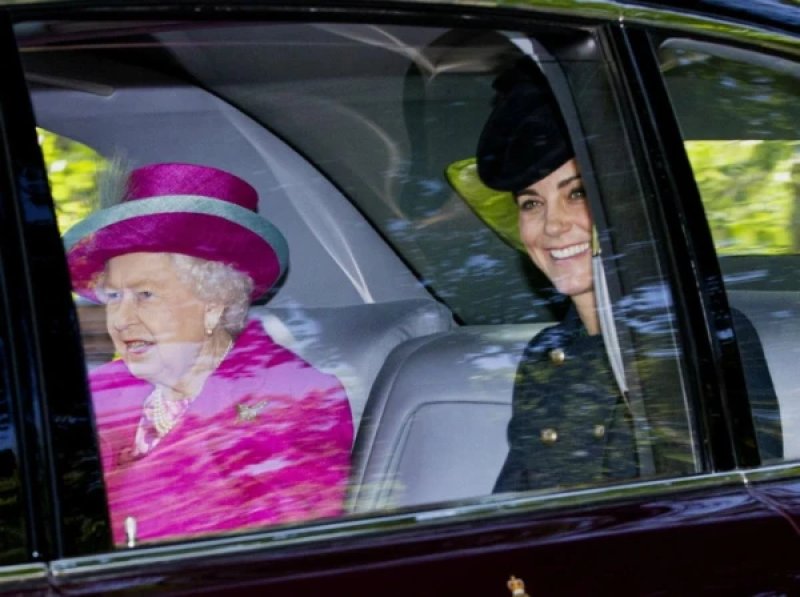
 Foto: BB.LV / Елизавета II и Кейт Миддлтон
Experts believe that the issue lies not so much in their backgrounds, but in their personalities, relationships with their husbands, and attitudes towards royal traditions. At first glance, Diana Spencer seemed to be the perfect fit for life in the British royal family. She came from an aristocratic lineage, was familiar with high society from a young age, and understood the significance of traditions. Kate Middleton, on the other hand, grew up in a family of entrepreneurs and did not belong to the aristocracy. Nevertheless, she managed to build a stable relationship with the royal family and earn the trust of Elizabeth II. So why did things turn out so differently? ## Diana Became a Princess at 20, Kate at 29 One of the main differences lay in age and life experience. Diana married Prince Charles in 1981 when she was just 20 years old. Her acquaintance with her future husband was relatively short, and her ideas about family life remained largely romantic. Kate, however, became the wife of Prince William in 2011 at the age of 29. By that time, the couple had been dating for about eight years, including a period of temporary separation. Catherine had the opportunity to familiarize herself with the peculiarities of royal life and understand the responsibilities she would have to undertake. Unlike Diana, she entered the royal family gradually, rather than finding herself at the center of palace life almost immediately after meeting her future husband. ## Relationships with Elizabeth II Developed Differently Initially, Queen Elizabeth II was favorably disposed towards young Diana. However, over time, their relationship became complicated.  Diana increasingly deviated from the traditional behavior expected of royal family members. Her emotionality, openness, and desire to make her own decisions did not always align with the palace's expectations of how a princess should behave. The situation with Kate developed differently. At first, Elizabeth II was not in a hurry to get close to her grandson's chosen one. But over time, Catherine demonstrated respect for royal traditions, composure, and a willingness to fulfill official duties. According to royal commentators, it was these qualities that helped her gain the monarch's trust. ## Diana Broke the Rules, Kate Prefers to Follow Them Princess Diana entered history as a woman who changed perceptions of the British monarchy. She was not afraid to show emotions in public, hug people, interact with hospital patients, and visit institutions that had rarely been in the royal family's spotlight before. Her charitable work, particularly in support of people living with HIV and fighting the stigma of serious illnesses, became especially notable. At that time, such openness seemed unusual for a member of the royal family. Kate is also actively involved in charity work, but she prefers to operate within established palace traditions. Her public appearances are usually well-prepared, and her personal life remains largely private. ## The Main Difference — Relationships with Their Husbands Significant circumstances in their family lives also played a role. Diana's marriage to Charles was accompanied by serious conflicts. The princess felt lonely and unloved, and the couple's relationship gradually deteriorated. The media's attention, which often focused on Diana rather than the heir to the throne, exacerbated the situation. As a result, she began to speak openly about family problems and her own struggles. In contrast, Kate and William have established a different public model. The Princess of Wales consistently demonstrates support for her husband, and the couple strives to keep family matters out of public discussion. At the same time, it is impossible to judge their personal life solely based on public appearances. ## Why Diana Spoke About Problems, While Kate Remains Silent The British monarchy has adhered to an unwritten rule for decades: "Never complain, never explain." Diana repeatedly violated this principle. She spoke about her struggles, family conflicts, and the difficulties of life in the palace. Her revelations, including materials given to biographer Andrew Morton, caused a huge stir. Kate follows a much more reserved strategy. She rarely discusses personal relationships and avoids public comments on family disagreements. Even when unconfirmed rumors about William's infidelity surfaced in the press, the princess did not publicly address them. At the same time, no credible evidence for such claims was presented. ## Experts Found Similarities Between Kate and Elizabeth II Royal commentator Victoria Murphy believes that Catherine's character aligns well with the role she is to play in the British monarchy. In her opinion, the princess prefers to work as part of a team rather than striving for leadership, and she listens more than she speaks. This manner of behavior resembles Elizabeth II's approach, who considered composure, consistency, and a sense of duty to be the most important qualities of a monarch. Diana, on the other hand, was a person of a different temperament. She sought emotional closeness, openly expressed her feelings, and was not always willing to adhere to strict palace rules. ## But It Was Diana Who Changed the Monarchy However, comparing the two princesses does not mean that one of them handled her role better than the other. Diana entered the royal family under completely different circumstances, significantly younger than Kate and without the support from her husband that, judging by their public relationship, the current Princess of Wales receives. Moreover, it was Diana who helped change the British monarchy's attitude towards charity, public displays of affection, and interaction with ordinary people. Much thanks to her, the next generations of the Windsors have been able to behave more freely and be closer to society. Therefore, the main secret of Kate likely lies not only in her restraint and ability to follow the rules. She came to the palace more mature, better prepared for her role, and with experience from a long-term relationship with her future husband. In contrast, Diana, faced with rigid traditions and an unhappy marriage, preferred not to adapt to the system but to try to change it.
