

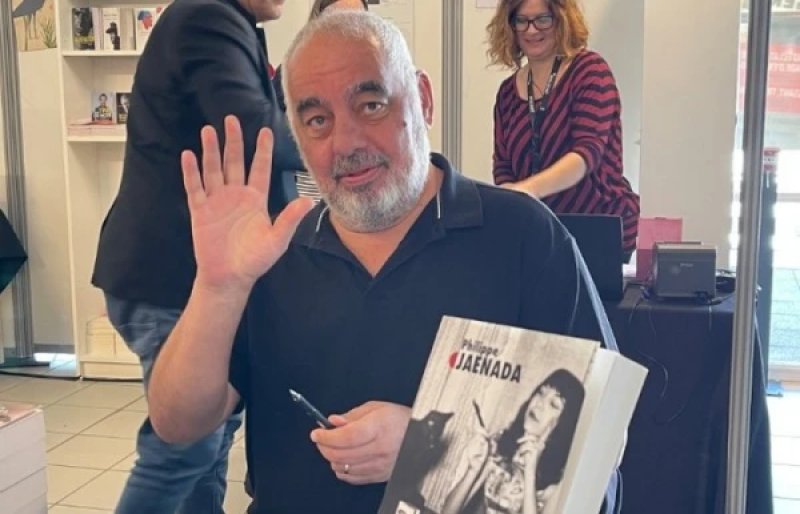
 Foto: BB.LV / Ллауреат Гонкуровской премии признался, что использовал в своем произведении ChatGPT
The writer announced the use of artificial intelligence on the air of France Inter radio, where he was invited the day after receiving the award. Jaenada admitted that he used ChatGPT three times while working on his novel "The Unknown from the Javel Quay." The book is based on the true story of an unsolved murder that took place in Paris in the late 1940s. According to the writer, in one of the episodes, he deliberately included a phrase created by the neural network in the narrative. In this way, the author wanted to conduct a kind of experiment and play with the reader's perception. Additionally, artificial intelligence helped him clarify some technical details necessary for working on the piece. The laureate's confession has sparked mixed reactions. The situation is particularly acute against the backdrop of a recent scandal involving another French author, Télisson Orléan. His manuscript was previously excluded from the list of candidates for the Goncourt Prize, and the publishing house withdrew its support for the writer due to suspicions of using artificial intelligence. A discussion has erupted on social media about the acceptability of using neural networks in the creation of artistic works. Some readers believe that such technologies undermine the very idea of literary creativity, while others see no problem if artificial intelligence is used solely as an auxiliary tool. Jaenada himself does not believe that turning to ChatGPT diminishes the writer's merits. In his opinion, modern technologies have already become part of everyday life, so it is impossible to completely ignore them. The main thing is that neural networks assist the author rather than perform the creative work for him. The story has once again posed a difficult question to the literary community: where does permissible technical assistance end and the creation of a work by artificial intelligence begin? And should writers inform readers and literary prize juries that they used neural networks while working on their books?
