

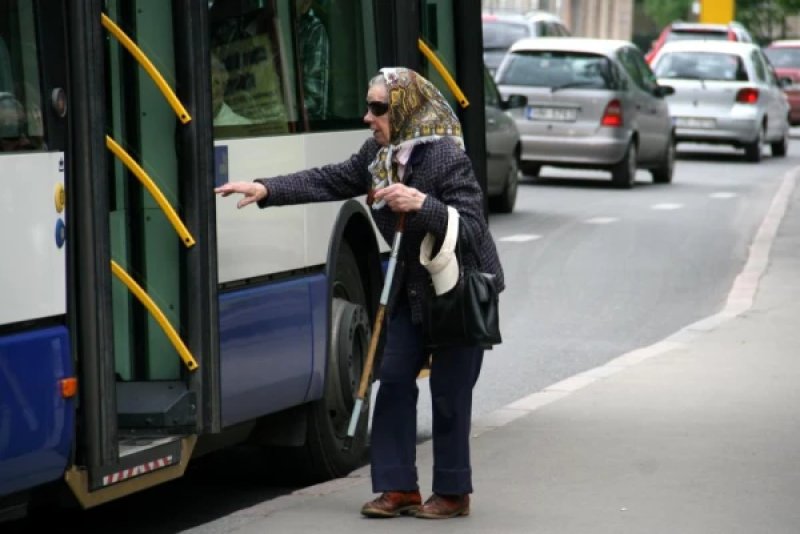
 Foto: BB.LV / инвалид
A petition to preserve free travel for people with disabilities and their companions has been launched on the public initiative portal Manabalss.lv. The author of the initiative opposes the proposal from the Ministry of Transport, which could lead to a 30% charge for trips currently fully covered by the state. This was reported by the LETA agency. The representative of the initiative is Raimonds Leinieks-Puke. He urges the Saeima to maintain the existing guarantees of free travel and to eliminate the situation where some passengers are already forced to pay extra for tickets on regional commercial flights. ### Who is currently guaranteed free travel? As the author of the initiative reminds, the Disability Law provides the right to free travel for several categories of residents. These include: - people with I and II disability groups; - children with disabilities; - companions of children with disabilities; - companions of people with I disability group. These guarantees are enshrined in paragraph 7 of part one of article 12 of the Disability Law. However, the changes proposed by the Ministry of Transport could lead to passengers entitled to free travel having to pay part of the ticket cost themselves. ### What will change if the benefit is reduced to 70%? The Ministry of Transport proposed one option for financing regional public transport, where the state compensation for discounted travel would be limited to 70% of the ticket price. This means that a passenger who currently uses transport for free will have to pay the remaining 30%. Such changes could be particularly significant for families with children with disabilities. As Leinieks-Puke points out, if a child cannot use public transport independently and requires accompaniment, the family will have to pay for two tickets — for the child and the companion. The author of the initiative believes that such expenses could significantly complicate the everyday travel of people who need transport to access medical, educational, and other services. ### On some routes, extra payments are already required The initiative concerns not only the possible reduction of benefits from 2027 but also the current rules for regional commercial transportation. As the author notes, if the ticket price on a commercial flight exceeds the state-established tariff for subsidized regional transport, the passenger must pay the difference themselves. Thus, even a person who has the legal right to free travel may, in certain cases, face the need to pay extra. Leinieks-Puke proposes to eliminate this discrepancy so that the right to free travel remains even when choosing a regional commercial flight. ### What is being requested from the Saeima? The initiative contains two main demands. The first is to fully preserve the right to free travel for all categories of residents listed in the Disability Law and to reject the proposal to introduce a 30% surcharge for them. The second is to abolish the mandatory payment of the difference in the cost of a regular ticket on regional commercial flights for passengers who are guaranteed free travel by law. The author of the initiative believes that the state guarantee should apply regardless of which regional flight a person uses. ### Decision on reducing benefits has not yet been made Earlier, the Ministry of Transport presented three options for financing regional public transport. Two of them involve limiting state compensation for discounted travel to 70%, while the third allows for the preservation of the existing benefits system and route network but requires additional funding from the budget. Opposition to the possible reduction of benefits has already been voiced by the ombudsman Karina Palkova (as reported by [BB.lv](https://bb.lv/statja/nasha-latvija/2026/11/09/ekonomit-na-samyx-uiazvimyx-nelzia-ombudsmen-raskritikovala-plany-izmenit-lgoty-na-transport)), patient organizations, the association of people with disabilities and their friends Apeirons, as well as the "Latvian Child Welfare Network." The ombudsman urged the government not to make decisions that worsen the situation of the most vulnerable groups in society without a thorough assessment of the consequences and alternatives. A final decision on public transport funding and possible changes to benefits has not yet been made.
