

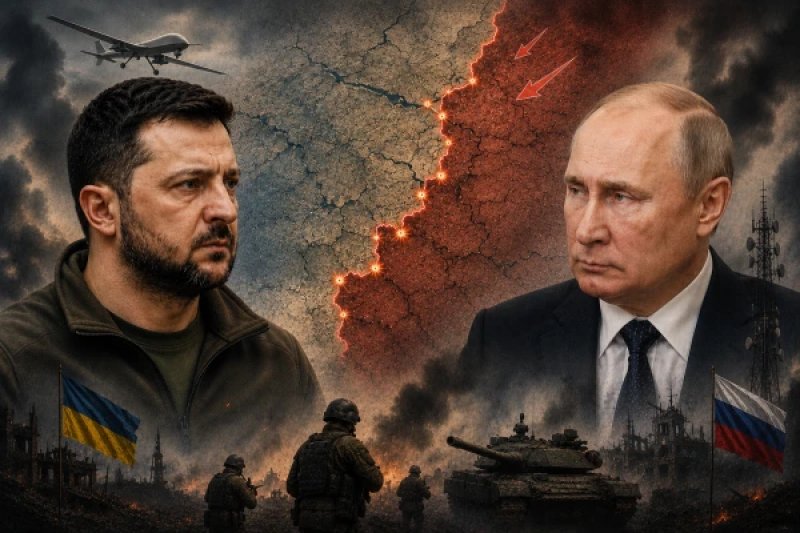
 Foto: BB.LV / Путин и Зеленский
Jared Kushner, son-in-law of Donald Trump and a member of the American delegation, stated that the negotiations will focus on addressing "post-war security issues" for both Russia and Ukraine. "An important part of this process is to encourage all parties to start seriously thinking about what will happen after the war," he noted. However, as the media reports, the positions of Moscow and Kyiv regarding the resolution of the conflict itself remain far apart. One of the key points of disagreement concerns the Donetsk region of Ukraine, which is currently mostly occupied by Russia. Moscow demands that Ukraine cede the parts of the Donetsk region that it still holds, while Kyiv wants to freeze the line of contact to maintain control over these areas, which it claims are crucial for the country's future security. Although neither side is backing down from its demands, an American official speaking ahead of the negotiations noted that these are merely public positions, and in private conversations, Moscow and Kyiv are showing "some flexibility." However, he acknowledged that this issue cannot be resolved without discussing a new "security architecture." "They will not resolve the issue of the Donetsk region and the territorial question until they know what the security architecture will look like after the war," the official stated. "And keep in mind, we will not be able to resolve one without the other." For Ukraine, the post-war "security architecture" may include guarantees that allies will come to its aid if it is attacked again. For Russia, it could be its long-standing ambition to see NATO's withdrawal from Eastern Europe, which would cause serious concern among Europeans. The proposed framework includes security consultations and "hotlines" for communication in case of a crisis, as well as "mutual de-escalation measures" between the two sides. Officials also mentioned the possibility of resuming the Russia-NATO Council, which has largely been suspended since 2022. The latest round of trilateral negotiations, which took place in Geneva in February, ended without a breakthrough. Soon after, the war between the U.S. and Israel against Iran diverted Washington's attention from Ukraine, and no further negotiations took place.
