

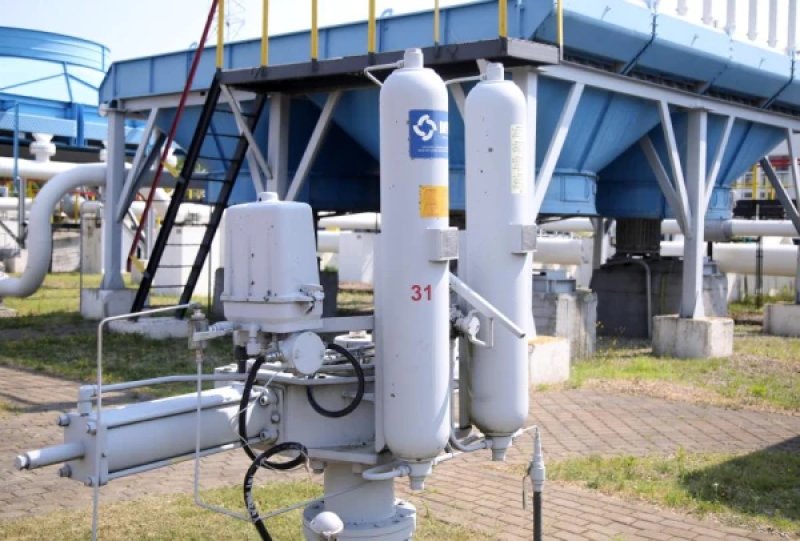
 Foto: BB.LV / Газохранилище
Germany's gas storage facilities are filled worse this year than ever before at the start of winter. If severe frosts hit, there may not be enough gas. This was reported by the Neue Zürcher Zeitung. "At extremely low temperatures, a full gas supply cannot be guaranteed," stated the Initiative for Energy Storage (INES). As of November 1, the storage facilities were only 61% full, which is about 9 percentage points below the level stipulated by the Ministry of Economy. The reason is disruptions caused by the war in Iran. In the summer, traders usually buy cheap gas to sell it at a higher price in winter, but this year prices in the summer were high: between 40 and 60 euros per megawatt-hour, which is significantly higher than last year. Many expected a quick end to the war and a decrease in winter prices, but this did not happen. A few days ago, the price exceeded 100 euros for the first time since 2022. According to INES experts, supply is stable at normal temperatures. However, in the case of severe frosts in January, February, and March, there could be a deficit of up to 6.6 terawatt-hours per month. On some days in January, consumption may reach 1.7 terawatt-hours, which accounts for almost half of the daily needs of all households and businesses in Germany. The calculations already take into account imports from neighboring countries with higher availability and supplies through LNG terminals. According to INES, in a normal winter, the storage is sufficient, and by April 1, 2027, the level will drop to about 28%. A shortage is only possible in a "cold" scenario like the winter of 2010. The Federal Ministry of Economy had previously stated that "according to current estimates, a gas shortage is not expected this coming winter." The head of TotalEnergies, as reported by Reuters, does not expect a real shortage but warns of rising prices.
