

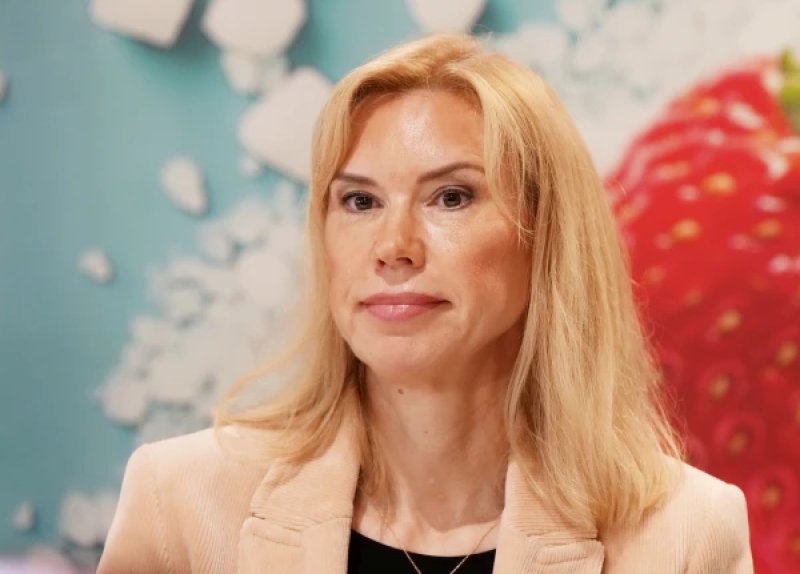
 Foto: BB.LV / Ингуна Гулбе
This opinion was expressed in the TV24 program "Press Club" by the head of the Agricultural Market Support Center, Inguna Gulbe. She believes that the bureaucratic apparatus has learned to effectively protect its own functions instead of seeking opportunities for real savings, reports [LA.LV](https://www.la.lv/ierednieciba-zina-ka-kaut-ko-nevaret-gulbe-asi-kritize-valsts-terinus-un-birokratijas-viltibu). ### "They save where there is almost nothing left anyway" According to Inguna Gulbe, discussions about reducing government spending in Latvia too often begin with demands to save in areas where resources are already limited. As a result, instead of reviewing administrative costs, services necessary for people's daily lives are under threat. > "Every time we need to save on something, we try to point fingers: you should cut expenses, you need to understand that savings are necessary. And these cuts happen where there is already very little funding," Gulbe stated. She is convinced that the government should change its approach to finding savings and first assess which functions are truly necessary and which only create additional costs. ### Unnecessary checks, measurements, and endless paperwork Gulbe believes that many bureaucratic procedures remain in public administration, the necessity of which is questionable. This refers to various checks, requirements to provide documents, and administrative actions that require money and human resources but do not always bring tangible benefits to society. > "We have a lot of various administrative matters and unnecessary checks, measurements, and demands for various unnecessary papers. There is still room for us to cut costs without touching very painful issues," she emphasized. In Gulbe's opinion, such expenses should become one of the primary targets when reviewing the state budget. However, in practice, she believes that discussions about reducing bureaucracy often end with statements that do not lead to significant changes. ### "Lawyers know how to explain why something can't be done" One of the main problems Gulbe identifies is the resistance of the administrative system itself. According to her observations, when discussing possible changes, officials and lawyers often focus on finding obstacles rather than solutions. > "Where there are lawyers, they always know how to explain why something can't be done instead of looking for a solution on how it can be done," she stated. Gulbe believes that a strong bureaucratic apparatus has formed in public administration, capable of justifying the necessity of almost any existing function. As a result, even abandoning clearly excessive procedures becomes a complex task: instead of discussing how to simplify work, explanations begin as to why nothing can be changed. ### "Maybe we should start with these expenses?" The head of the Agricultural Market Support Center also urged a closer examination of information about government spending, which regularly appears in the public domain. According to her, some expense items raise so many questions that it would be worth starting the discussion on savings with them. > "We all sometimes get dizzy from various expense items, don’t we? So maybe we should start with them," Gulbe suggested. At the same time, she did not specify particular institutions or amounts that should be cut first in her statements. ### Public transport is not an area where savings should be made Gulbe specifically emphasized that reducing government spending should not worsen the accessibility of vital services. She cited public transport as an example. For many residents, especially outside major cities, a bus or other public transport is the only way to get to work, school, take children to activities, or solve everyday issues. Therefore, cutting such routes for the sake of savings can create significantly more problems for people than benefits for the budget. Gulbe's main point is that the government should primarily eliminate unnecessary administrative functions rather than cut services that residents' daily lives directly depend on.
